A distinguished panel of international scholars and witnesses discussed how freedom of religion or belief is an essential part of social justice.
by Daniela Bovolenta
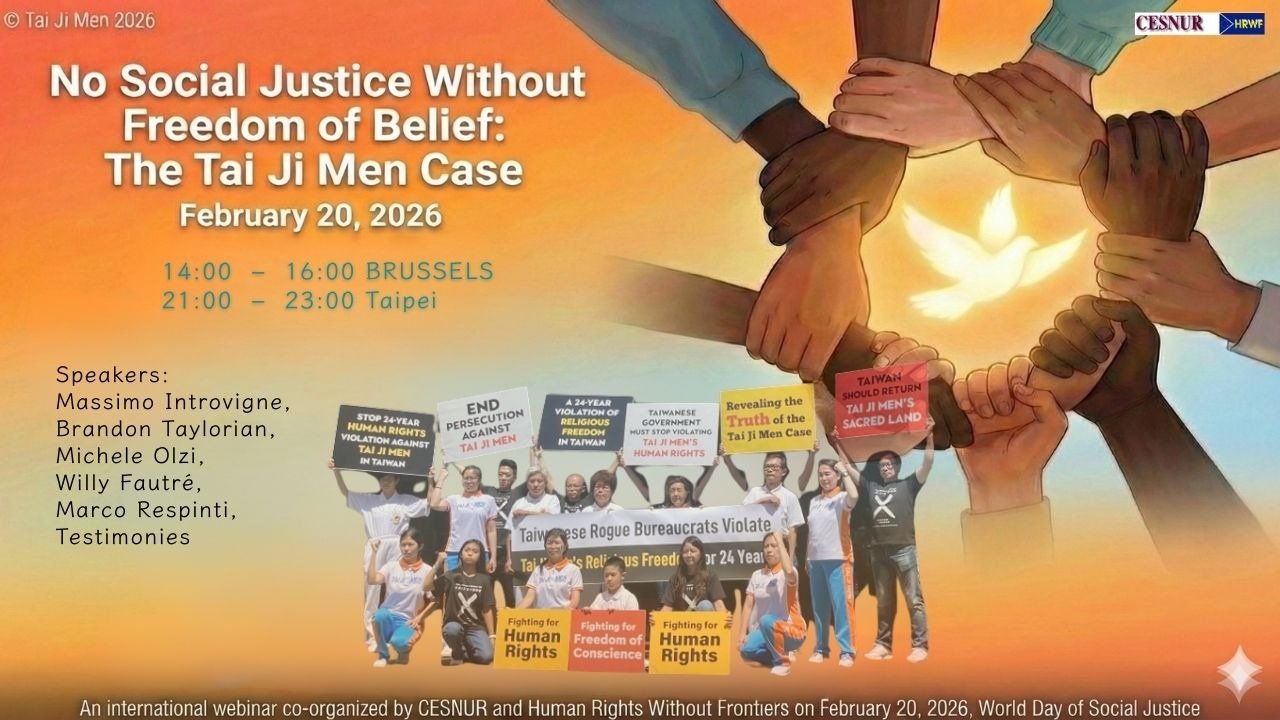
The webinar “No Social Justice Without Freedom of Belief: The Tai Ji Men Case,” co‑organized by CESNUR and Human Rights Without Frontiers on February 20, 2026, United Nations World Day of Social Justice, opened with introductory remarks by Massimo Introvigne, Italian sociologist and co‑founder of CESNUR.
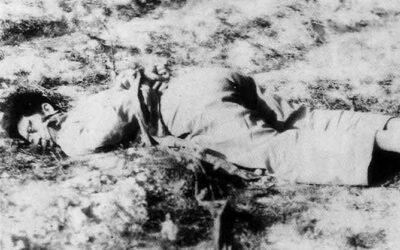
Introvigne situated the event within the United Nations World Day of Social Justice, recalling that the 2025 theme—“Strengthening a Just Transition for a Sustainable Future”—had emphasized the inseparability of ecological sustainability and social justice. Drawing on a recent journey to Africa devoted to both advocating for freedom of religion or belief and learning about the protection of endangered species, he reflected on how justice is woven from many threads: respect for nature, cultural identity, and human dignity. His visit to Rwanda’s mountain gorillas, and to the legacy of American primatologist Dian Fossey, illustrated how ecological destruction and political oppression often stem from the same disregard for conscience and community. Fossey’s murder, the corruption she confronted, and the later Rwanda genocide revealed how violations of ecology, including “human ecology,” can escalate into broader social tragedies.
Introvigne linked these reflections to Taiwan’s own history, particularly the 228 Incident of 1947, and to the long‑running Tai Ji Men case, which he described as not only a legal injustice but also a cultural and ecological wound, given the nationalization of land that includes a sacred bamboo grove. Justice, he concluded, requires conscience, and the resilience of Tai Ji Men is part of a global movement insisting that human dignity, cultural identity, and ecological harmony must be protected together.
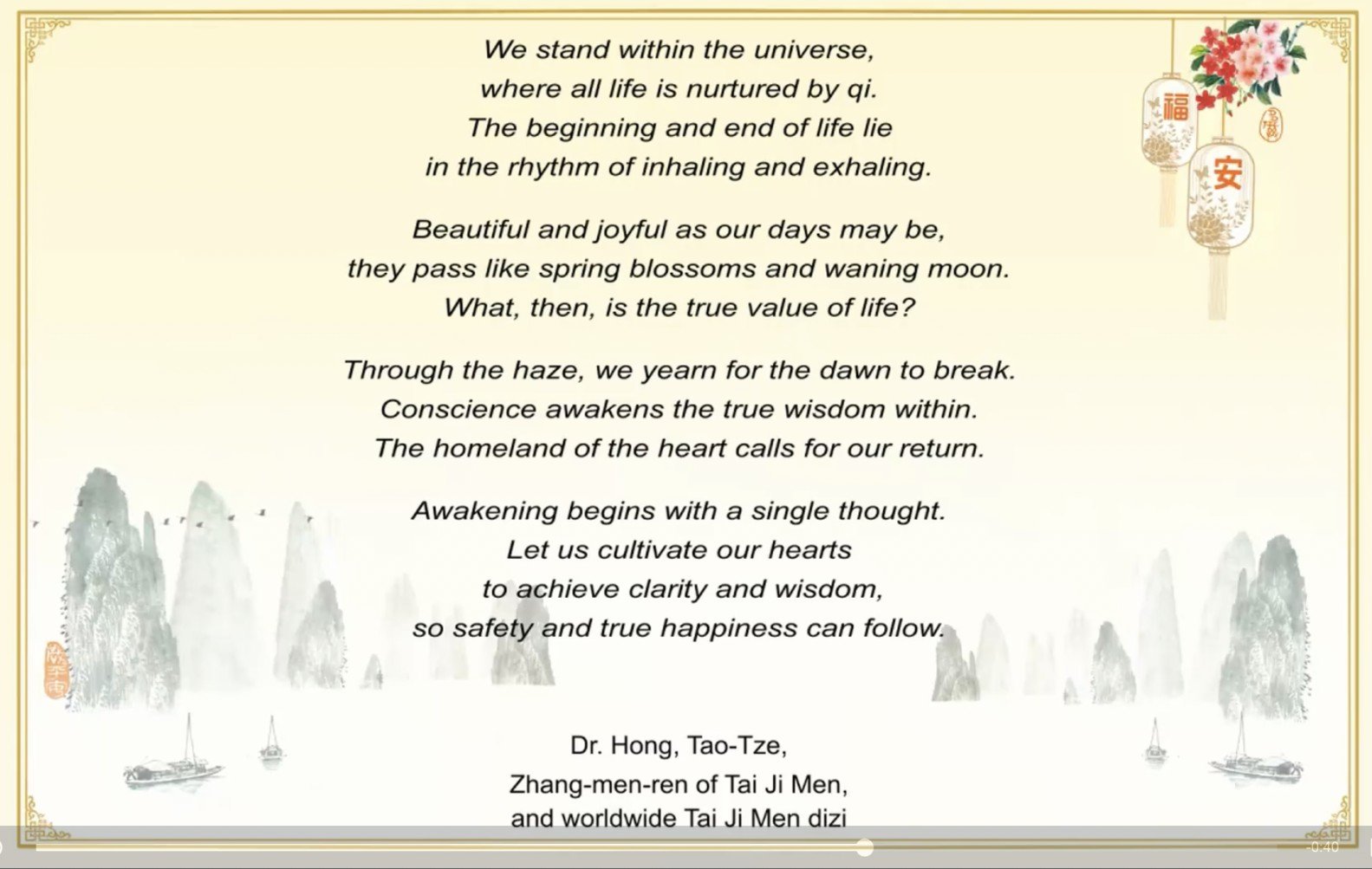
Introvigne then introduced two short videos. The first featured the U.N. Secretary-General António Guterres’ wishes for the Chinese New Year. The second presented Tai Ji Men’s own wishes for the same Chinese New Year, centered on a message from its Shifu (Grand Master), Dr. Hong Tao‑Tze. “We stand within the universe, where all life is nurtured by qi,” Dr. Hong said, reminding viewers that life’s value lies in awakening conscience, cultivating clarity of heart, and returning to the inner homeland where wisdom and true happiness reside.
Introvigne next presented the two speakers of the first session: Brandon Reece Taylorian, Associate Lecturer and Research Fellow at the University of Central Lancashire, UK, and Michele Olzi, Teaching Assistant in Religion and Media and Research Fellow in Political Theory at the University of Insubria, Italy.

Taylorian opened with reflections drawn from his research on how recognition and registration systems shape real conditions of freedom of religion or belief (FoRB). He argued that although often treated as technical matters, these systems function as powerful mechanisms that determine whether belief communities can exist and flourish. Recognition confers legitimacy; registration grants legal personality. In practice, the two merge, shaping access to rights, benefits, and public space. To analyze this, he developed the Spectrum of Religious Registration (SRR‑2), ranging from optional systems that respect freedom of belief to restrictive regimes where unregistered activity is criminalized. He also created a Scale of Rights Violations (SRV) to show how administrative pressures—tax burdens, penalties, seizures, denial of legal standing—can escalate into serious violations of dignity and autonomy. Registration, he said, is “civic oxygen”: without it, communities struggle to rent venues, hold property, organize activities, or defend themselves in court. Social justice requires not only formal rights but the institutional conditions that allow communities to act, assemble, and transmit their traditions.
Turning to Tai Ji Men, Taylorian noted that, despite the Supreme Court’s 2007 ruling confirming innocence and recognizing the “red envelopes” given by disciples (dizi) to their Shifu as gifts, the fabricated 1992 tax bill served as the basis for enforcement actions culminating in the 2020 nationalization of sacred land. This exemplifies what he called “administrative persistence,” where bureaucratic mechanisms continue to impose harm long after courts have cleared the underlying accusations. When taxation and property control are applied in ways uniquely sustained against a specific spiritual community, the issue becomes inseparable from freedom of religion or belief. A social‑justice response, he concluded, requires clarity after judicial decisions, non‑discrimination in fiscal governance, protection of legal personality, and FoRB literacy within administrations. The Tai Ji Men case shows that administrative systems are not neutral: they can facilitate pluralism or become instruments of exclusion. When a community is financially and administratively restricted for decades, social justice has not been achieved.

Michele Olzi examined the Tai Ji Men case through Axel Honneth’s theory of recognition. He argued that the decades‑long sequence of judicial proceedings, tax sanctions, and public delegitimization cannot be understood as a series of isolated errors but reveals a systematic pattern of misrecognition that has deeply affected the dignity, identity, and autonomy of those involved. Honneth’s framework views society as an order of recognition in which individuals develop autonomy through relations of care, legal respect, and social esteem. Injustice manifests as misrecognition: a denial of the forms of recognition necessary for identity. At the level of personal integrity, the intimidation and prolonged uncertainty inflicted on Tai Ji Men have produced insecurity and humiliation. At the legal level, the persistence of punitive actions despite definitive court rulings amounts to a suspension of the disciples’ status as full subjects of rights. At the level of social esteem, the public portrayal of Tai Ji Men as a deviant entity symbolically devalues the movement and undermines collective self‑esteem. This combination of personal, legal, and social misrecognition constitutes a pathology of the order of recognition.
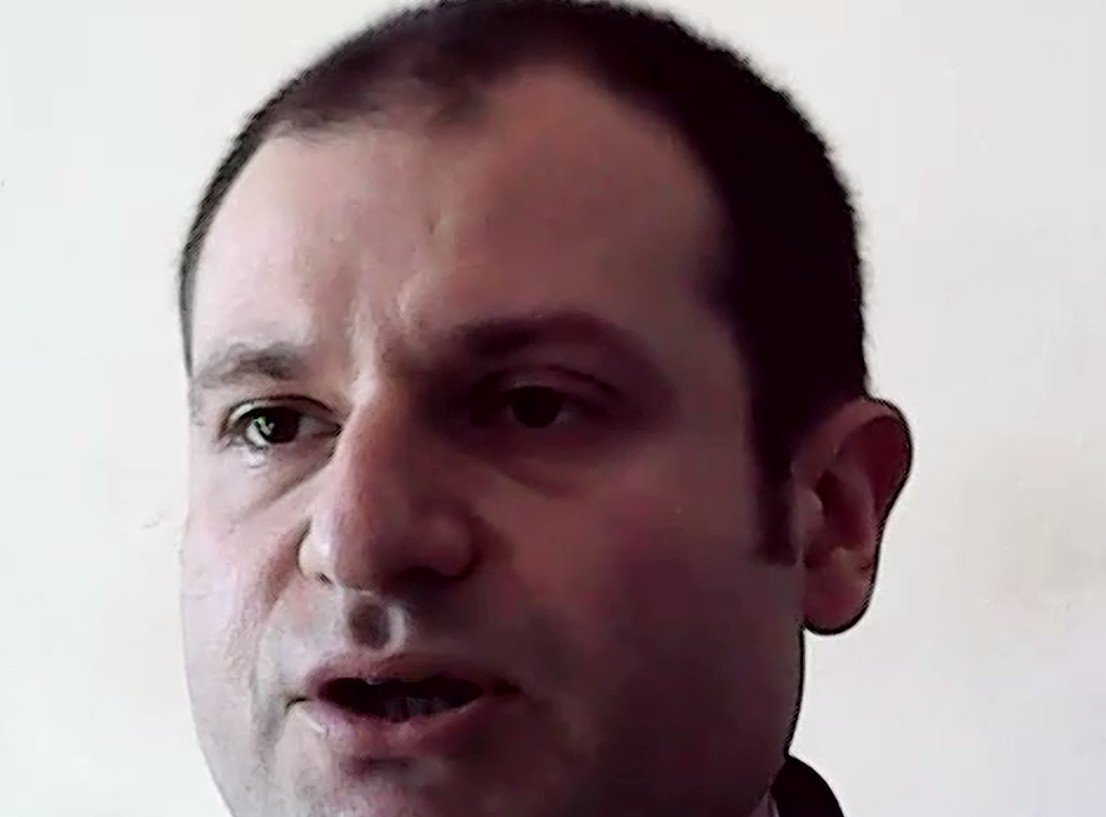
Yet Tai Ji Men’s response has been peaceful: legal appeals, public mobilization, and engagement with democratic institutions. According to Honneth, social struggles emerge when disrespect is experienced as moral injustice. In this sense, Tai Ji Men’s resistance is a claim to dignity and recognition as legitimate bearers of a form of life. Olzi situated this analysis within the symbolic context of the February 28, 1947, massacre, a historical rupture in Taiwan’s order of recognition. Without drawing improper equivalences, he argued that the memory of 228 serves as a warning against subtler but persistent forms of institutional misrecognition. Democratic justice requires not only condemning past violence but remaining vigilant against present injustices. Applying Honneth’s theory to the Tai Ji Men case invites reflection on whether institutions have learned from history and remain faithful to the promise of recognition: to guarantee all citizens the social conditions of autonomy so that tragedies of misrecognition, old or new, are not repeated.
The second session of the webinar was chaired by Willy Fautré, co‑founder and director of Human Rights Without Frontiers. He opened by presenting a moving video recounting the story of Japanese Judge Norimichi Kumamoto, the junior member of a three‑judge panel who, against his conscience, followed his colleagues in sentencing Iwao Hakamada to death for a crime he had not committed. Kumamoto lived the rest of his life haunted by guilt. He resigned from the bench, became a lawyer, and fought tirelessly for a retrial—one that he finally obtained, although he did not live to see Hakamada fully exonerated.

Fautré then introduced the session, recalling the meaning of the World Day of Social Justice and linking it to Taiwan’s own February 28 Peace Memorial Day, commemorating the 1947 228 tragedy, a reminder of how social injustice, when left unchecked, can metastasize into decades of repression. He traced the legacy of the White Terror, the lingering authoritarian reflexes that survived Taiwan’s democratic transition, and how these dynamics contributed to the persecution of Tai Ji Men. Freedom of belief, he stressed, is inseparable from social justice, and the Tai Ji Men case illustrates how injustice persists when conscience is absent from governance. He then introduced the five speakers of the second session, all Tai Ji Men dizi.
The first testimony was offered by Yushuan Sung, a data engineer, who drew a powerful parallel between debugging a malfunctioning system and correcting institutional injustice. In her world, a single uncorrected bug replicates itself endlessly until it produces a systemic disaster. The same, she argued, happens when state institutions refuse to stop a faulty process. Reflecting on the World Day of Social Justice, she noted that even in countries that claim to uphold democracy and the rule of law, persecution can be manufactured under the guise of “lawful administration.” She recalled Dr. Hong’s teaching that justice depends on conscience. She connected it to the story of Iwao Hakamada, whose fate changed not because procedures ran their course but because a former judge finally listened to his conscience.

Turning to Taiwan, she summarized the long ordeal of Tai Ji Men: the false accusations of 1996, the Supreme Court’s definitive 2007 ruling of innocence and tax‑exemption, and the state compensation for wrongful imprisonment. Yet the administrative system refused to stop the wrong process. The National Taxation Bureau ignored the Supreme Court and continued issuing tax bills based on a rejected indictment, creating what she called an “absurdity rarely seen in legal history.” As an engineer, she pointed out the logical impossibility of treating tax bills for six identical years differently: five were corrected to zero, while only 1992 was enforced. If the Hakamada case stole 48 years from one man, she said, the Tai Ji Men case has stolen 30 years from three generations. Even a tax officer who had cooperated in fabricating evidence later confessed on his deathbed that the case was staged. Yet, the state persisted, nationalizing Tai Ji Men’s land in 2020. Laws exist, she concluded, but justice fails when no one dares to press the “Stop” button. The Tai Ji Men case is a litmus test of Taiwan’s democratic maturity, and conscience must once again become the system’s safeguard.
The second testimony came from Melody Fu, an administrative assistant, who reflected on how justice becomes visible only when society chooses to look. She described the 2025 Taipei exhibition “1219 Escape Room—Thirty Years After Authoritarian Rule, Toward the Light,” which transformed decades of human‑rights‑related judicial controversies into immersive experiences. More than 15,000 people attended in 9 days, proving that when injustice is made accessible and understandable, it resonates widely. As a guide for the exhibition, she witnessed participants’ shock upon realizing that wrongful cases can persist even in a model democracy. One room, in particular, led visitors from a scene of apparent institutional progress into total darkness, where they learned that some injustices remain unresolved despite reforms. At the end of the darkness, an exit toward the light reminded them that justice is a choice.

She connected this to historical cases such as the Yang Naiwu and Little Cabbage affair in late Qing China, where public attention—not institutional self‑correction—led to exoneration, and to Japan’s Moritomo Gakuen scandal, exposed through media scrutiny. Yet people often remain silent, either because they believe injustice does not concern them or because they fear confronting power. Justice, she insisted, is never automatic; it emerges only when civil society refuses to look away. The Tai Ji Men case asks every global citizen whether they will choose to see, to care, and to speak.
The third testimony was delivered by Winnie Lu, an elementary school teacher and counselor, who reflected on this year’s World Day of Social Justice’s theme, “Empowering Inclusion: Bridging Gaps for Social Justice.” In her daily work, she sees another form of injustice: unequal access to mental‑health support for children. Neurodiverse students often collide with standardized educational expectations, and when caregivers lack information or hold stigmatizing beliefs, children are deprived of the developmental rights they deserve. Drawing on Dr. Hong’s teaching that conscience is the compass of the mind, she argued that caregivers’ understanding becomes the child’s direction.

Since joining Tai Ji Men during her university years, she has learned the importance of balance, and she sees how teachers can become “energy balancers” in the classroom by offering tolerance and encouragement. Small adjustments to the school environment can make it more inclusive, and society must abandon narrow definitions of a “good student” based solely on academic performance. She then turned to the Tai Ji Men case, calling it a form of institutional bullying that undermines the psychological health of society. How can children be taught to admit mistakes when the state refuses to correct its own? She urged the government to revoke the illegal tax bill and return the nationalized land, arguing that only by restoring justice can collective trauma heal. Mental health, she concluded, must be recognized as a human right, and society must build a “Conscience Alliance” to protect children from the secondary harm caused by prejudice and institutional injustice.
The fourth testimony was offered by YuTing Ni, a software project manager, who reflected on social justice through the lens of global suffering. She recalled interviews with civilians in the Israel–Palestine conflict who had learned to “adapt to cruelty,” yet whose deepest wish was to live freely and peacefully. War, she said, is the most unjust distribution of the right to survive. But injustice also exists in democracies when administrative power loses restraint. The Tai Ji Men case, she argued, is a textbook example of structural failure: the National Taxation Bureau ignored its duty to investigate facts, denied the right to be heard, and copied prosecutorial allegations wholesale, violating fundamental principles of administrative law. Investigators fabricated figures, ignored objective evidence, and even treated the same funds as both fraud proceeds and taxable income, violating the principle of non‑duplication of penalties.

Despite the Supreme Court’s 2007 ruling of innocence and non‑taxability, the Bureau continued its unlawful pursuit, culminating in the 2020 nationalization of Tai Ji Men’s sacred land. When administrative power overrides judicial authority, she warned, public power becomes a weapon. She recalled Yasser Arafat’s transformation from armed struggle to peace, noting that true justice comes from ending harm and correcting mistakes. The Tai Ji Men case, she said, is a global indicator of religious freedom. A democracy that knowingly refuses to correct wrongdoing undermines its own credibility. She called on the Taiwanese government to end this “invisible war” and restore dignity and rights, for only conscience can eliminate injustice.
The fifth testimony was given by George Chen, a physician, who approached the Tai Ji Men case through medical metaphors. In traditional Chinese medicine, he noted, “the greatest doctor treats the country.” He described the case as a form of systemic leukemia: mutated cells—officials who violated the law—were never removed by the accountability mechanism, which should function as the immune system of a rule‑of‑law state. Despite the Supreme Court’s definitive ruling and repeated investigations by the Control Yuan identifying serious violations, the responsible officials were promoted rather than disciplined. When the immune system fails, he said, pathological decisions spread, culminating in the illegal auction and nationalization of Tai Ji Men’s land in 2020.
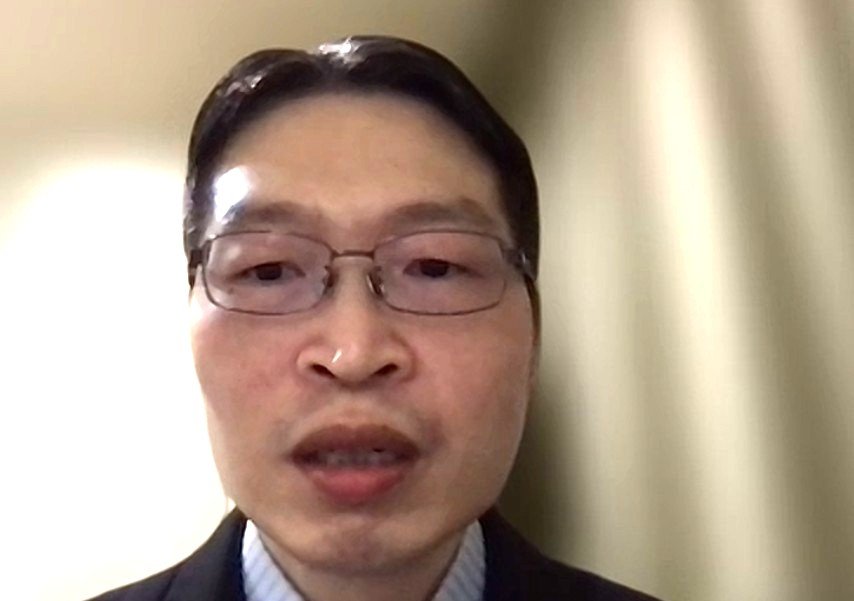
He then spoke of conscience as preventive medicine. Years of practicing qigong at Tai Ji Men have taught him the importance of physical and mental balance, and he argued that officials guided by conscience would not abuse power for bonuses or performance metrics. He praised Tai Ji Men’s mixed‑age learning environment as a model of social health, where generations support one another like cells working in harmony.
Redressing the Tai Ji Men case, he concluded, is the necessary prescription to heal institutional chronic illness: revoke the illegal tax bill, return the confiscated assets, establish real accountability, and place conscience at the center of governance. Justice delayed, he warned, is a chronic injury to democracy.
The conclusions of the webinar were offered by Marco Respinti, an Italian scholar and journalist, and the Director‑in‑Charge of “Bitter Winter.” He reflected on the meaning of the World Day of Social Justice and compared the UN’s own definition of social justice with the reality of the Tai Ji Men case. Every principle the UN identifies—equity, access, participation, respect for diversity—has been violated. Tai Ji Men has been deprived of the resources and opportunities necessary to thrive, stigmatized as tax delinquents and even accused of absurdities such as raising goblins, and prevented from fully participating in public life. Despite being fully acquitted by all levels of the judiciary, the group continues to face discrimination and arbitrary sanctions, including the nationalization of its sacred land. Respinti warned that the case exemplifies the strong preying on the weak— not in moral strength, but in the imbalance between peaceful citizens and the machinery of the state. He appealed to the Taiwanese government to resolve the case politically and restore justice, for injustice to one citizen harms the entire democratic fabric, and injustice anywhere harms humanity as a whole.
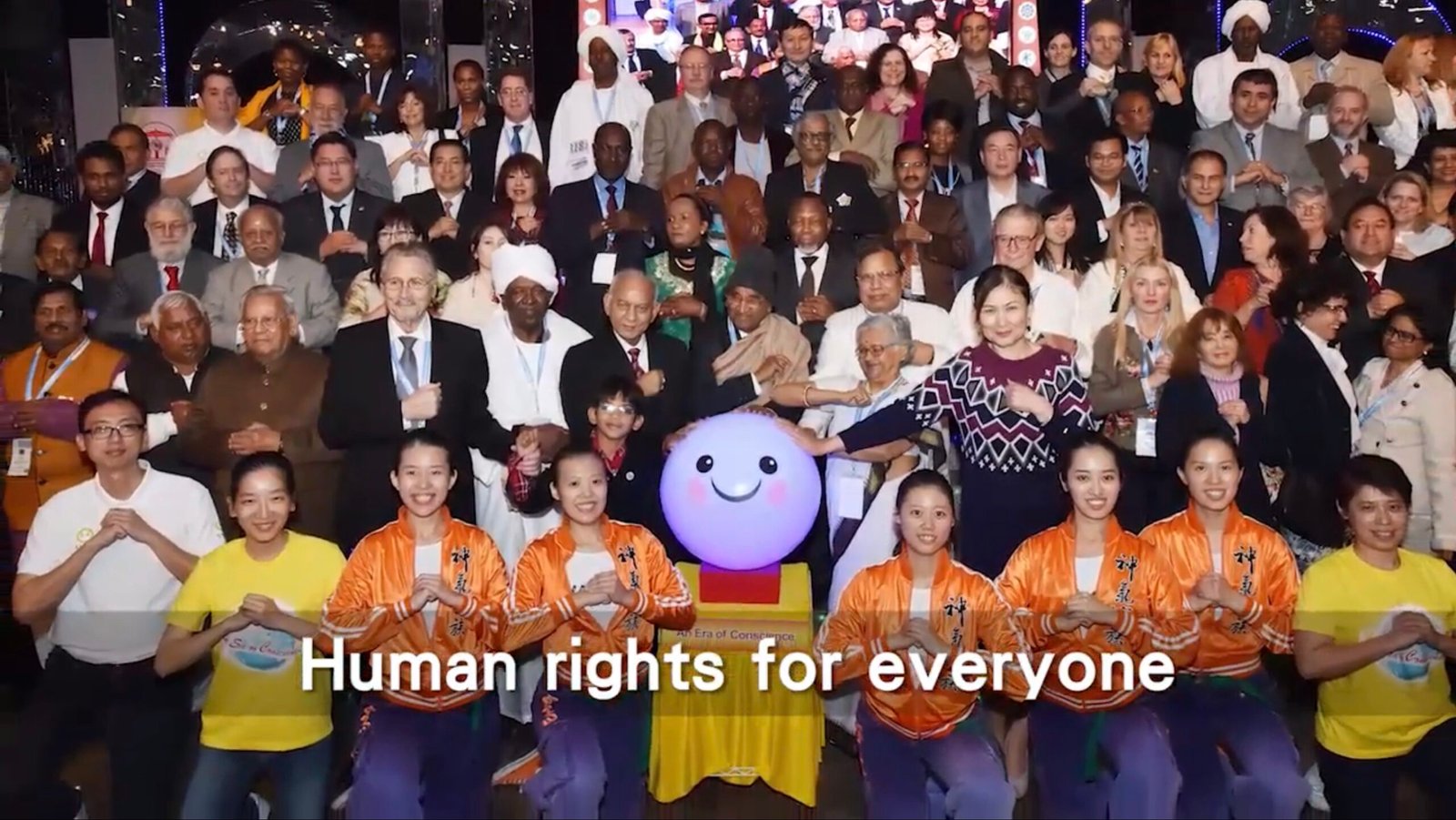
The webinar concluded with a musical video celebrating the global meaning of human rights and Tai Ji Men’s core teaching that they are rooted in conscience.