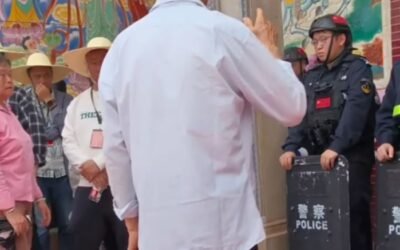
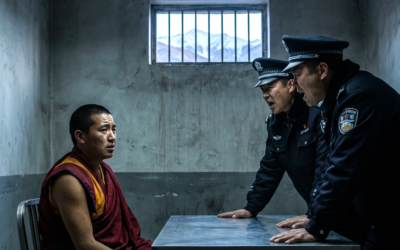
The CCP launches a three-year plan to progressively replace Mongolian with Chinese as the primary language of instruction in all schools in Inner Mongolia.
by Massimo Introvigne
Teachers are called to meeting in their schools at midnight. They are told they should keep the meetings secret. It did not happen during a war or invasion. It is happening in Inner Mongolia, which local Mongolian populations prefer to call Southern Mongolia, in these very days.
What is so important and so secret? It is a CCP plan to progressively replace in schools Mongolian with Chinese throughout all of Inner Mongolia, extending an experiment performed earlier this year in and around Tongliao City, as Bitter Winter previously reported.
Chinese will become the primary language of instruction from September 1 in all elementary and middle schools starting from September 1 next. This is introduced as “bilingual education,” but in fact several main subjects will be taught in Chinese only, and the program will be extended to high schools, and further increase the use of the Chinese, through two other stages, which will start respectively in September 2021 and September 2022. “This is a decision of the Central Government, the teachers were told. It is not a decision of the Autonomous Region’s government.”
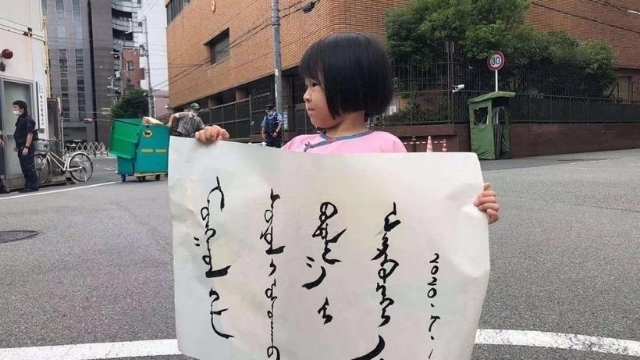
The nightly, secretive meetings were organized to prevent the expected protests by the Mongolian-speaking population. But news are spreading, and many parents threaten not to send their children to the “sinicized” schools any longer. Even children have their pictures taken with posters protesting the destruction of their culture. The Southern Mongolian diaspora abroad, as reported by the Southern Mongolian Human Rights Information Center, is also mobilized. It believes that only through strong international support the cultural genocide of Southern Mongolia, less well-known but not less real than those affecting Tibet and Xinjiang, could perhaps be slowed down if not halted.
Massimo Introvigne (born June 14, 1955 in Rome) is an Italian sociologist of religions. He is the founder and managing director of the Center for Studies on New Religions (CESNUR), an international network of scholars who study new religious movements. Introvigne is the author of some 70 books and more than 100 articles in the field of sociology of religion. He was the main author of the Enciclopedia delle religioni in Italia (Encyclopedia of Religions in Italy). He is a member of the editorial board for the Interdisciplinary Journal of Research on Religion and of the executive board of University of California Press’ Nova Religio. From January 5 to December 31, 2011, he has served as the “Representative on combating racism, xenophobia and discrimination, with a special focus on discrimination against Christians and members of other religions” of the Organization for Security and Co-operation in Europe (OSCE). From 2012 to 2015 he served as chairperson of the Observatory of Religious Liberty, instituted by the Italian Ministry of Foreign Affairs in order to monitor problems of religious liberty on a worldwide scale.