The leader reorganized the movement after having been detained and “reeducated” for two years. Now, he goes to jail again, this time for 19 years.
by Massimo Introvigne

On June 15, 2020, the Intermediate People’s Court of Luohe City, Henan, sentenced Wen Jinlu (温金路), the 75-year-old founder of Riyue Qigong (“Sun and Moon” Qigong, 日月气功) to 19 years in jail for having organized and promoted a xie jiao (“heterodox teaching,” often less correctly translated as “evil cult”) and for rape. Six other leaders of the movement received sentences from two years and ten months to three years and six months. With this trial, Henan authorities claimed that Riyue Qigong has been “completely destroyed.”
Wen Jinlu, also known as Jin Guangdao, was born in 1945 in Xiangcheng County, Henan. He was interested in Qigong since high school, and founded Riyue Qigong in 1994. Reportedly, in a few years he had gathered several thousand followers. According to police authorities, by 2000 the movement was present in 29 provinces, districts, and cities, with a total following around 130,000.

Riyue Qigong was a victim of the repression of large Qigong groups following the crackdown on Falun Gong in 1999. On April 15, 2000, Wen was arrested and sent to a reeducation camp, where he spent two years. While the authorities believed he had been successfully reeducated, this was not the case. He reorganized Riyue Qigong and, while keeping a low profile for some years, eventually gathered more followers than he had before his arrest. With the help of his eldest son, Wen Lijun, and his senior disciple, Guo Junzhao (who are among those sentenced in 2020), in 2007, he inaugurated the movement’s temple headquarters in Zhanbei Township, Xiangcheng County, Xuchang City, Henan, which started being visited by a continuous flow of devotees and pilgrims, and in 2008 an “ecological park” in Mengzhai Town, Wuyang County, Luohe City, Henan.
It is difficult to reconstruct the doctrine of Riyue Qigong, as the only sources available are Chinese anti-cult publications. Reportedly, Wen taught mostly through poems, which members were requested to study, and promoted a system of “signal decoding,” claiming that most problems come from the acquired incapacity of human body to receive and interpret “signals.” A correct “decoding” may be restored by Qigong practice. Anti-cult publications also accuse Wen to deify himself, brainwashing followers, using his position to sleep with multiple female devotees, and announcing the imminent end of the world. These are standard accusations against xie jiao leaders in China.
On April 8, 2017, Henan’s Public Security carried out one of the spectacular raids typical of the repression of “cults,” involving a large number of armed police. Both the headquarters and the “ecological park” were stormed at 1 a.m. The buildings were destroyed, and Wen and 26 devotees were arrested.
The authorities reported that after the raid several members were successfully reeducated, but not Wen and the other leaders, who have been sentenced on June 15, 2020. Eight female devotees testified they had been raped by Wen, allowing the court to sentence him for rape in addition to the crime punished by Article 300 of the Chinese Criminal Code, i.e. being active in, and promoting, a xie jiao. Accusations of rape are fairly common in China in cases against leaders of xie jiao.
Riyue Qigong is not included in the last known official list of xie jiao. There are, however, multiple examples in China of applications of Article 300 to movements not included in the list.
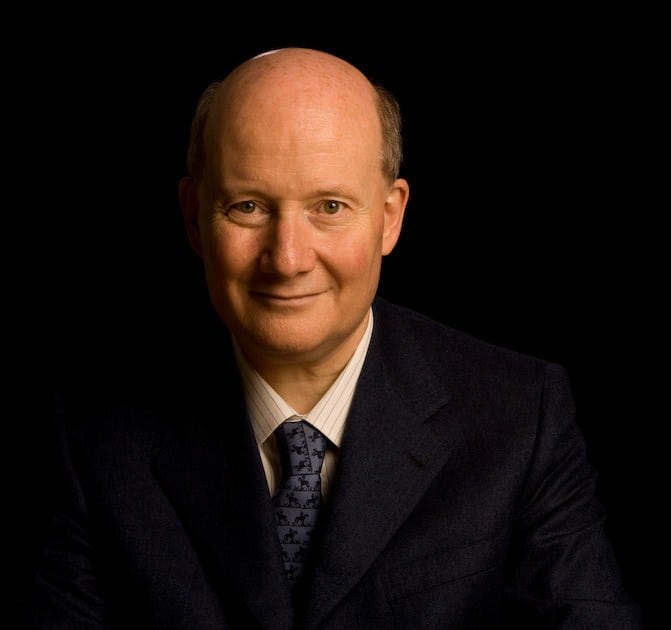
Massimo Introvigne (born June 14, 1955 in Rome) is an Italian sociologist of religions. He is the founder and managing director of the Center for Studies on New Religions (CESNUR), an international network of scholars who study new religious movements. Introvigne is the author of some 70 books and more than 100 articles in the field of sociology of religion. He was the main author of the Enciclopedia delle religioni in Italia (Encyclopedia of Religions in Italy). He is a member of the editorial board for the Interdisciplinary Journal of Research on Religion and of the executive board of University of California Press’ Nova Religio. From January 5 to December 31, 2011, he has served as the “Representative on combating racism, xenophobia and discrimination, with a special focus on discrimination against Christians and members of other religions” of the Organization for Security and Co-operation in Europe (OSCE). From 2012 to 2015 he served as chairperson of the Observatory of Religious Liberty, instituted by the Italian Ministry of Foreign Affairs in order to monitor problems of religious liberty on a worldwide scale.