Two very different cases of self-immolation: Jewish warriors at Masada, Indian women in the Sati ritual.
by Massimo Introvigne*
*A paper presented at the Occult Convention IV, Parma, September 6, 2025.
Article 2 of 5. Read article 1.
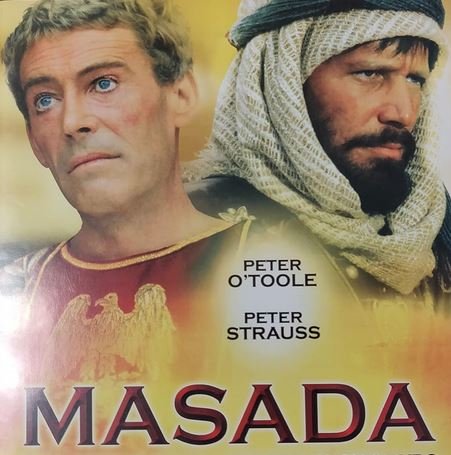
The Masada siege of 73 CE is a prominent example of collective suicide in Jewish history, open to various interpretations, including martyrdom, resistance, and tragedy. We must first look at the historical background to grasp its religious and cultural importance.
Masada, a fortress built by Herod the Great on a remote plateau in the Judean Desert overlooking the Dead Sea, was designed as a refuge in case of revolt. Its strategic location made it nearly impregnable. After the Second Temple’s destruction in 70 CE, Jewish rebels called the Sicarii—an extremist faction opposing Roman rule—retreated to Masada with their families. Led by Eleazar ben Ya’ir, they persisted in resisting Rome from this isolated stronghold. In 72 CE, Roman governor Lucius Flavius Silva led the Tenth Legion and auxiliaries to besiege Masada. The Romans built a massive ramp to breach the fortress—an engineering feat that took months.
According to Jewish historian Flavius Josephus, when the Romans entered in 73 CE, they discovered nearly all 960 inhabitants dead. Josephus states the Sicarii chose death over slavery: they killed their families, then each other, leaving one man to commit the final act of suicide.
This account has been debated; some question its accuracy, noting Josephus’ ties to Rome and potential dramatization. Archaeological evidence confirms the siege but does not necessarily support the full story of mass suicide.

Scholars like Nachman Ben-Yehuda have questioned the heroic portrayal of this event. In his book, “The Masada Myth,” he suggests that the traditional story was influenced by ideological motives, especially Zionist attempts to build a legacy of Jewish resistance. He highlights that the Sicarii were not widely admired and that their actions, such as the massacre at Ein Gedi, challenge the simplified view of noble martyrdom.
Nonetheless, the tale remains a potent symbol in Jewish and Israeli identity. Today, Masada is regarded in Israel as a site of heroic resistance, and the phrase “Masada shall not fall again” once served as an Israeli Defense Forces motto.
Religiously, the act of suicide at Masada conflicts with Jewish law, which essentially forbids self-harm. However, some rabbis and scholars argue that the Sicarii’s actions were justified under “Kiddush Hashem”—sanctifying God’s name through martyrdom, possibly driven by fears of forced conversion, torture, or desecration. Masada reflects a complex intersection of religion, nationalism, and memory, challenging simple notions of suicide as sin or martyrdom as virtue, and prompting reflection on how collective identity shapes interpretations of death.

India offers a different case of self-immolation within a religious context. Sati, or suttee, was a historical practice where Hindu widows would immolate themselves on their husbands’ funeral pyres. Originally meaning “virtuous woman,” the term later described both the woman and the act of self-immolation.
This practice is among the most discussed forms of ritual suicide in world religions, with a history intertwined with myth, social control, and disputed agency. The mythological origin of the practice comes from the story of the goddess Sati, who burned herself to protest her father’s insult to Shiva. However, formal widow burning emerged later, especially among elite Rajput clans during medieval India, and was often linked to notions of honor, purity, and loyalty. Widows who committed sati were believed to become goddesses, and their cremation sites were marked with memorial stones or temples.
The practice was not universal but more common among upper-caste women in Bengal and Rajasthan. Some scholars suggest property rights influenced sati, especially in Bengal, where widows could inherit property, perhaps using sati to prevent asset claims. Others note the harsh treatment of widows—shaving heads, wearing white, eating once daily—as a form of “cold sati,” possibly motivating some to choose death over social rejection. British colonial authorities, especially during Governor-General William Bentinck’s tenure, abolished Sati in 1829 with the Bengal Sati Regulation. This legislation labeled the practice as “unlawful and wicked” and made those aiding it criminal. Christian missionaries and Indian social reformers also portrayed Sati as savage and incompatible with contemporary values.
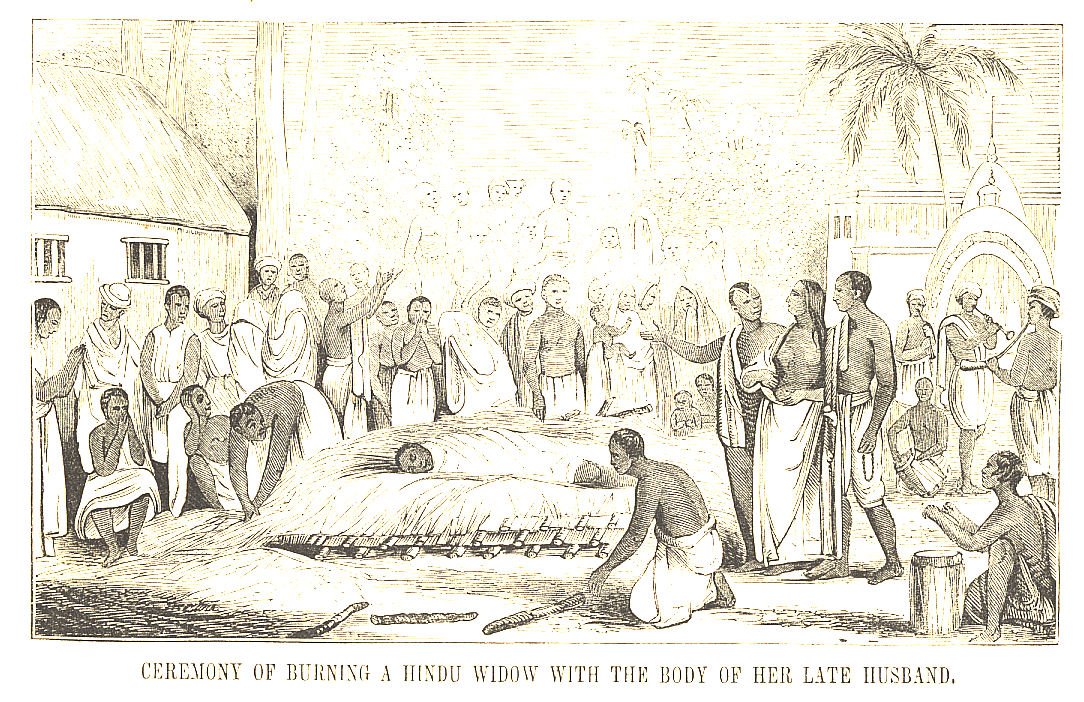
They point out that abolishing Sati benefited imperial interests, enabling the British to claim moral superiority and justify their intervention in Indian traditions. The legal portrayal of Sati as murder or suicide overlooked its ritual and symbolic aspects, reducing it to a criminal act.
The most discussed recent case is that of Roop Kanwar, an 18-year-old widow who committed sati in Rajasthan in 1987, sparking outrage and prompting the Sati (Prevention) Act of 1987, which made the act and its glorification illegal.
Hindu scriptures send mixed messages about sati: the Rig Veda appears to support widow immolation, yet later texts like the Manusmriti focus on chastity and renunciation rather than death. Reformers such as Raja Ram Mohan Roy condemned sati as barbaric and not part of Hinduism, working towards its abolition during the 19th century.
Overall, sati illustrates how ritual suicide can be rooted in gendered religious norms. It also shows how interpretations of dharma and purity can sometimes precede the instinct to survive.
Sati must be understood as both a religious rite and a social imposition. While some women may have embraced it as a path to spiritual purity, others were coerced or lacked alternatives. That both attitudes existed is epitomized in the world-famous 1978 novel “The Far Pavilions” by British novelist Mary Margaret Kaye. The practice reflects deep-seated patriarchal structures where a woman’s identity was subsumed under her husband’s.
Modern scholarship emphasizes the need to distinguish between voluntary religious acts and socially enforced violence. Sati’s legacy continues to provoke debates about agency, tradition, and the limits of religious freedom.

Massimo Introvigne (born June 14, 1955 in Rome) is an Italian sociologist of religions. He is the founder and managing director of the Center for Studies on New Religions (CESNUR), an international network of scholars who study new religious movements. Introvigne is the author of some 70 books and more than 100 articles in the field of sociology of religion. He was the main author of the Enciclopedia delle religioni in Italia (Encyclopedia of Religions in Italy). He is a member of the editorial board for the Interdisciplinary Journal of Research on Religion and of the executive board of University of Pennsylvania Press’ Nova Religio. From January 5 to December 31, 2011, he has served as the “Representative on combating racism, xenophobia and discrimination, with a special focus on discrimination against Christians and members of other religions” of the Organization for Security and Co-operation in Europe (OSCE). From 2012 to 2015 he served as chairperson of the Observatory of Religious Liberty, instituted by the Italian Ministry of Foreign Affairs in order to monitor problems of religious liberty on a worldwide scale.