In Guangdong, the police tried to prevent the Ying Laoye procession from taking place. In Jiangxi, they violently blocked the construction of an ancestral hall.
by Zhao Zhangyong
Two recent incidents in Guangdong and Jiangxi, though happening hundreds of kilometers apart, show a clear trend: the Chinese authorities are tightening their control over grassroots religious and communal activities. What was once viewed as harmless customs—like deity processions, ancestral halls, and seasonal rituals—is now increasingly seen as a threat to be managed or eliminated.
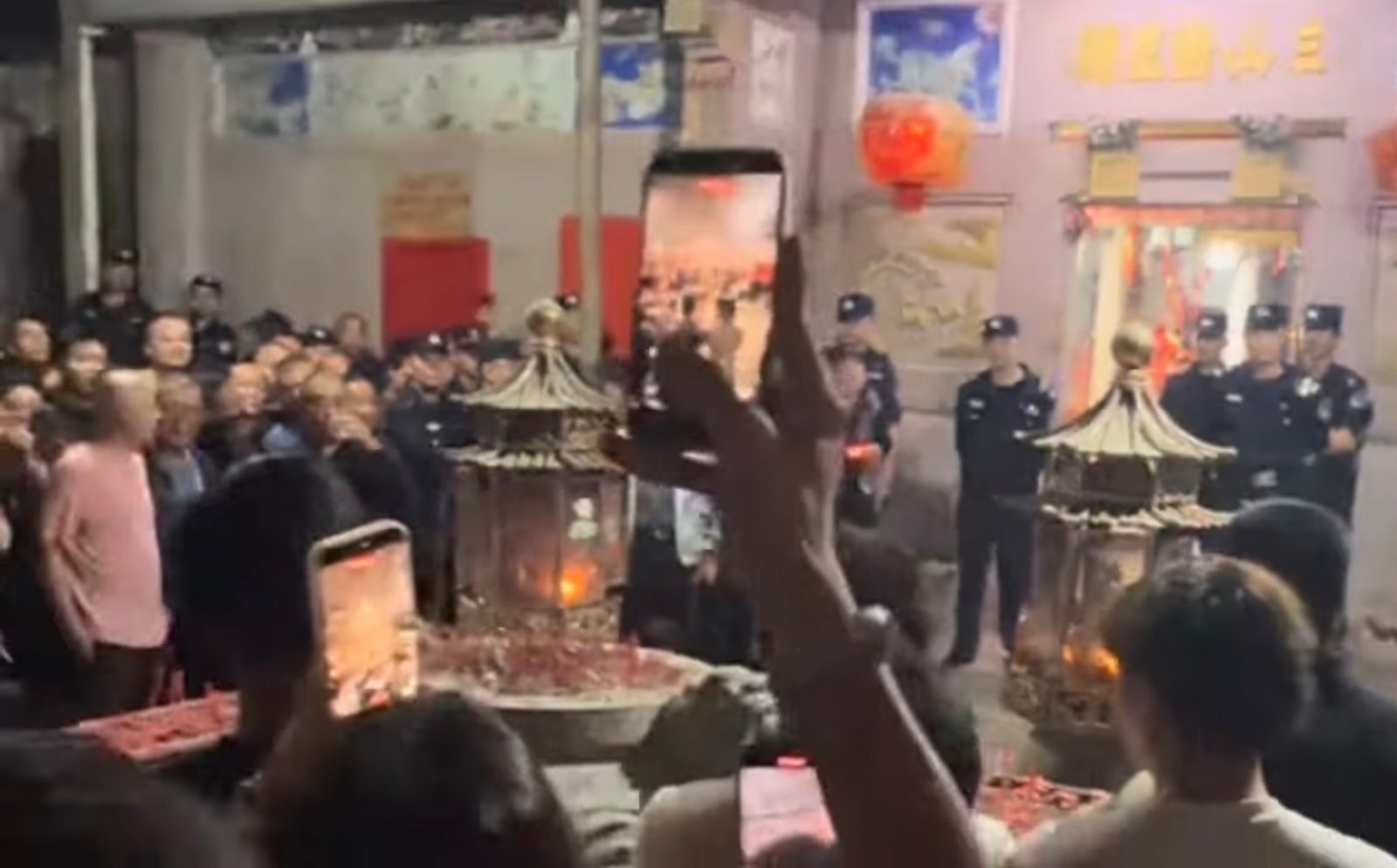
In Chaozhou’s Changmei Village, Guangdong, the Ying Laoye procession was meant to be a typical part of the Lunar New Year celebrations. For generations, villagers have carried the statue of a local deity out of the temple and through the streets to bless their community. However, on the evening of March 2, police officers blocked the temple gates, intent on stopping the ritual.

The scene was tense but short-lived: young villagers pushed past the police line, opened the way to the temple, and brought out the statue. The procession then continued peacefully, just as it always had. This effort to stop a harmless folk custom—one that has no political ties and no history of disorder—shows how even traditional expressions of belief are now viewed with suspicion.

A similar situation occurred days earlier in Qusha Village, Jiangxi Province, where the local government had promised to rebuild an ancestral hall after demolishing the old one. Once the demolition was finished, the promise vanished. When villagers tried to start construction on February 28, government personnel showed up to prevent them, using violence. The ancestral hall, vital for lineage identity and community unity, was treated not as cultural heritage but as an unauthorized religious building to suppress.
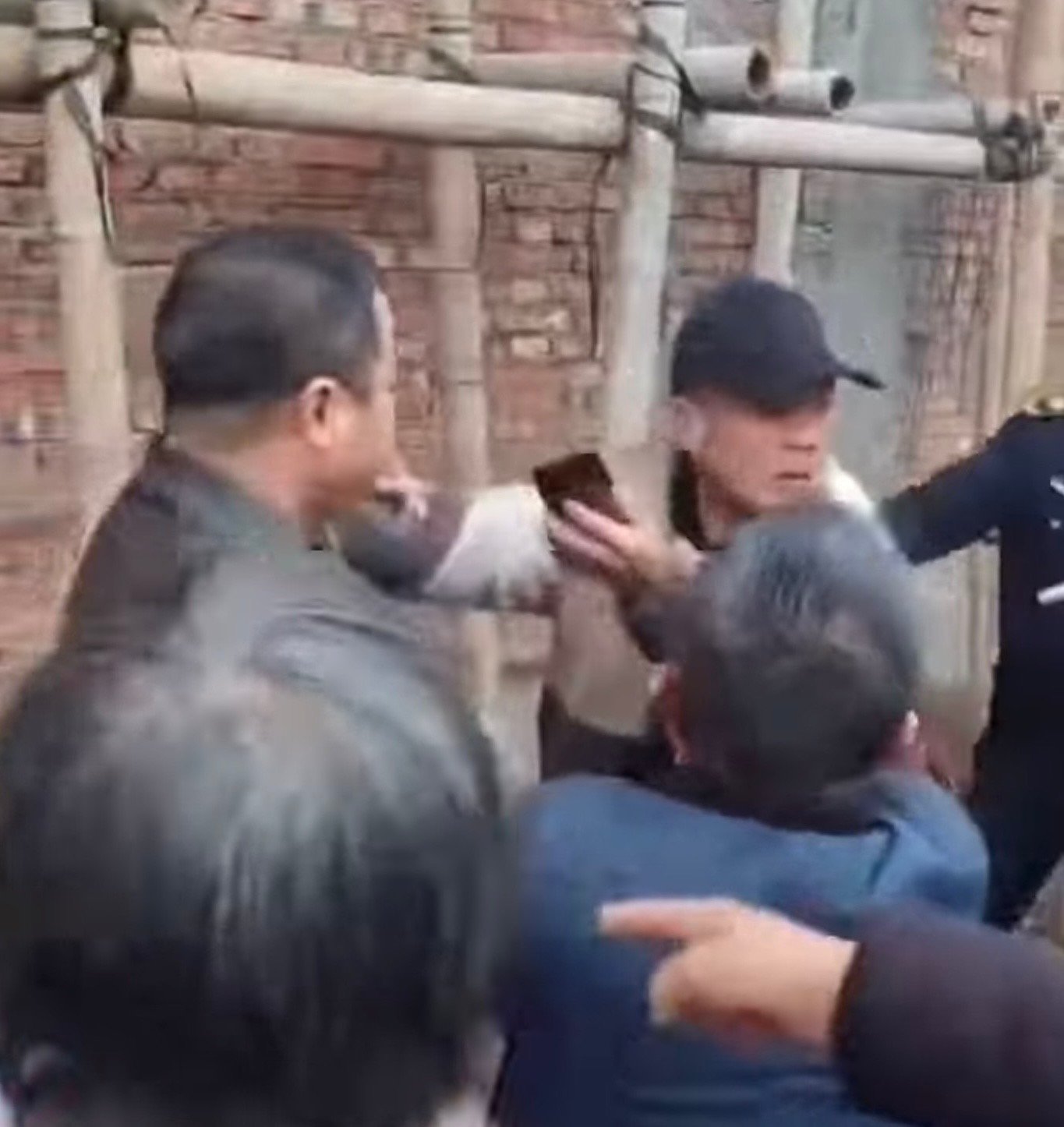
These two events, though different, reflect the same underlying logic. Community-organized rituals are increasingly labeled as “uncontrolled gatherings.” Ancestral halls and temples are redefined as “illegal structures” or “feudal remnants.” Local officials, under pressure to minimize visible religious life, intervene even when these traditions are peaceful, apolitical, and deeply rooted in local identity. This results in a slow erosion of the spaces—both physical and symbolic—where rural communities connect with their past.

What stands out is how villagers responded. In Chaozhou, they physically broke through a police blockade to protect a ritual that defines their identity. In Jiangxi, they tried to rebuild their ancestral hall with their own hands after the state went back on its promise. These acts of resistance are small, local, and unorganized, but they show how important these traditions are to the people who keep them alive.
The oppression of folk religion often gets overshadowed by more visible efforts against organized faiths, but these incidents reveal that the pressure goes well beyond churches, mosques, and temples. It extends into everyday rural life, targeting customs that have survived through dynasties, revolutions, and modernization. The pressing question is how far the authorities plan to push and how communities will respond as their space for tradition continues to shrink.

Uses a pseudonym for security reasons.