China is committing genocide against the Uyghurs precisely to secure permanent control over strategic resources such as rare earths. A Uyghur journalist’s appeal to the U.S.
by Shohret Hoshur

Imagine that a valuable property of yours was being traded between two people right before your eyes—without your permission—and one of those people was a thief who had stolen your possession. At the same time, the other was a prominent person from your neighborhood who knows well that you are the rightful owner. How would you feel?
Naturally, you would despise the thief’s shamelessness and be deeply disappointed in the indifference of the prominent man. While America and China have been arguing about rare earth resources for more than a week, I feel exactly that same emotion.
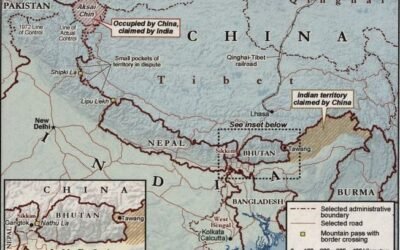
Indeed, some of the seventeen disputed rare earth metals—lanthanum (La), cerium (Ce), praseodymium (Pr), neodymium (Nd), samarium (Sm), europium (Eu), gadolinium (Gd), and yttrium (Y)—come from East Turkestan (Ch. Xinjiang). More importantly, our homeland is a key source of China’s global economic strength. For instance, 40% of China’s coal, 22% of its oil, and 20 % of its natural gas come from here. East Turkestan is also the strategic starting point of China’s Belt and Road Initiative.
However, these resources, belonging to us—the Uyghurs, the rightful owners of the land—bring us no benefit. Instead, they bring disaster upon our heads. The more China realizes the wealth of these resources, the more it fears that the region might break away. During the past 30 years, wave after wave of so-called “anti-terrorism” campaigns have struck the area, and ultimately, concentration camps were built. More than three million Uyghurs have been detained in captivity for over eight years—all because of the resources buried in our land. The Uyghur people do not want the resources that have brought them such tragedy to remain in the hands of their enemies. Therefore, they have fought tirelessly for years to take back this power. This struggle often takes the form of protecting national identity and sometimes forcefully resisting China’s brutality. The price we are paying for our independence struggle is hefty.
Our people wish to cooperate with powerful nations like the United States, and through such cooperation, discuss and negotiate the future rights and shares in the use of these resources taken from our homeland. Unfortunately, the help that America has provided our people so far has been limited to humanitarian aid. The rare-earth crisis has once again proven that the Uyghur issue is not merely a humanitarian concern for America—it is a strategic matter, a card of partnership and influence.
Instead of begging China for rare earths, America should pressure China to abandon its colonial rule over East Turkestan, one of the primary sources of these resources. Rather than advising China not to assist Russia and Iran, the U.S. should work to deprive China of the resources it plunders from East Turkestan. Before calling on China to respect international trade laws, America should demand an end to the ongoing Uyghur genocide. The Uyghur issue is China’s soft underbelly. It is not only America’s responsibility to restrain China but also a global concern: stopping China’s expansion, preventing the spread of injustice, corruption, and dictatorship worldwide, and safeguarding world peace.
China is committing genocide against the Uyghurs precisely to secure permanent control over these strategic resources—such as rare earths—and to maintain eternal dominance over the United States in this field.

I believe President Donald Trump, a professional businessman, can make this calculation—he can recognize China’s weakest point and perceive the strategic value of the Uyghur issue.
I am confident that, just as he showed boldness in matters like the Panama Canal and Greenland, he can show similar courage on the Uyghur issue. Therefore, I call on the Trump administration to include the independence of East Turkestan in America’s foreign policy agenda and to hold direct talks with Uyghur organizations.
The Uyghur armed forces in Syria possess strong willpower, real operational capability, and—most importantly—legitimacy as representatives of our nation’s independence struggle. I recommend that the U.S. government meet with them as soon as possible to listen to their plans and requests for cooperation.
Our call may not sound appealing to overly “realist” politicians, but it is the most reasonable call for those who believe in the power of truth, trust the right course of history, and have strategic foresight. Those who turn a deaf ear today will one day regret it when China has taken complete control over the world.
Finally, I remind all politicians around the globe that in international trade and politics, it is wise, strategic, moral, and lawful to speak with the valid owner of the goods, not with the thief.

Shohret Hoshur (who until 2025 used the pseudonym of Kok Bayraq) is a political émigré from East Turkestan (Ch. Xinjiang) and an opponent of the Sinicization of his homeland. He left China in 1995 when his journalism got him “into trouble with the authorities,”and is now living in Washington, D.C.. His unique thoughts and feelings published in Taipei Times and Global Voice comment on the ongoing Uyghur genocide.