Registration systems are a way of limiting religious liberty. Unjust taxes are another.
by Brandon Reece Taylorian*
*A paper presented at the webinar “No Social Justice Without Freedom of Belief: The Tai Ji Men Case,” co-organized by CESNUR and Human Rights Without Frontiers on February 20, 2026, United Nations World Day of Social Justice.
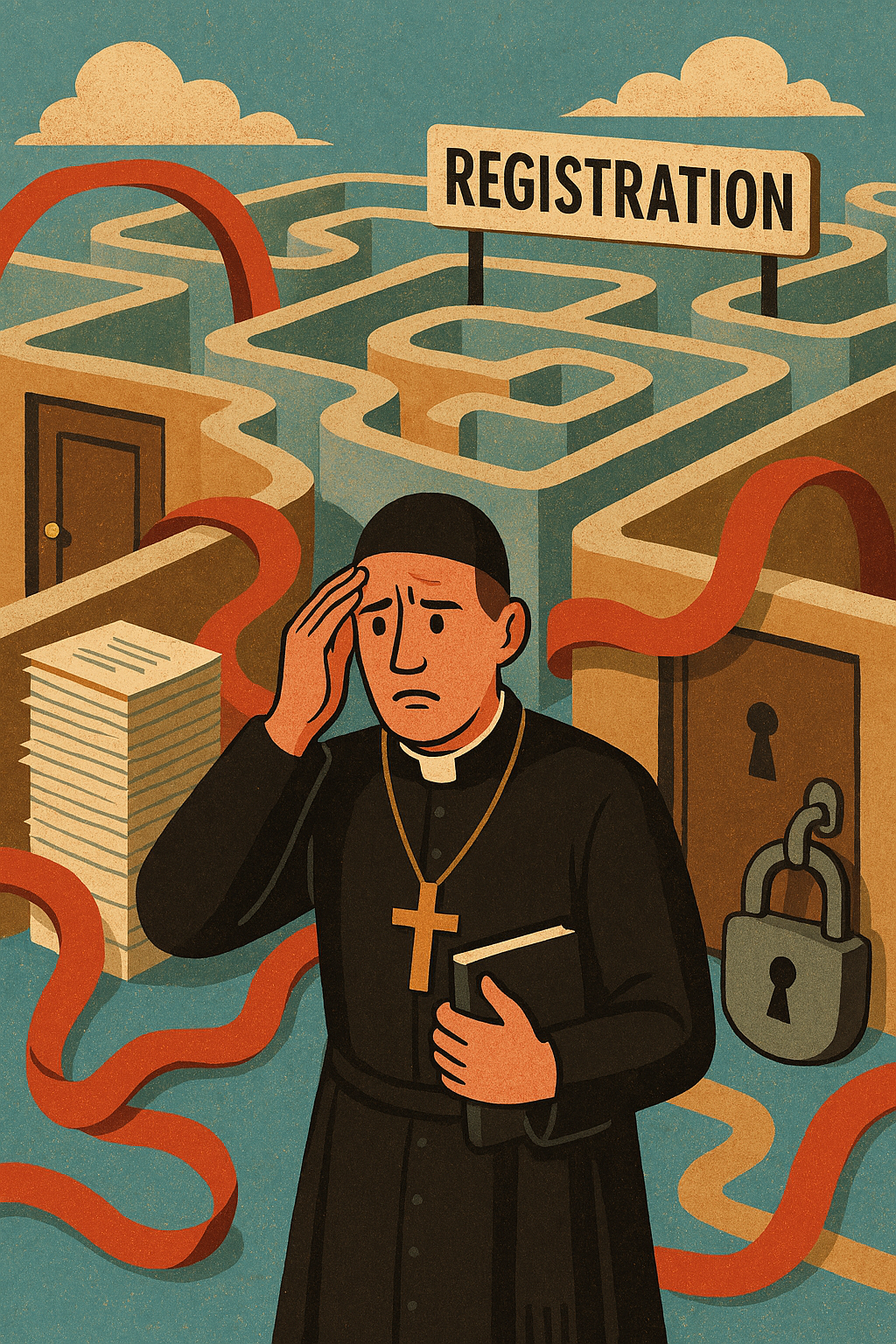
My ongoing research asks a deceptively simple question: to what degree do recognition and registration systems shape real conditions of freedom of religion or belief—not in theory, but in the everyday life of communities? My central claim is that recognition and registration are often treated as administrative or technical matters. Yet in practice, they function as powerful mechanisms that can expand or contract the space in which belief communities can exist.
Today I want to make three points.
First, recognition and registration are distinct, but in practice, they interact in ways that can quietly produce inequality.
Second, because these mechanisms look “bureaucratic,” they can cause harm without appearing like persecution—yet the impact can still be profound, including surveillance, stigmatization of unrecognized or unregistered groups, financial punishment, and the erosion of legal personality.
Third, I will argue that the Tai Ji Men case is a particularly instructive example for the theme “No Social Justice Without Freedom of Belief,” because it shows how administrative and tax systems can become instruments of long-term restrictions of fundamental rights—even after criminal acquittals and in a context that is not usually framed as a classic authoritarian environment.
1. Why recognition and registration matter for FoRB
In my thesis, I distinguish recognition from registration. Recognition is the broader social and state practice of conferring legitimacy, status, or privilege on certain religions or beliefs; registration is the more specific legal process by which an organization gains legal personality—the capacity to operate as an entity in law.
But although the distinction matters conceptually, in real-world governance the two often merge: recognition shapes who gets access to registration, what benefits follow, and whether officials perceive a group as customary or suspicious.
To clarify how registration regimes vary, I built the Spectrum of Religious Registration (SRR-2). At the most FoRB-compliant end are optional registration regimes, where groups may register for benefits without losing basic religious freedom if they remain unregistered; at the most restrictive end are broad, mandatory registration regimes, where unregistered activity is criminalized, and communities can be punished simply for existing outside state supervision.
Crucially, my research suggests that governments often treat registration not merely as a means of record-keeping, but as a gatekeeping mechanism: it can be used to decide what are “real” religions, who is “legitimate,” and who may access public funds and spaces. Where registration becomes coercive, the state’s message is that your rights are conditional on approval. That is precisely where social justice concerns begin.
2. How “administrative” systems create real-world harm
One reason these issues are underestimated is that the harms are not always dramatic or instantly visible. They frequently appear as excessive paperwork, delays, intrusive demands for information, and rules around tax and property. Yet these “soft” mechanisms can have “hard” outcomes.
In my thesis, I describe how registration systems can enable surveillance and enforcement. Information demanded during registration—addresses, leadership details, membership information—can be repurposed for monitoring, intimidation, and building cases against religious groups considered undesirable. And where registration is made onerous, uncertain, or endlessly delayed, the effect can be to keep a community in a permanent grey zone: not outright banned but never legalized.
To capture variation in severity, I developed a Scale of Rights Violations (SRV) ranging from minor harms (such as unequal access to tax benefits) to grave harms (systematic violence and extreme punishment). The point of the SRV is that FoRB violations often escalate and interlock with other rights—property rights, fair trial rights, freedom of association, and dignity.
What matters for today is this: financial and administrative pressure can be a form of coercion, even when it is framed as routine enforcement. If social justice means meaningful equality and non-discrimination, then a system that repeatedly imposes disproportionate burdens on a religious or belief community—through tax, penalties, seizures, or denial of legal standing—should be treated as a social justice issue, not merely a technical dispute.
3. A social justice lens: legal personality as “civic oxygen”
Registration—legal personality—can be understood as civic oxygen. Without it, communities struggle to rent venues, hold property, run educational or cultural activities, fundraise, or challenge unfair treatment in court. My interviews with minority-faith stakeholders repeatedly returned to this practical reality: legal status does not merely add convenience; it determines whether a community can operate without fear.
This connects directly to the UN Day of Social Justice theme. Social justice requires not only formal rights on paper but institutional conditions in which communities can actually act—organize, speak, assemble, teach, transmit tradition, and build community life.
When states—or bureaucracies within states—treat religious or belief communities as suspect, “abnormal,” or culturally illegitimate, they can use administrative and fiscal mechanisms to apply pressure while insisting that “this is not about religion.” That denial is itself a pattern worth naming because it obscures the lived reality of discrimination.
4. Turning to Tai Ji Men: why this case matters for FoRB and social justice
This brings me to Tai Ji Men.
From the publicly available case materials, the core narrative is well known. Tai Ji Men is described as a martial arts and spiritual self-cultivation movement that faced criminal accusations in the 1990s and, later, prolonged conflict through tax bills—especially the unresolved 1992 tax bill.
In 2007, Taiwan’s Supreme Court confirmed that the defendants were innocent of the criminal charges, including tax-related allegations, and characterized the “red envelopes” as gifts of gratitude rather than taxable tuition. Yet, despite subsequent developments and despite tax bills for other years being corrected to zero, the 1992 tax bill remained a focal point used to justify enforcement actions culminating in property seizure and nationalization of land in 2020.
What makes Tai Ji Men analytically significant—through the lens of my thesis—is that it exemplifies a phenomenon I would call “administrative persistence”: when a community is effectively kept under a long shadow by bureaucratic mechanisms even after key adjudications appear to clear the underlying wrongdoing narrative.
In SRV terms, one can see how the harm is not only reputational but material: financial penalties, property seizure, and the punitive effect on civic participation. This is why many human rights advocates describe the case not just as a legal dispute but as a social justice issue—because unequal or retaliatory enforcement produces long-term inequality, even without overt bans on worship.
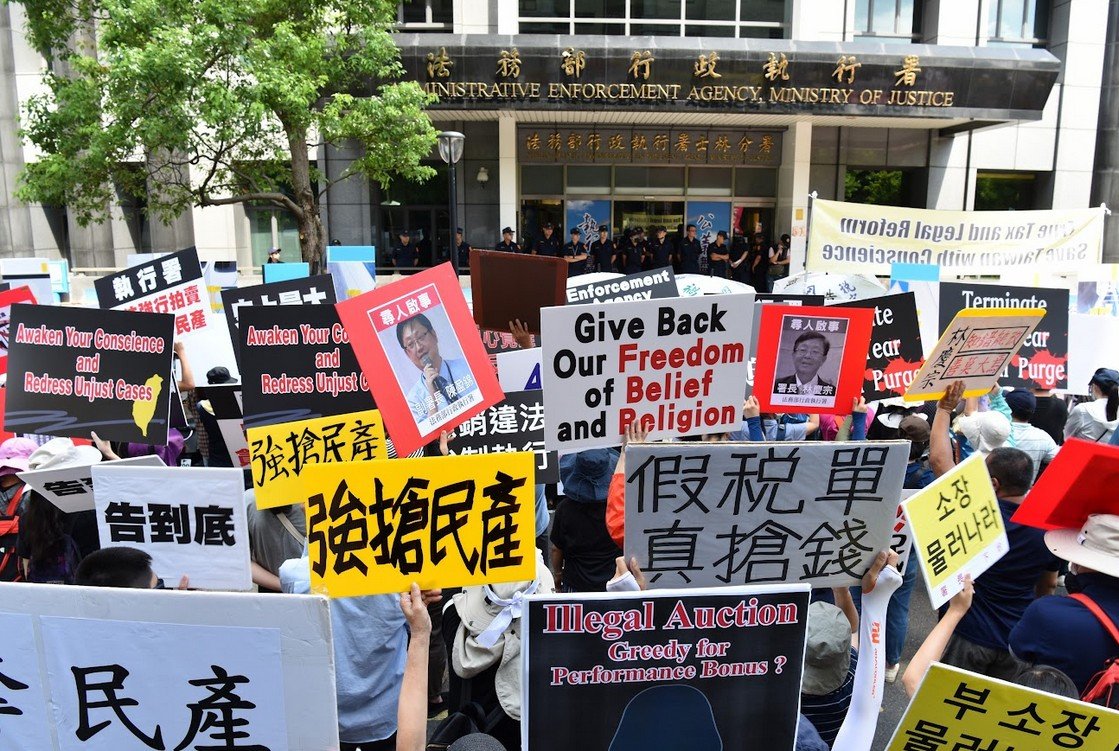
5. Why this is not “just taxes”: the FoRB dimension
A question often raised in cases like this is: Is this really a concern for FoRB, or just taxation?
My response—consistent with the framework of my thesis—is that FoRB is routinely mediated through institutional conditions, and taxation and property control are among the most powerful institutional levers a state possesses. When tax mechanisms are applied in a way that appears uniquely sustained against a specific religious or belief community, and when the effects include seizure of land associated with the community’s life and activities, the issue becomes inseparable from freedom of religion or belief in practice.
In my thesis’ terms, even systems that are not “broad mandatory registration” can still become restrictive if administrative and fiscal rules are used to narrow what a community can do. The movement from unequal treatment toward coercive enforcement is a recognizable escalation pattern.
6. What a social-justice response should look like
Let me end with brief practical implications, framed around the principle I discuss in my thesis: the maximization of rights—the idea that states should structure their recognition and registration systems so that the fullest scope of FoRB can be enjoyed, rather than treated as a privilege conditional on administrative preference.
A social-justice response to cases like Tai Ji Men would include at least four commitments:
Clarity and finality in administrative handling after judicial decisions—so that acquittal and authoritative rulings are not undermined by endless residual enforcement.
Non-discrimination in the fiscal governance of religious or belief communities, including careful scrutiny where enforcement patterns appear exceptional or punitive.
Protection of legal personality and civic space, recognizing that when property and finances are threatened, the community’s ability to exist is threatened.
FoRB literacy within administrations, so that officials understand how seemingly technical decisions can generate real rights violations over time.
Conclusion: Tai Ji Men and the webinar theme
To conclude: the Tai Ji Men case matters beyond Taiwan because it demonstrates a wider truth that my research repeatedly encountered across contexts—registration, recognition, and administrative governance are not neutral. They can facilitate pluralism or become instruments of exclusion.
If social justice is about fair participation in society, then freedom of religion or belief is not a side issue. It is one of the conditions that makes social justice possible. And Tai Ji Men is an important reminder that the struggle for freedom of religion or belief is sometimes waged not only in criminal courts or through overt bans, but through the quieter machinery of administration.
That is why the theme “No Social Justice Without Freedom of Belief” is an accurate diagnosis. When a religious or belief community can be financially and administratively restricted for decades, social justice has not been achieved—regardless of what the formal constitutional language says.

Brandon Reece Taylorian is a Research Fellow at the University of Lancashire in Preston, UK. He completed his PhD in 2025, specializing in freedom of religion or belief, especially the barriers caused by state recognition and registration issues. One of his core research interests is social issues in Britain during the Victorian, Edwardian, and Interwar periods (e.g., access to education, domestic violence, immigration). In religious studies, he specializes in the early histories of Quakerism and Mormonism in England, and on the history of traditionalist Catholicism in Britain, especially the Society of Saint Pius X. His research in these fields has been published in “History of Education,” “Oxford Journal of Law and Religion,” “Nottingham Law Journal,” “The Journal of CESNUR,” and “Journal of Mormon History.”