The World Day of Social Justice is connected for Taiwanese with Peace Memorial Day on February 28. Both call for a solution to the Tai Ji Men case.
Willy Fautré*
*Introduction to the second session of the webinar “No Social Justice Without Freedom of Belief: The Tai Ji Men Case,” co-organized by CESNUR and Human Rights Without Frontiers on February 20, 2026, United Nations World Day of Social Justice.
World Day of Social Justice, February 20, precedes by one week another important date for Taiwan, February 28.
In Taiwan’s calendar, the 28th of February is a landmark day—not because it is a religious holiday, but because it has been designated as the nation’s Peace Memorial Day.
The commemoration of this national Peace Day is not connected to the end of World War II or to an invasion by a foreign power. It marks instead the outbreak of a conflict between Taiwan’s political rulers and their own people.
After 50 years of Japanese colonial rule, the end of the Second World War brought Taiwan under the control of the Kuomintang-led Nationalist government of President Chiang Kai-shek. In 1947, an apparently minor incident ignited the powder keg.
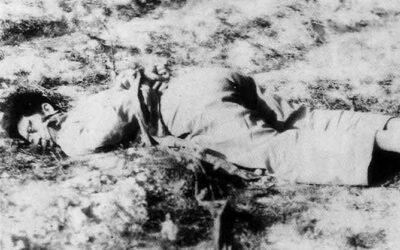
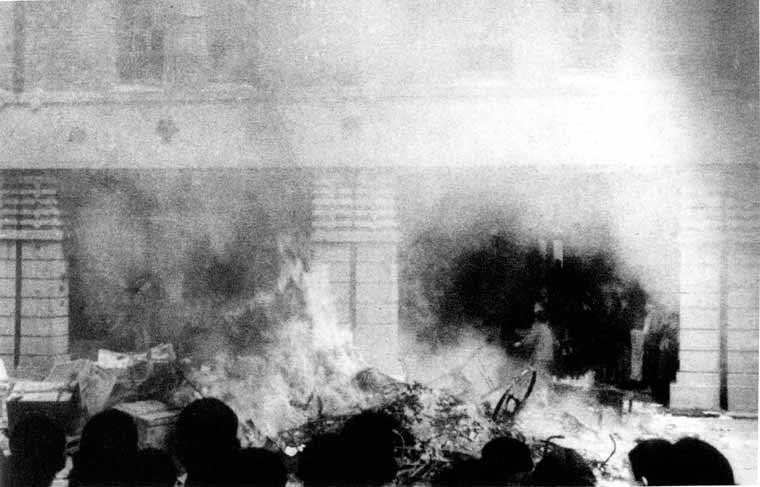
On the evening of 27 February 1947, a Tobacco Monopoly Bureau enforcement team confiscated contraband cigarettes from a 40-year-old widow in a district of Taipei. When she demanded them back, one of the agents struck her with his gun. An angry crowd gathered to defend her. The agents fled, but one fired into the crowd, killing a bystander. For Taiwanese citizens—already overwhelmed by unemployment, inflation, corruption, and frustration with the Nationalist government—this was the breaking point. The revolt spread across the island like wildfire. Within days, martial law was declared, and curfews were imposed.
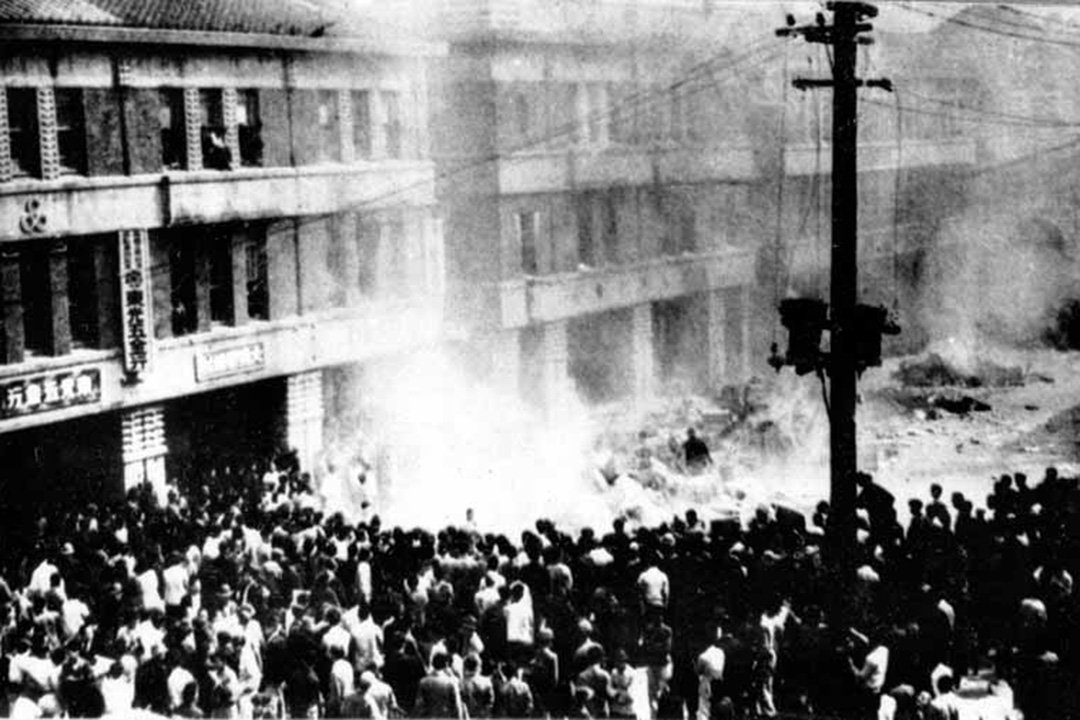
This conflict, born of social injustice, marked the beginning of decades of dictatorship —the period later known as the White Terror.
Under that regime, freedom of religion or belief was not formally banned, but it was tightly controlled and monitored. Sermons and publications were scrutinized. Many people were persecuted not for religious doctrine but for moral criticism of social injustice and for calling for dignity.
State institutions enforced ideological loyalty, making freedom of conscience and belief unsafe.
At that time, if a religious group or leader was perceived as politically threatening, sanctions were immediate: arrests, imprisonment, interrogations under torture, and sometimes executions. Loyalty to the state’s political line was prioritized over individual and collective rights, as well as over social justice. Tai Ji Men remained neutral during those dark years.
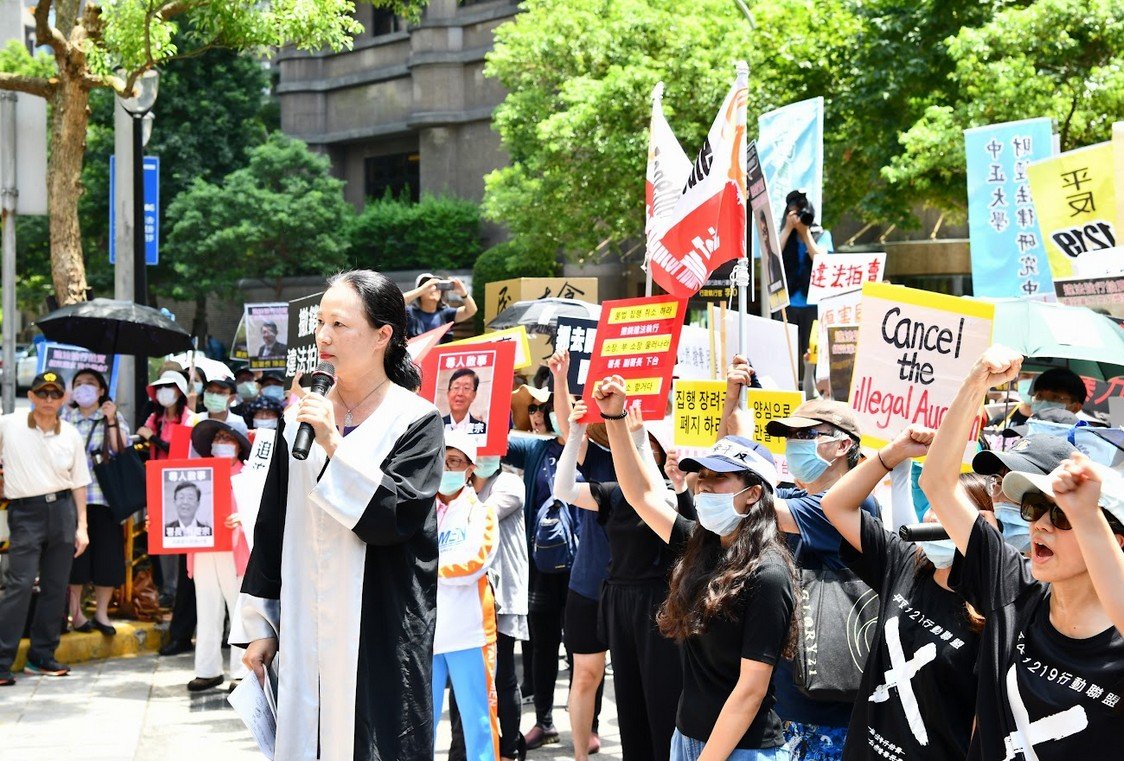
This autocratic political culture did not disappear overnight when democracy began to emerge after nearly 40 years of dictatorship. Despite its political neutrality, Tai Ji Men was persecuted by state institutions and administrations that indiscriminately retaliated against collective entities—religious or not—to preserve the powers and privileges they had inherited from the White Terror era.
Freedom of belief and social justice
The link between freedom of belief and social justice is foundational: societies that protect people’s freedom to believe—or not to believe—are better equipped to achieve fairness, equality, and dignity for all.
Freedom of belief affirms that every person’s conscience has equal value. Social justice depends on this principle. When some beliefs are privileged while others are punished or silenced, inequality becomes embedded in the system.
This idea is reflected in United Nations human rights frameworks, especially the Universal Declaration of Human Rights, which treats freedom of thought, conscience, and religion as universal.
Social injustice often targets groups whose beliefs differ from the majority, including religious or belief minorities. They are frequently vulnerable to discrimination, stigmatization, exclusion from public life, violence, and even coercion.
Tai Ji Men has experienced many forms of social injustice:
Social injustice from the media, which severely damaged its public image.
Social injustice in the abusive arrest and months-long imprisonment of the Shifu, the Shimu, and some close disciples, despite their later acquittal by the Supreme Court.
Social injustice in the way a prosecutor treated them.
Social injustice in the persistent and obstinate misuse of a loophole by the tax administration and judiciary to continue persecuting and prosecuting Tai Ji Men.
This is far from an exhaustive list of injustices. Yet Dr. Hong and Tai Ji Men continue, steadfastly and peacefully, to teach and share their beliefs about conscience and peace for the good of humankind.

Willy Fautré, former chargé de mission at the Cabinet of the Belgian Ministry of Education and at the Belgian Parliament. He is the director of Human Rights Without Frontiers, an NGO based in Brussels that he founded in 1988. His organization defends human rights in general but also the rights of persons belonging to historical religions, non-traditional and new religious movements. It is apolitical and independent from any religion.
He has carried out fact-finding missions on human rights and religious freedom in more than 25 countries He is a lecturer in universities in the field of religious freedom and human rights. He has published many articles in university journals about relations between state and religions. He organizes conferences at the European Parliament, including on freedom of religion or belief in China. For years, he has developed religious freedom advocacy in European institutions, at the OSCE and at the UN.