Scholars and human rights activists honored the day of observance, anticipating the Tai Ji Men case’s entrance into its thirtieth year.
by Daniela Bovolenta
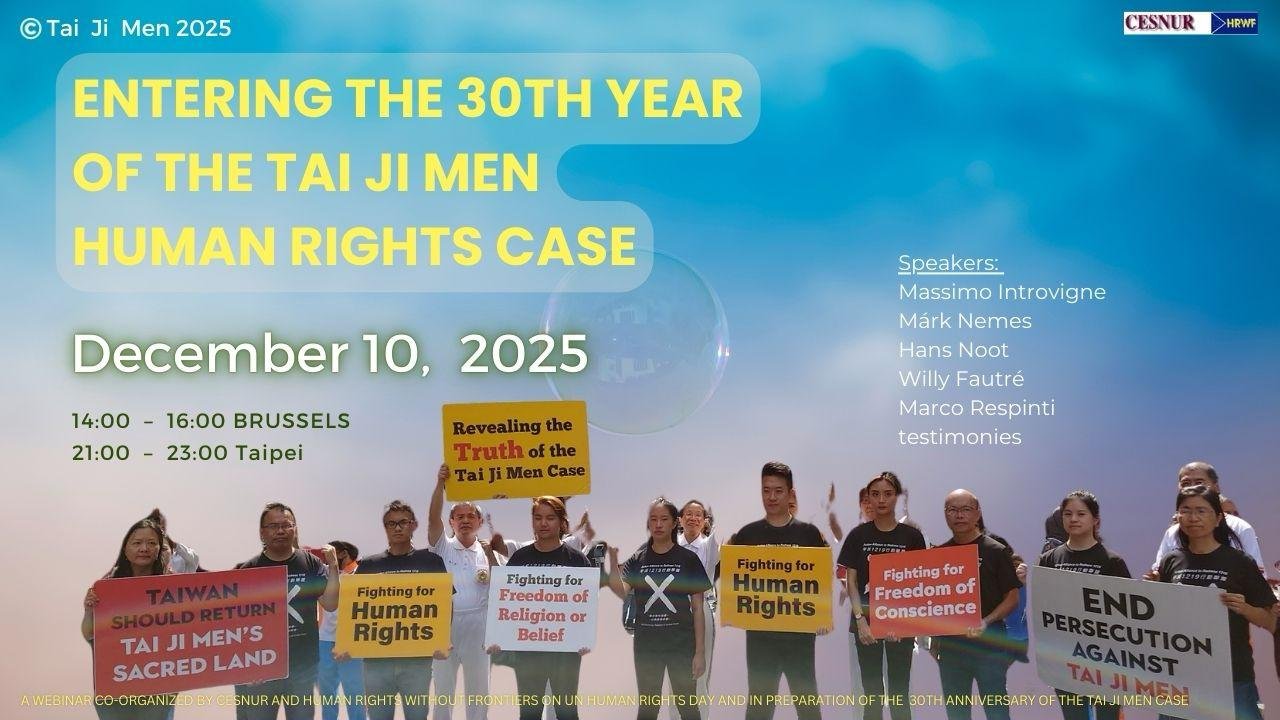
The December 10 webinar “Entering the 30th Year of the Tai Ji Men Human Rights Case,” one of the periodic webinars on the Tai Ji Men case co-organized by the Center for Studies on New Religions (CESNUR) and Human Rights Without Frontiers, opened with Massimo Introvigne, Italian sociologist and managing director of CESNUR.
In his introduction, Introvigne reminded participants that the webinar not only honors Human Rights Day as a commemoration of dignity and freedom but also as a prelude to a singular anniversary: on December 19, the Tai Ji Men case will enter its thirtieth year. He emphasized that this long struggle is not only a demand for justice but also a manifestation of beauty, echoing legal scholar Charilaos Nikolaidis’ notion of the “poetry of rights.” Rights, Introvigne explained, are not merely legal instruments but poetic creations, verses in humanity’s collective poem. For nearly three decades, Tai Ji Men Shifu (Grand Master) and dizi (disciples) have embodied this poetry through resilience, transforming injustice into inspiration and endurance into luminous acts of dignity. Their testimonies, symbols, and persistent protests have become a cultural performance of conscience, resonating with defenders of rights across continents.
Introvigne elaborated that Tai Ji Men’s journey is a rare example of how suffering can be transfigured into meaning. He described their resistance as rhythmic, symbolic, and emotional: the beating of drums, the ringing of the Bell of World Peace and Love, and the quiet strength of disciples refusing despair. This endurance, he argued, is not only a legal struggle but a ritual of resilience that inspires others to imagine justice as something beautiful.
Introvigne also presented a two-part video, prepared for Human Rights Day 2025, before and after the first session. The video explained the Universal Declaration of Human Rights and highlighted the year’s theme, “Human Rights: Our Everyday Essentials,” stressing that rights are not abstract ideals but the foundations of daily life—our food, air, words, opportunities, and protections.

The first session featured Márk Nemes, researcher at the Hungarian Academy of Arts’ Research Institute of Art Theory and Methodology and Deputy Director of CESNUR, and Hans Noot, president of the Dutch Gerard Noodt Foundation for Freedom of Religion or Belief. Nemes examined the 2020 seizure and nationalization of fifty plots of Tai Ji Men’s sacred land in Miaoli, originally intended for a spiritual and educational center. Nemes argued that this land could be understood as a modern “temenos,” a sacred grove akin to those of classical antiquity, spaces ritually separated from the profane world and imbued with spiritual power. He described how the Miaoli site, with its rivers, forests, and bamboo groves, naturally embodied the qualities of such sacred spaces. For Tai Ji Men, it was meant to become a retreat for cultivation and education. The unjust confiscation, Nemes noted, left the ground “intemnéndus”—unseparated and unfulfilled—yet it continues to call to the Tai Ji Men dizi (disciples), who return to practice and sustain their bond with the place.
Nemes further emphasized that sacred spaces are central to the identity of spiritual communities, serving as symbols of resilience and banners under which followers gather. The Miaoli land was destined to become such a place, but its confiscation halted the process of “temnéndus,” the ritual separation of sacred from profane. He explained that while the land remains unbuilt, it still holds spiritual significance, and disciples continue to visit, practice, and gather bamboo, maintaining their connection. Nemes concluded that every spiritual community has the right to designate sacred spaces, and Tai Ji Men’s sacred land should have been preserved as such, free from secular interference. The case, he argued, is not only about property but about the denial of a community’s right to create a spiritual home, a reminder of the unresolved injustice of the Tai Ji Men case.

Hans Noot followed with a paper in which he emphasized that, while the Supreme Court of Taiwan acquitted Tai Ji Men in 2007 and confirmed that the disciples’ red-envelope gifts were non-taxable, the unresolved 1992 tax bill served as a pretext for continued enforcement. This culminated in the 2020 nationalization of Tai Ji Men’s land. Noot argued that such persistence violates due process and fair remedy, exposing how economic rights underpin all other rights. He warned that without property security, communities cannot freely organize, practice their beliefs, or sustain their livelihoods. He also situated the case within a broader pattern of religious suppression in Taiwan after 1996, where taxation and administrative measures were used to control minority spiritual groups.
Noot drew a historical parallel with the Roman “Fiscus Judaicus,” a tax imposed on Jews after the destruction of the Temple in Jerusalem, which transformed voluntary offerings into humiliating obligations and became a tool of identity control. He explained that fiscal measures, when weaponized, can serve as proxies for religious persecution. The Tai Ji Men case, he argued, reflects a similar misuse of taxation, turning administrative practice into a mechanism of suppression. Noot concluded that justice requires not only acquittal but implementation: restitution of confiscated property, cancellation of illegitimate assessments, and safeguards against future abuses. On Human Rights Day, he reminded participants that dignity is indivisible, and a legal victory without enforcement is not yet justice.
The second session was introduced by Willy Fautré, co-founder and director of Human Rights Without Frontiers, who analyzed discriminatory taxation as a subtle but powerful form of persecution. He argued that Taiwan’s failure to redress the Tai Ji Men case after nearly three decades demands at least an official apology. Fautré explained that taxation, when selectively applied, can suppress minority religions without overt violence, creating economic pressure that discourages adherence and undermines communities. He cited historical examples such as the jizya tax on non-Muslims in Islamic polities and discriminatory levies in early modern Europe, showing how fiscal inequality often signaled broader systems of exclusion.
Fautré concluded that discriminatory taxation functions as a socially sanctioned method of persecution, undermining equality under the law. In the case of Tai Ji Men, despite their resilience, the movement has been stigmatized, its reputation damaged, and its honor tarnished. He then presented testimonies from five Tai Ji Men dizi, whose personal stories illustrate the human impact of the case.
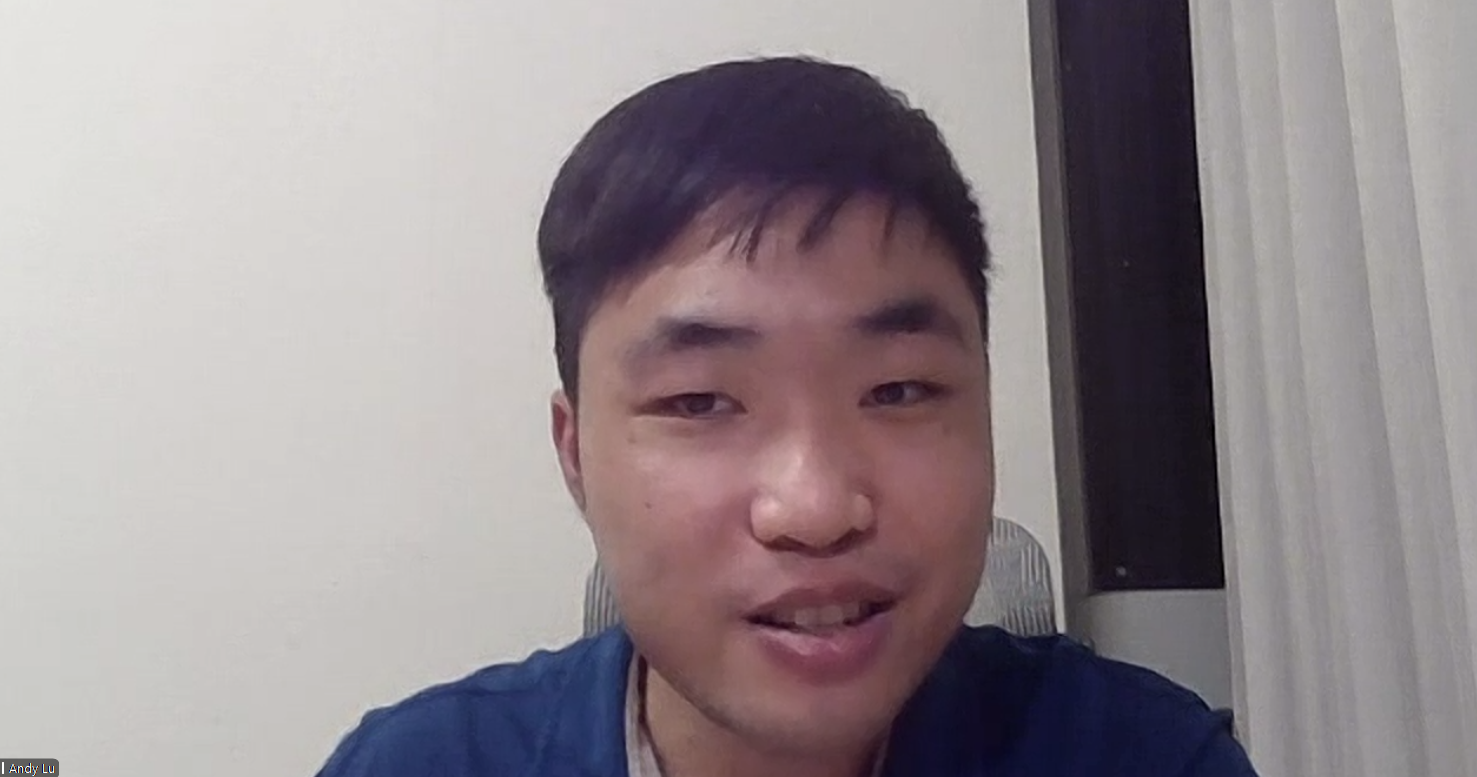
Andy Lu, a resident physician, spoke about how his upbringing in Tai Ji Men reinforced his commitment to the medical oath to respect human rights. He described how the White Coat Ceremony instilled in him the principle of treating all patients equally, regardless of race, religion, or status. This commitment was strengthened by Tai Ji Men’s emphasis on conscience and peace, which he experienced from childhood through participation in human rights education and global initiatives. He lamented that despite Tai Ji Men’s contributions, their rights have been trampled for thirty years, with unlawful tax bills and land nationalization undermining their dignity.
Lu further explained that the Tai Ji Men case exemplifies how state power can violate human rights, even in a democratic context. He recalled the 1996 defamation campaign, when a prosecutor released false information that led to hundreds of stigmatizing media reports affecting tens of thousands of families. Despite the Supreme Court’s ruling of innocence, the National Taxation Bureau continued issuing unlawful bills, culminating in the 2020 seizure of Tai Ji Men’s land. Lu urged the government to uphold human rights and dignity, correct past mistakes, and ensure that universal values are realized in Taiwan.
Linda Chen, a junior high school teacher, spoke of how Tai Ji Men practice taught her that sincerity, kindness, and courage are the essence of human rights. She described how her life as a teacher and mother left her exhausted, but through Tai Ji Men, she found peace and courage. She emphasized that courage is not dramatic but gentle, like Rosa Parks’ refusal to give up her seat, which sparked change. Human rights, she argued, are realized through such quiet acts of conscience.

Chen connected this to the Tai Ji Men case, which she described as a test of democracy and human rights. Despite the Supreme Court’s ruling of innocence, one erroneous tax bill was deliberately kept, leading to the unlawful nationalization of land. She warned that if tax and legal justice are ignored, democracy risks becoming a hollow shell, stripped of substance.
She concluded by stressing that courage, sincerity, and kindness—values taught by Tai Ji Men’s Shifu Dr. Hong—are the proper foundations of human rights. As a teacher, she sees her role as planting seeds of conscience in the next generation, showing students that courage can be gentle yet transformative. She reminded participants that Human Rights Day is not just a commemoration but a call to action: to protect justice, raise voices, and light the way. For Chen, the Tai Ji Men case is a reminder that laws alone cannot protect rights unless officials act with integrity, and that every act of conscience contributes to a brighter future for Taiwan and the world.
Sophia Chen, an elementary school and social science teacher, drew inspiration from Malala’s courage and Rosa Parks’ quiet defiance, linking these examples to the Tai Ji Men case. She explained how she teaches children to reflect on human rights, planting seeds of goodness that can grow into positive social change. She emphasized that domestic violence, rooted in neglect of human rights, shows how violations can occur within families. Still, when the perpetrator is the state, the need for solidarity is even greater. She cited the case of Ms. Wu Pei-Chun, unjustly burdened with tax bills, as an example of state abuse.

Chen connected this to Tai Ji Men, victims of fabricated tax bills and unlawful land nationalization. She explained that despite exhausting all legal remedies, the community could not stop the persecution. As a volunteer for the Alliance for the Redress of the December 19 Incident, she discovered that arbitrary tax bills have harmed countless people, dragging down Taiwan’s economy and eroding trust. Chen concluded that defending tax and legal human rights is everyone’s responsibility, and that society must speak up to prevent further victims.
Karen Huang, an international sales representative, reflected on the risks of bias in AI systems and stressed that conscience and human rights must guide technological progress. She explained how AI recruitment systems can amplify gender and racial disparities, excluding certain groups from opportunities. For her, the Universal Declaration of Human Rights reminds us that dignity and equality are essential in every aspect of life, including technology. She emphasized that international cooperation requires respect for local cultures and laws, and that rapid innovation must be balanced with conscience and human well-being.

Huang connected these reflections to her experience in Tai Ji Men, where she learned Qigong and cultivated resilience. She recalled the persecution of Tai Ji Men in 1996, including the unjust detention of Shifu (Grand Master) and Shimu (Grand Master’s wife), and the freezing of their assets. She described the suffering of disciples and their families, including children left without support. Huang concluded that Human Rights Day is not only about speaking out but also about acting, urging civil servants and citizens alike to uphold their consciences and prevent tragedies like the Tai Ji Men case from recurring.
Kai Jao, a retired manager, offered a systemic perspective in his testimony. He recalled joining Tai Ji Men in 2017 and experiencing the warmth of a spiritual family guided by his Shifu, Dr. Hong Tao-Tze. Through practice, he learned the importance of self-reflection and shifting one’s mindset, finding balance in retirement, and cultivating tolerance. Yet he emphasized that such a benevolent community has been persecuted for nearly thirty years, despite the Supreme Court’s 2007 ruling of innocence and repeated corrections by the Petition Commission. He noted that while five of six tax years were corrected to zero, one unlawful bill was deliberately left in place, leading to the illegal nationalization of Tai Ji Men’s land.
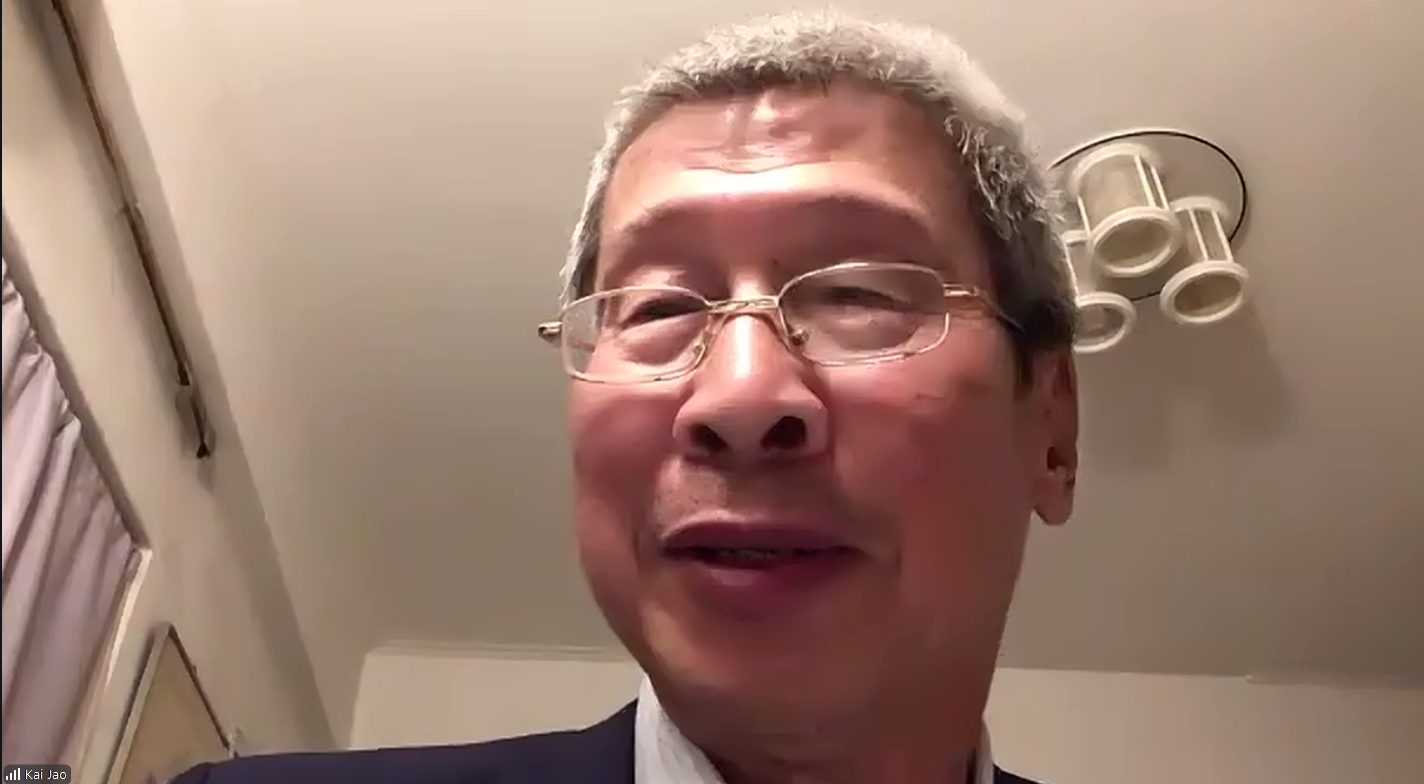
Jao argued that the case illustrates the need for institutional reform. He proposed the creation of an interministerial, impartial investigative commission with binding powers, modeled on international precedents such as Korea’s Truth and Reconciliation Commission and New Zealand’s Waitangi Tribunal. Such a body, composed of experts from the judiciary, finance, human rights, and academia, could review administrative abuse, re-examine disputed decisions, and issue legally binding recommendations. For Jao, the Tai Ji Men case is not only about one community but about the credibility of Taiwan’s democracy. He concluded that acknowledging and correcting mistakes is essential for Taiwan to mature into a truly human rights–based nation.
The webinar concluded with remarks by Marco Respinti, Italian scholar and journalist, director-in-charge of “Bitter Winter.” In his paper, Respinti compared Tai Ji Men’s ordeal to Edmond Dantès’ unjust imprisonment in Alexandre Dumas’ novel “The Count of Monte Cristo.” He noted that while Dantès succumbed to revenge, Tai Ji Men has consistently rejected retaliation, choosing instead endurance, benevolence, and acts of goodness. Thirty years of suffering have been transformed into thirty years of freely given contributions to humanity, a testimony of resilience and moral clarity. Respinti emphasized that Tai Ji Men’s refusal to embrace vengeance is a rare and exemplary response to injustice, showing that evil cannot be corrected by evil and that true justice lies in conscience and generosity.
Respinti concluded that the world must remember not only the thirty years of suffering endured by Tai Ji Men but also the thirty years of good they have freely given. Their resilience is a lesson in resisting the temptation to seek revenge and in turning suffering into inspiration. He affirmed that while time lost can never be restored, Tai Ji Men has ensured that their time of persecution has not been wasted, transforming it into a legacy of peace and conscience.
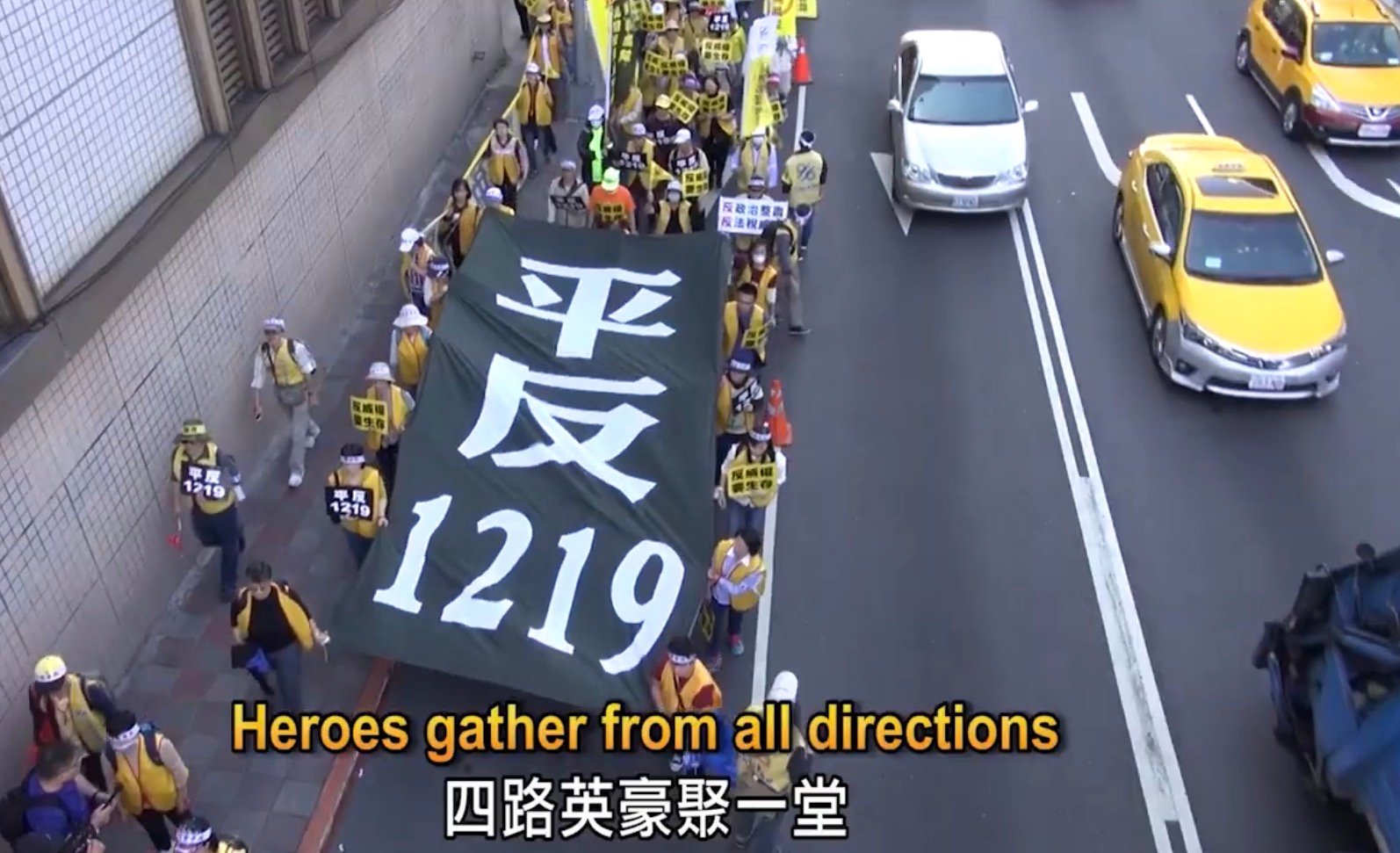
As usual, the webinar ended with a musical video dedicated to the struggle of Tai Ji Men, reminding participants that their protest is not only a demand for justice but also a song of human dignity that continues to inspire worldwide.