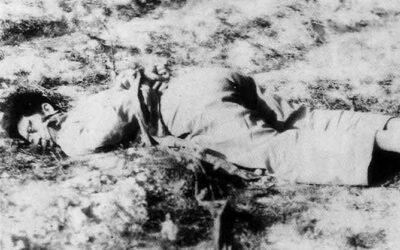
Legal scholar and poet Charilaos Nikolaidis argues that human rights embody beauty, not justice only. Tai Ji Men Shifu and dizi offer a living example of this beauty.
by Massimo Introvigne*
*Introduction to the webinar “Entering the 30th Year of the Tai Ji Men Human Rights Case,” co-organized by CESNUR and Human Rights Without Frontiers on December 10, 2025, UN Human Rights Day, and in preparation for entering the 30th year of the Tai Ji Men case.

On December 10, the world pauses to honor Human Rights Day. It is a day when the language of dignity and freedom is spoken in every corner of the globe, a day when we remember that rights are living commitments for each of us. They are written into the daily struggles of ordinary people who refuse to bow to injustice. And it is on this day that we also prepare a singular anniversary: twenty-nine years since Tai Ji Men began a journey of protest and resilience that has become both a cry for justice and a work of beauty.
Yes: beauty. For nearly three decades, Tai Ji Men has stood as a testament to the idea that resistance can be beautiful. Their protest has not been a mere reaction to injustice, but a sustained performance of conscience, a choreography of dignity, a poem written in persistence. To watch the dizi (disciples) and their Shifu (Grand Master) carry forward their cause is to witness something rare: the transformation of suffering into inspiration, of endurance into beauty. Their journey created meaning, turning resistance into a luminous act that inspired defenders of human rights across the world.
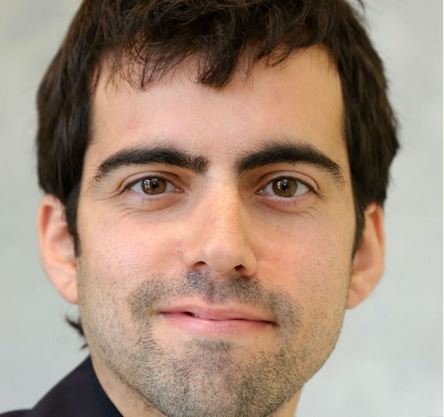
In a now-well-known 2022 article, legal scholar and poet Charilaos Nikolaidis has argued that rights are not only legal instruments but also poetic creations. In his theory of the “poetry of rights,” he reminds us that rights possess aesthetic, emotional, and symbolic qualities. They are more than clauses in a statute or articles in a treaty; they are verses in humanity’s collective poem. Rights inspire, resonate, and move us beyond the technicalities of law into the realm of imagination. They allow us to envision justice as duty and dream, as enforcement and beauty. Rights, Nikolaidis suggests, are powerful because they are both rational and emotional, both functional and symbolic. They carry the power to inspire, mobilize, and transform.
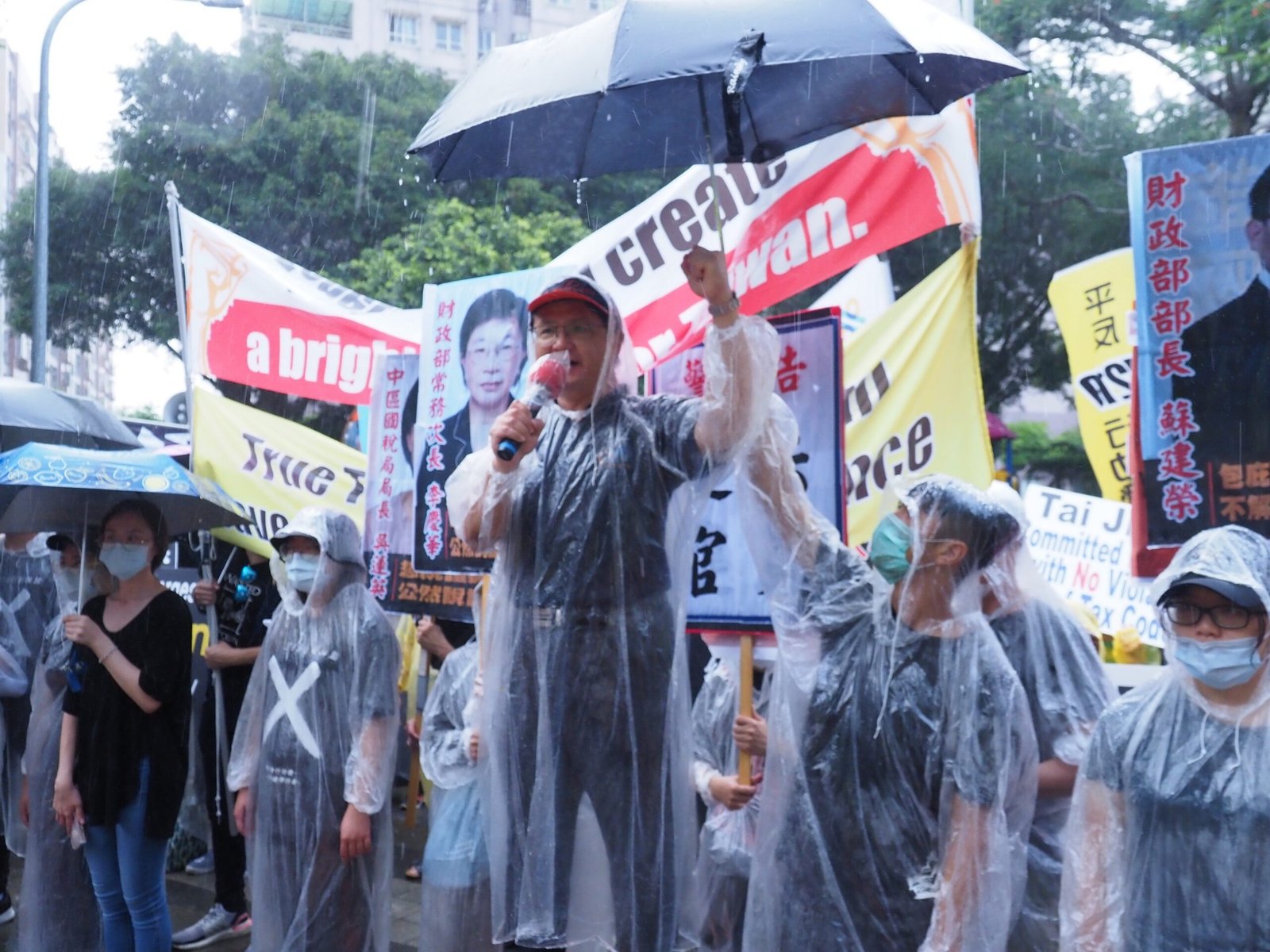
Tai Ji Men’s struggle embodies this poetry. For twenty-nine years, their resilience has been a refrain repeated across time, a stanza that insists dignity cannot be extinguished. Their protest has been rhythmic, like the beating of a drum; symbolic, like the ringing of their Bell of World Peace and Love; emotional, in the quiet strength of disciples who refuse despair. In their endurance, we see the poetry of rights made flesh: the capacity of human beings to turn injustice into inspiration, to transform resistance into a song that echoes across borders.
This is why their journey, as we have recently seen at the CESNUR 2025 conference in Cape Town, South Africa, has inspired defenders of human rights around the world. It is not only the facts of their case that matter, but the beauty of their persistence. Their example reminds us that rights are not given once and for all; they must be lived, defended, and imagined anew. And in that living, defending, imagining, there is poetry. Their resilience is not only a demand for justice—it is a gift to humanity, a reminder that the poetry of rights is alive, and that beauty can be found in steadfast pursuit of truth.
Consider the symbolism of twenty-nine years. It is nearly three decades of endurance, a generation of disciples who have grown up under the shadow of injustice yet chosen to respond with light. It is the rhythm of anniversaries, each year marked not by defeat but by renewed commitment. It is the repetition of a refrain that refuses to fade, a chorus that insists that justice must be done. In this way, their protest becomes a legal struggle and a cultural performance, a ritual of resilience that inspires others to imagine justice as something beautiful.
The poetry of rights, as Nikolaidis reminds us, lies in their ability to inspire and to resonate. Tai Ji Men’s journey has precisely done that. It has inspired defenders of rights in Asia, Europe, and the Americas, who have regularly participated in our webinars and sessions on the Tai Ji Men case at conferences around the world. It has resonated with those who see in their struggle a mirror of their own. It has become a symbol of the universal truth that rights are not only about law but about life, not only about enforcement but about imagination. Their resilience is a reminder that rights—as I mentioned earlier—are beautiful because they are lived, defended, and imagined anew.
On this Human Rights Day, we therefore express gratitude. Gratitude to the Tai Ji Men dizi, whose devotion has carried this cause with dignity and grace. Gratitude to Shifu, whose guidance has turned resilience into art and the most powerful statement of justice. Gratitude for twenty-nine years of endurance that have inspired countless defenders of rights worldwide.
Your struggle, your demand for justice, is a gift to humanity. It is a reminder that the poetry of rights is alive, that beauty can be found in the steadfast pursuit of truth, and that even in the face of injustice, human beings can create something luminous.
Today, we honor you. Today, we celebrate not only Human Rights Day but the poetry of resilience that Tai Ji Men has given the world. Your protest is a poem, your endurance a verse, your resilience a chorus. And in that chorus, we hear the universal song of human dignity, a song that will continue to inspire us until justice is done.

Massimo Introvigne (born June 14, 1955 in Rome) is an Italian sociologist of religions. He is the founder and managing director of the Center for Studies on New Religions (CESNUR), an international network of scholars who study new religious movements. Introvigne is the author of some 70 books and more than 100 articles in the field of sociology of religion. He was the main author of the Enciclopedia delle religioni in Italia (Encyclopedia of Religions in Italy). He is a member of the editorial board for the Interdisciplinary Journal of Research on Religion and of the executive board of University of California Press’ Nova Religio. From January 5 to December 31, 2011, he has served as the “Representative on combating racism, xenophobia and discrimination, with a special focus on discrimination against Christians and members of other religions” of the Organization for Security and Co-operation in Europe (OSCE). From 2012 to 2015 he served as chairperson of the Observatory of Religious Liberty, instituted by the Italian Ministry of Foreign Affairs in order to monitor problems of religious liberty on a worldwide scale.