A new report analyzes 30 major countries of the world, concluding that, under Xi Jinping, the campaign to influence the media is constantly accelerating with devastating effects.
by Marco Respinti
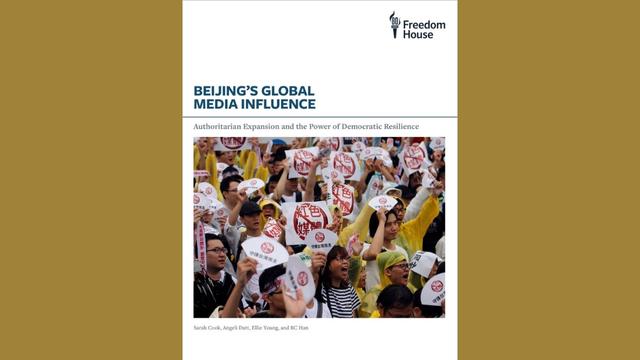
The Beijing’s Global Media Influence (BGMI) 2022 report is a major effort by respected international NGO Freedom House to trace, track, and document how the CCP and its agencies use newspapers, online news services, and TV networks to affect public decision-making. The research, published on September 8, has been coordinated by Sarah Cook, Research Director for China, Hong Kong, and Taiwan at Freedom House, and provides documentary evidence of how “the CCP devotes billions of dollars a year to its foreign propaganda and censorship efforts.”
Table of Contents
Evaluating influence and response: the methodology
The methodology implied in the report is quite accurate. It was “created by Freedom House in consultation with international experts on media freedom and regulation, CCP foreign influence, disinformation, the Chinese diaspora, and the regions of the world under study.” While examining “direct responses to CCP media influence in each country under review,” to evaluate “its underlying resilience or vulnerability to problematic influence or manipulation efforts emanating from Beijing,” the report considers also “laws and practices that protect press freedom, the extent of critical and diverse news coverage related to China and Chinese investment in the local economy, and both generic and China-specific initiatives by governments and civil society to counter disinformation, screen investments in media and digital industries, enhance transparency, and protect press freedom and freedom of expression.”
The report highlights five main CCP strategies: propaganda and promotion of preferred narratives, open disinformation campaigns, censorship and intimidation, control over content-distribution infrastructure, and dissemination of CCP norms and governance models.
The Freedom House analysts came to their conclusions through a 150-item questionnaire, divided into two main categories. The first is Beijing’s media influence efforts. The ratings used in the report are labelled “low” if results range 0-29 points, “notable” if 30-35, “high” if 36-45, and “very high” for 46 or above. The second category of results is the resilience and response displayed by each of the countries analyzed. This is evaluated through a second group of 65 questions, among which some “that account for problematic forms of pushback, which may have the effect of limiting CCP influence but which also infringe on freedom of information rights or well-being of members of the local Chinese diaspora.”
30 countries scrutinized
The report analyzes the situation of 30 countries, examined one by one. They were selected based on “a study not only of Beijing’s influence efforts but also of the response and impact in democratic settings” and other criteria, among which the nature of their bilateral relations with China, membership or not in the Belt and Road Initiative, and being China’s trading partners or sources of investment. The 30 countries are Argentina, Australia, Brazil, Chile, Colombia, France, Ghana, India, Indonesia, Israel, Italy, Kenya, Kuwait, Malaysia, Mexico, Mozambique, Nigeria, Panama, Peru, Philippines, Poland, Romania, Senegal, South Africa, Spain, Sri Lanka, Taiwan, Tunisia, the United Kingdom, and the United States.
Major Western powers are included (Australia, France, the UK, and the US), as well as countries of both local and international relevance (Taiwan and India). The high number of African countries included documents the impressive outreach that the Chinese regime plans since years, amounting, in some parts of the Black Continent, to a real new colonization. One may then wonder whether the number of South American countries included in the selection has to do with the dissemination, in the whole Latin American continent, of the ideological influences from non-democratic regimes that systematically violate religious liberty and persecute human rights as Venezuela and Nicaragua. They are in fact tied to the Chinese regime, for both ideological and economic reasons, while the Venezuelan/Nicaraguan wind is increasingly blowing over a number of parties, and possibly government agencies, through all the Ibero-American area.
The results
The countries where the CCP influence in media is assessed as “very high” in the report are Nigeria, the UK, the US, and Taiwan. Except for Taiwan, the fact that most of these countries’ media are published in English, that is to say read at an international level, helps explain why. Language is in fact one of the key criteria used in the report. The strategic international role played by the UK, the US, and Taiwan, as well as the amount of anti-CCP criticism there, also justify the ideological and economic investment by the Chinese regime to influence public opinions in these countries. No wonder that Australia, Taiwan, the UK, and the US count, the report says, for “a recent turn to more aggressive, confrontational, or surreptitious tactics as milder influence efforts fail to achieve the desired results. This trend is likely to expand to additional countries in the coming years.”
The Freedom House report also rates “high” the CCP influence on media of Argentina, Australia, Chile, France, Indonesia, Italy (a case study of international relevance), Kenya, Malaysia, Peru, the Philippines, South Africa, and Spain.
As to resilience/ response, almost all 30 countries reveal a level equal to influence they are subjected to. If the CCP’s influence in their media is assessed based on the score respectively as “very high,” “high,” “notable,” or “low,” so is their resilience/response. A few exceptions are noteworthy. Some countries where Chinese influence is “very high,” “high,” or “notable” show a level of resilience/response higher than influence. They are Australia, Brazil, France, Poland, South Africa, and Tunisia. In turn, Israel and Colombia, while subject to a low level of influence, score better or far better in resilience/response (Israel better than Colombia).
What is instead worrisome are countries which show an inferior level of resilience/response compared to the level of CCP’s influence. These are Argentina, Kenya, Kuwait, Malaysia, Mozambique, Nigeria, Panama, Peru, Senegal, and Sri Lanka. It indicates a less independent press in general, or a lesser general awareness of the Chinese maneuvers within the media, as well as a lack of substantial maturity in the civil society.
Accelerating massive campaigns
The data analyzed leads the report to conclude that “[t]he Chinese government, under the leadership of President Xi Jinping, is accelerating a massive campaign to influence media outlets and news consumers around the world. While some aspects of this effort use the tools of traditional public diplomacy, many others are covert, coercive, and potentially corrupt. A growing number of countries have demonstrated considerable resistance in recent years, but Beijing’s tactics are simultaneously becoming more sophisticated, more aggressive, and harder to detect.”
The effort of the regime “include both promotion of preferred narratives—about China, its regime, or its foreign policy priorities—and more aggressive attempts to marginalize, discredit, or entirely suppress any anti-CCP voices, incisive political commentary, or media exposés that present the Chinese government and its leaders in a negative light.”
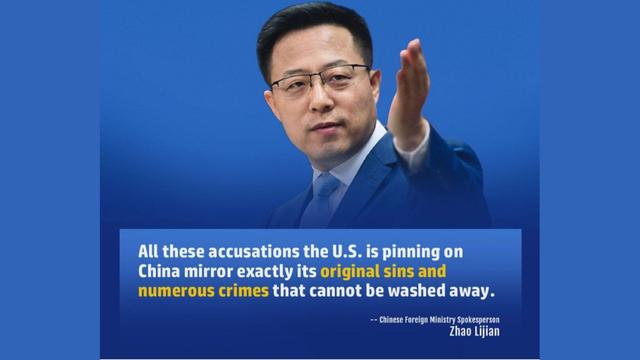
But the study identifies even “more problematic types of messaging. In every country, Chinese diplomats or state media outlets openly promoted falsehoods or misleading content to news consumers—on topics including the origins of COVID-19, the efficacy of certain vaccines, and prodemocracy protests in Hong Kong—in an apparent attempt to confuse foreign audiences and deflect criticism. Moreover, there was a concerted effort to whitewash and deny the human rights atrocities and violations of international law being committed against members of ethnic and religious minority groups in Xinjiang. Lastly, Chinese state-affiliated actors adopted stridently anti-American or anti-Western messaging to rebuff local concerns about Chinese state-linked activities, including those related to investment projects, opaque loans, or military expansionism, by attributing such concerns to a ‘Cold War mentality’ or a misguided US-led attempt to ‘contain China.’”
Still roaming in unguarded prairies
“[E]vidence of democratic pushback against Beijing’s influence efforts proliferated during this report’s three-year coverage period,” but it is not enough. Yes, “[a]cross all of the countries under study, journalists, commentators, civic groups, regulators, technology firms, and policymakers have taken steps that reduced the impact of the CCP’s activities. In most countries, local media and civil society have been at the forefront of the response.” Still, Beijing’s media influence projects “have achieved results with regard to limiting critical original reporting and commentary on China in many countries, establishing dominance over Chinese-language media, and building a foundation for further manipulation.”
Especially disturbing is the fact that, “[f]aced with implicit or explicit threats of lost advertising, reduced access to China or Chinese diplomats, harm to relatives residing in China, or damage to bilateral relations, journalists and commentators in 18 countries in this study reportedly engaged in self-censorship or more cautious reporting on topics that are likely to anger the Chinese government.”
In fact, the report concludes, the Chinese government has expanded its global media footprint. Recently, the CCP and its proxies’ tactics became more sophisticated and coercive in imposing their version of reality and in suppressing critical reporting. This is twinned by general “inadequate government responses [that] leave countries vulnerable or exacerbate the problem,” Freedom House notes, and “democracies’ ability to counter CCP media influence is alarmingly uneven.” Long-term democratic resilience “will require a coordinated response,” but this is not yet in sight.
So far, the public denunciation of its unashamed strategies for fabricating and imposing fake news notwithstanding, the CCP still roams freely in the unguarded and unprotected prairies of world information.

Marco Respinti is an Italian professional journalist, member of the International Federation of Journalists (IFJ), author, translator, and lecturer. He has contributed and contributes to several journals and magazines both in print and online, both in Italy and abroad. Author of books and chapter in books, he has translated and/or edited works by, among others, Edmund Burke, Charles Dickens, T.S. Eliot, Russell Kirk, J.R.R. Tolkien, Régine Pernoud and Gustave Thibon. A Senior fellow at the Russell Kirk Center for Cultural Renewal (a non-partisan, non-profit U.S. educational organization based in Mecosta, Michigan), he is also a founding member as well as a member of the Advisory Council of the Center for European Renewal (a non-profit, non-partisan pan-European educational organization based in The Hague, The Netherlands). A member of the Advisory Council of the European Federation for Freedom of Belief, in December 2022, the Universal Peace Federation bestowed on him, among others, the title of Ambassador of Peace. From February 2018 to December 2022, he has been the Editor-in-Chief of International Family News. He serves as Director-in-Charge of the academic publication The Journal of CESNUR and Bitter Winter: A Magazine on Religious Liberty and Human Rights.