Eyewitness accounts and appeals from the January 9 “Fasting Prayer Meeting for Persecuting Churches in China.”
by Feng Reng
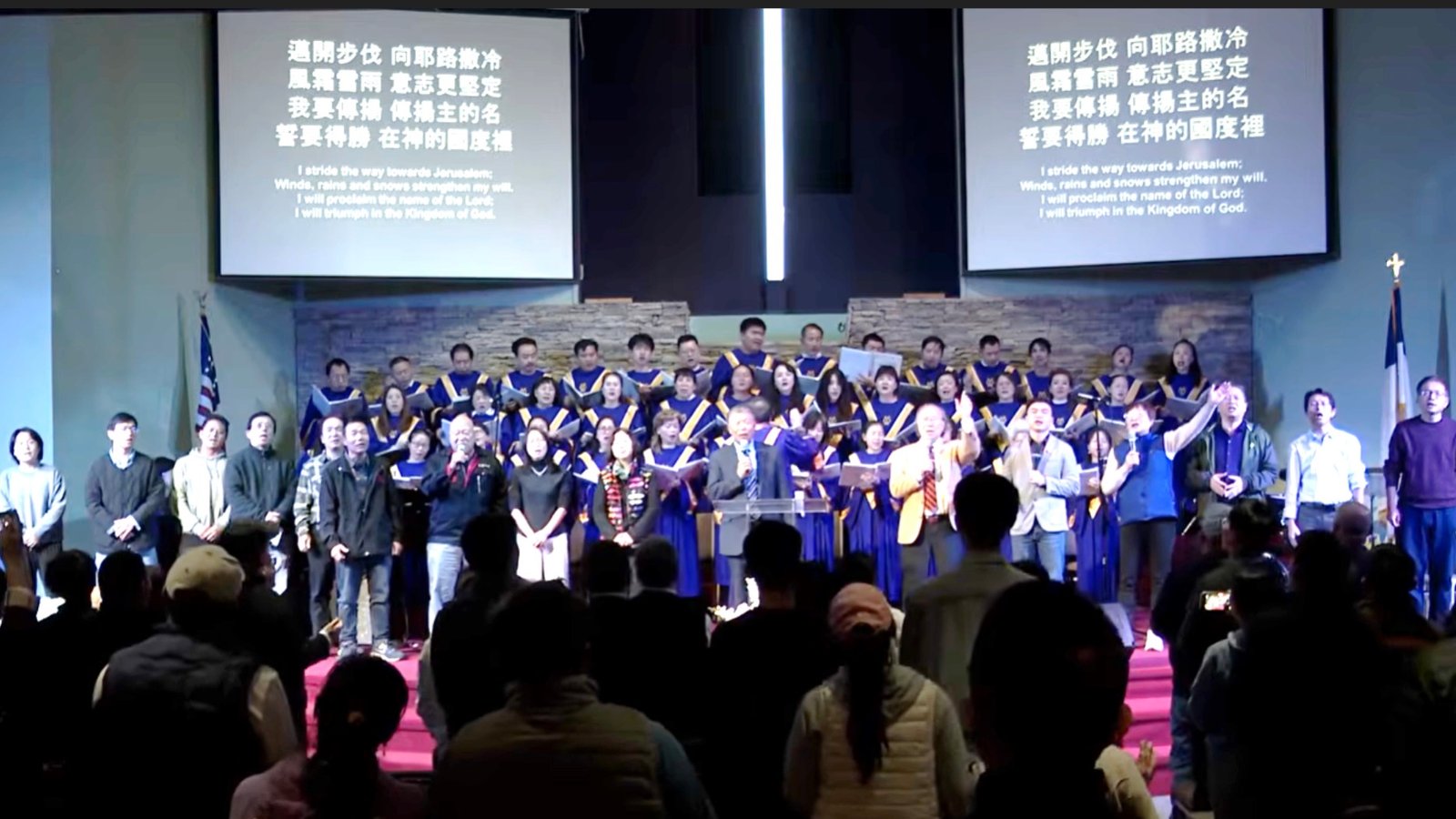
On the evening of January 9, I attended the “Fasting Prayer Meeting for Persecuted Churches in China” at Harvest Chinese Christian Church in Los Angeles. As a choir member, I stood on stage throughout the gathering, witnessing how hymns, prayers, messages, and testimonies intertwined. They transformed the familiar scripture, “Remember those in prison,” into an inescapable, urgent call to action.
For me, this gathering was far more than a mere “commemorative event.” It felt like a public spiritual roll call: as China’s house churches and believers endure relentless suppression, silencing, forced relocation, and detention, overseas churches that continue to “keep quiet” as a cautious measure risk becoming—unwittingly—the most exploitable link in the persecution system: the silent link. Commemoration is not sentimental sympathy, but standing firm at cost; prayer is not retreating into private spheres, but the church’s spiritual warfare against darkness.
A service dedicated to “the persecuted” was held at 1951 S. Mountain Ave, Ontario, CA 91762, with simultaneous access via Zoom and YouTube. The entire process was not a “generic prayer,” but rather a “testimonial structure” composed of factual sharing, witness narratives, and collective intercession: first laying out specific situations, then bringing people before God.
As I sang hymns on stage, one phrase echoed continuously in my mind: “If one member suffers, all members suffer together.” This is not a slogan, but the fundamental logic of the church as the body of Christ. Persecution is not “their problem,” but “our shared wound.”
That evening’s gathering resonated with an initiative text proposing to establish January 9 as “China Religious Freedom Day” and to designate the 9th of every month as a “Day of Fasting and Prayer for Persecuted Churches in China.” The choice of the “9th” is not merely a symbolic preference but stems from the fact that over the past decade, multiple major persecution events have repeatedly occurred on the 9th of the month, forming a clear and heavy timeline.
The initiative document outlines several key “9th” milestones:
• April 9, 2011: The Beijing Shouwang Church incident began, with prolonged outdoor worship and sustained suppression becoming a landmark case.
• July 9, 2015: The July 9 Crackdown on Rights Lawyers (involving multiple Christian attorneys and cases related to religious persecution).
• December 9, 2015: The Guiyang Living Stone Church case in Guizhou.
• January 9, 2018: The Linfen Golden Lampstand Church incident (church building demolished).
• September 9, 2018: Beijing Zion Church incident.
• December 9, 2018: Chengdu Early Rain Covenant Church incident.
• October 9, 2025: Zion Church faces renewed major crackdown, drawing sustained international and global church attention.
This sequence of dates pulls “religious freedom” from constitutional text back into the reality of conflict. When a regime can repeatedly target the same form of worship and assembly across different cities and years using strikingly similar methods, “religious freedom” ceases to be a guaranteed right and instead resembles a license that can be revoked at any moment.
What struck me most that evening was not merely our overseas intercession for them, but the presence of numerous pastors, pastors’ wives, and co-workers from persecuted churches across China who shared their experiences firsthand. They transformed this prayer meeting from an abstract “imagination of the intercession recipients” into a face-to-face encounter where we listened to the accounts and spiritual responses of those directly involved.
1. Beijing Zion Church: Pastor’s Wife Anna Liu, Pastor Jiang’en Long, and Co-workers
Pastor’s wife Anna Liu from Beijing Zion Church shared live that evening. They avoided inflammatory rhetoric to stir emotions, instead clearly presenting the realities churches endure under high-pressure environments: shrinking meeting spaces, restrictions on workers, intimidation of members, and family disruptions. They also testified that believers mutually support one another in trials, steadfastly maintaining their worship and prayer lives, refusing to let fear steal their faithfulness to Christ.
Pastor Long Jiang’en specifically addressed “freedom.” The freedom he spoke of was not external permission or political sloganeering, but a more profound, more spiritual truth that terrifies persecutors: though believers may lose meeting spaces, forms of assembly, or even physical freedom, their loyalty to truth and their right to worship God can never be taken away. He reminded us: When power seeks to silence faith and imprison conscience in fear, the church must discern more clearly—we pursue not “cowardly safety,” but the unbound spirit in Christ. External systems may constrain such freedom, yet it cannot be extracted from the human heart.
I particularly sensed a “restrained resolve.” Those who have weathered storms often recount suffering without exaggeration; they convey reality more authentically with fewer words. This calmness struck me like a sledgehammer—awakening those of us in free lands who still habitually self-censor. We possess spaces for open assembly, yet often “lock ourselves up” internally first; whereas, under intense pressure, they grasp more clearly what true freedom is.
2. Chengdu Early Rain Covenant Church: Brother Wang Ge
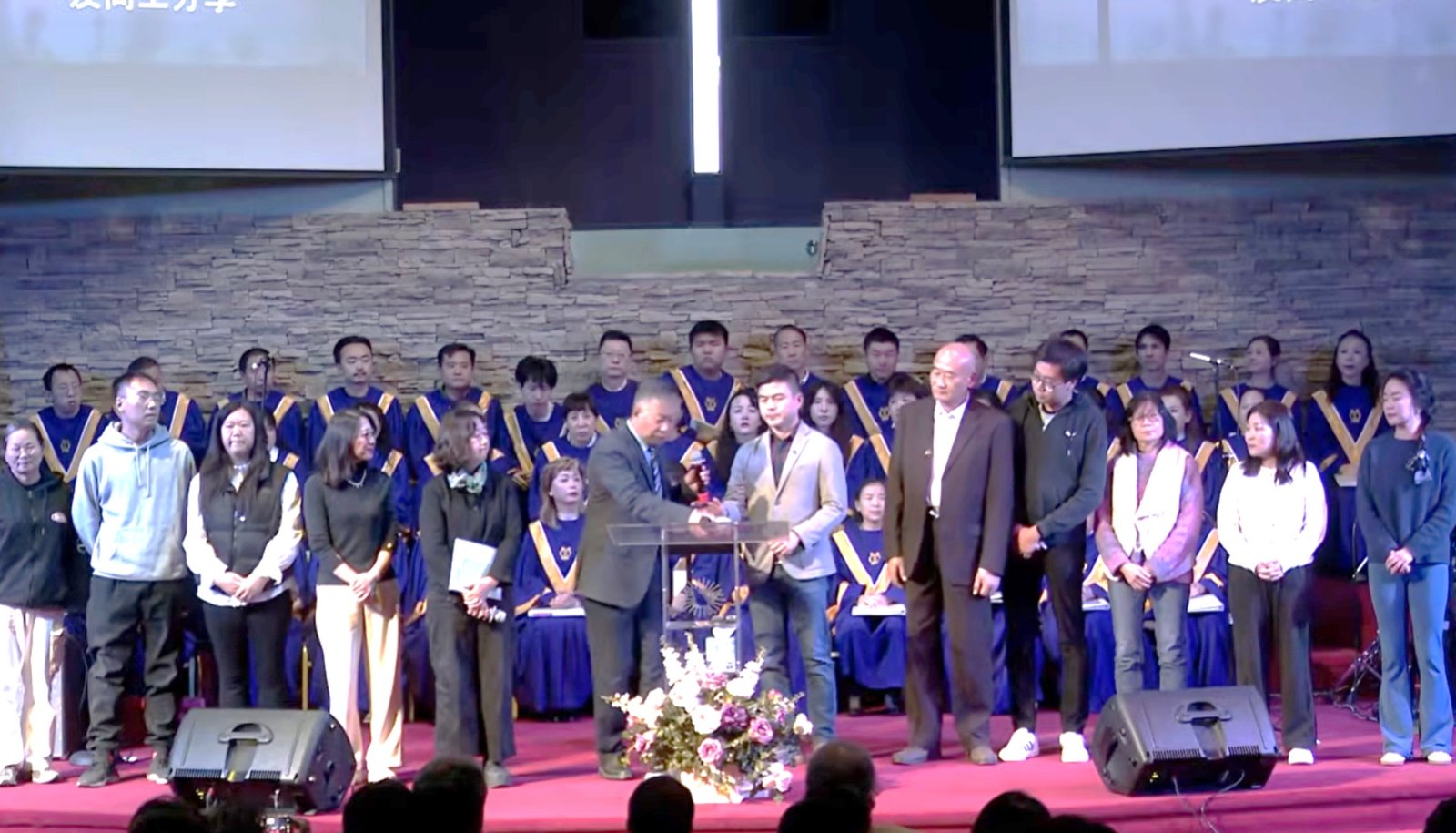
On-site report from Brother Wang Ge of Chengdu Autumn Rain Covenant Church: On January 6, 2026, the church and its members faced large-scale persecution, including home raids, restrictions on personal freedom, home surveillance, and loss of contact. Members taken away or restricted include: Elder Li Yingqiang, Pastor Dai Zhichao, Brother Ye Fenghua, and Pastor Zhang Xinyue with her two children (The pastor’s wife was taken away; the two children were taken to the police station and spent the night there before being temporarily placed with their grandmother). It was also mentioned that some members who were taken away have since returned home. Still, Deputy Deacon Jia Xuewei and another brother, whose name has not yet been disclosed, remain unaccounted for.
Their accounts made it clearer to me: Early Rain Church faces not a one-time arrest or dispersal, but a structured, long-term squeeze—turning public gatherings into high-risk activities, regular pastoral care into “potentially criminal” acts, and dragging the daily lives of brothers and sisters into prolonged uncertainty and fear.
I deeply realize: the most insidious aspect of persecution isn’t a single “disruption,” but the gradual fragmentation of people’s lives—leaving them exhausted, scattered, doubting, and retreating—forcing faith to slowly withdraw from public expression until it can only be “hidden in the heart.”
3. Guizhou Living Stone Church: Ministry Testimonies and Practical Needs
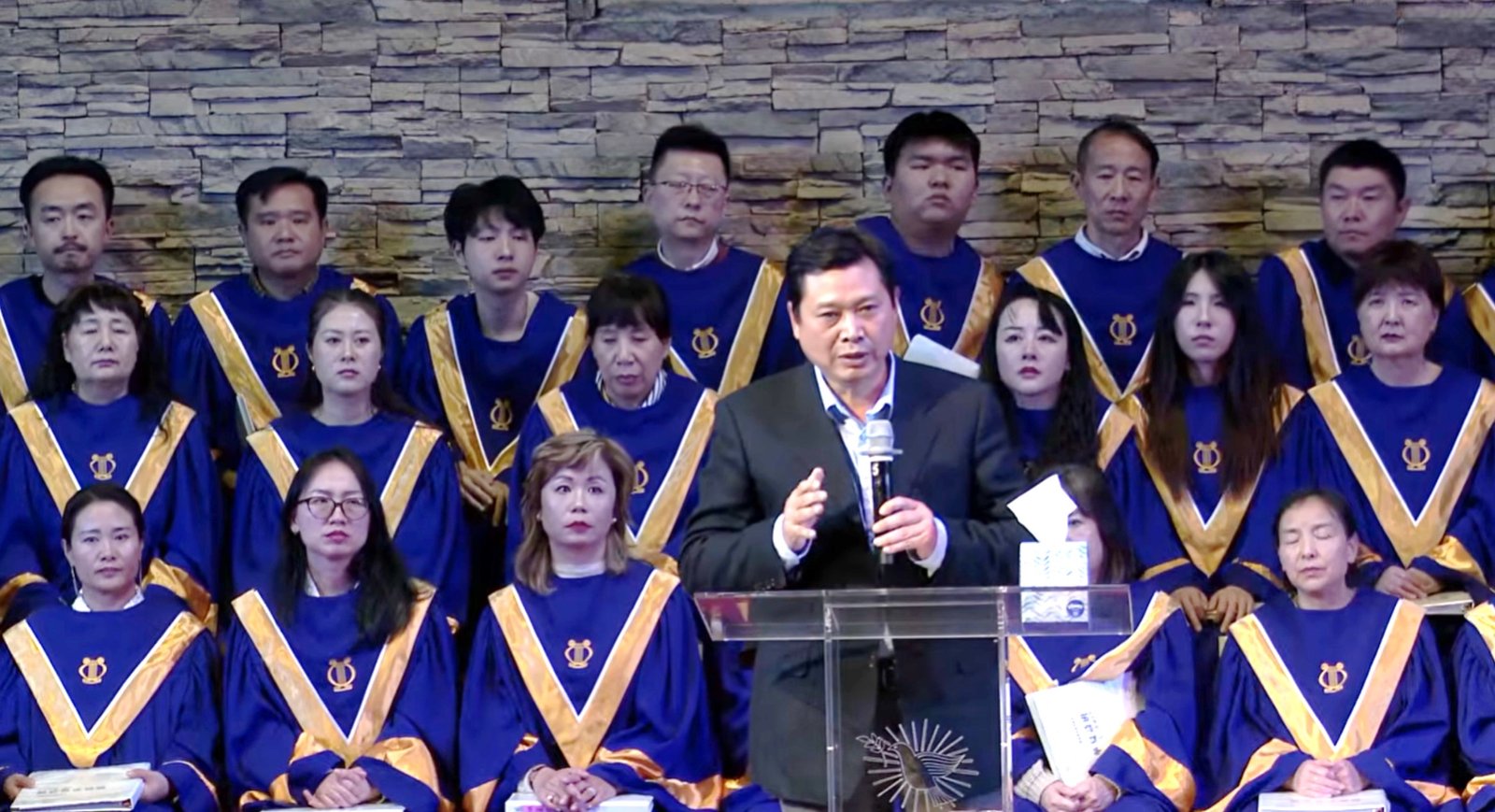
That evening also featured sharing from ministry workers at Guiyang Living Stone Church in Guizhou. They reflected on the long-term impact of the church case against Living Stone Church, focusing their intercessory prayers on concrete, tangible realities: the living conditions of ministry workers and their families, the needs of fellow believers, the pressures faced by children and the elderly, and how to continue pastoral care and mutual support after the church was forced to disperse.
Such testimonies brought “persecution” back from grand narratives to the family level: not abstract “persecution of a church,” but real people enduring the pain of relocation, unemployment, disrupted children’s education, and implicated relatives.
4. Shouwang Church, Golden Lampstand Church, Wenzhou, and Home Church Workers Nationwide
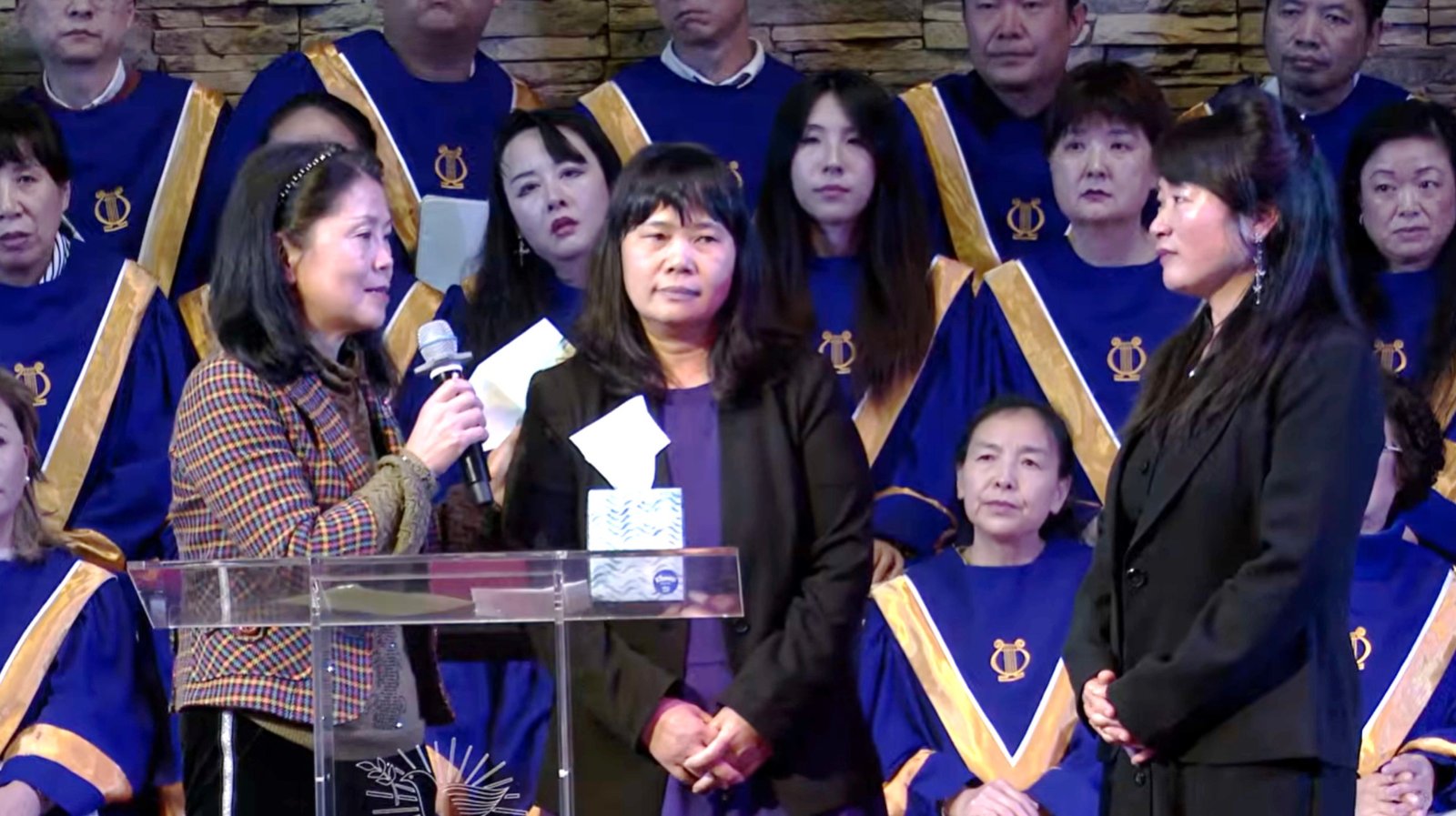
Additionally, the event featured testimonies from workers of Shouwang Church, Golden Lampstand Church in Wenzhou, and home churches across other regions. Their collective picture was consistent: though persecution manifests differently in various areas, the underlying logic remains similar—squeezing spaces, restricting pastors, intimidating believers, controlling families and employment, and tightening online and information dissemination. As these voices from different cities converged that night, I became acutely aware: this is not a collection of isolated incidents, but the systematic operation of a mechanism.
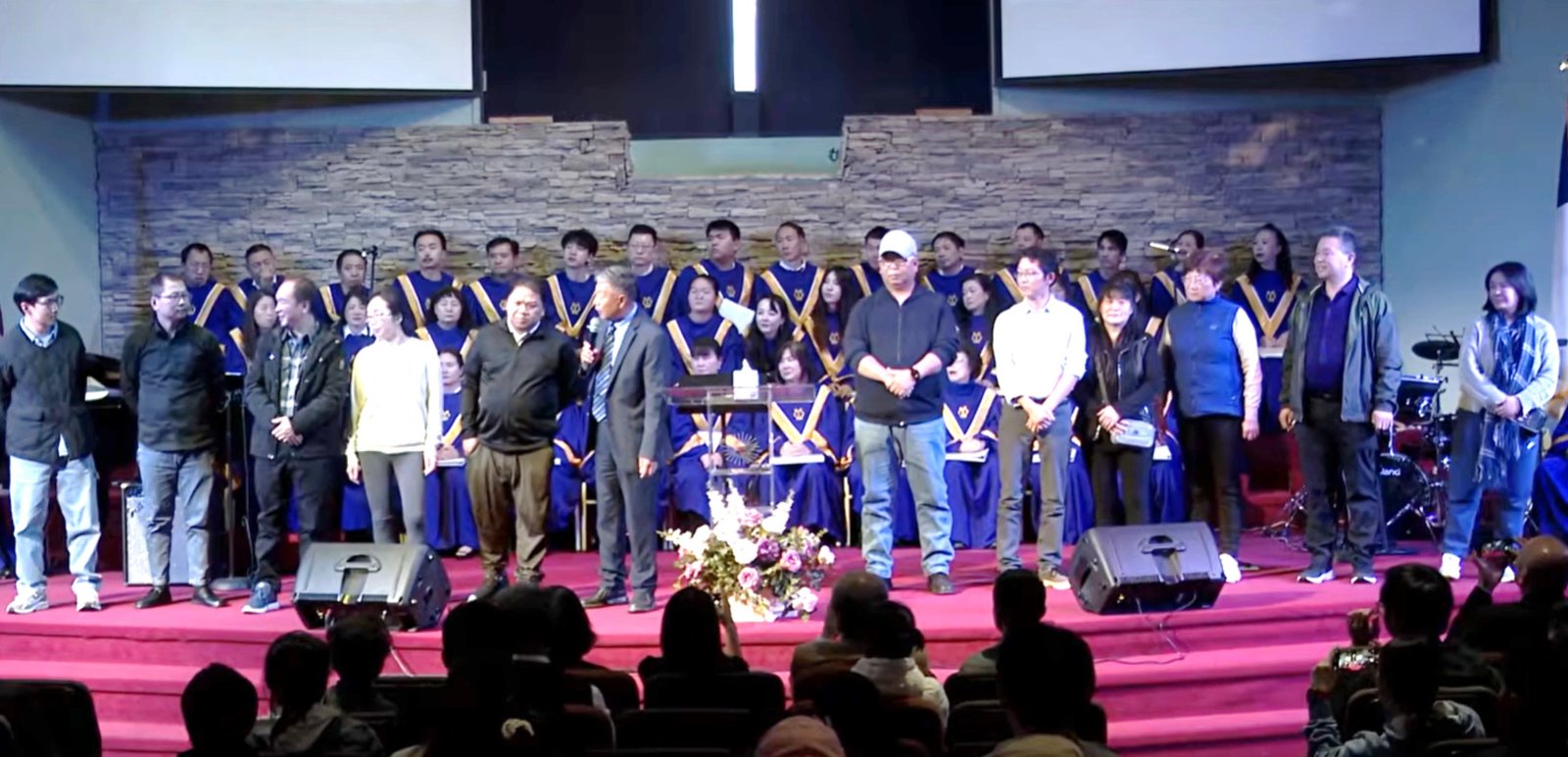
Tonight’s intercessory prayers included particular petitions: for those detained, for their access to and reading of the Bible, and for the practical needs of their families and churches. Such prayers made me realize: the cruelty of persecution lies not only in stripping away freedom, but in attempting to sever people’s connection to truth—robbing them of their voice, their testimony, and their network of mutual support.
For me personally, this shock is not abstract. Having lived in China for many years, I instinctively avoided politics and public affairs. Later, forced into exile for my words, I gradually understood: Silence does not buy safety; only more profound fear. Speaking out may not immediately change reality, but it guards the boundaries of conscience and truth. Precisely for this reason, I am more determined to use prayer and testimony in gatherings like this to bring the persecuted back into the public eye, so the world may continue to see.
At the gathering’s conclusion, I spoke with and took a photo with Pastor Anna Liu from Zion Church. Her serenity made me feel both ashamed and more awake: those who have weathered storms often no longer need to prove their suffering; they only ask the church not to forget.
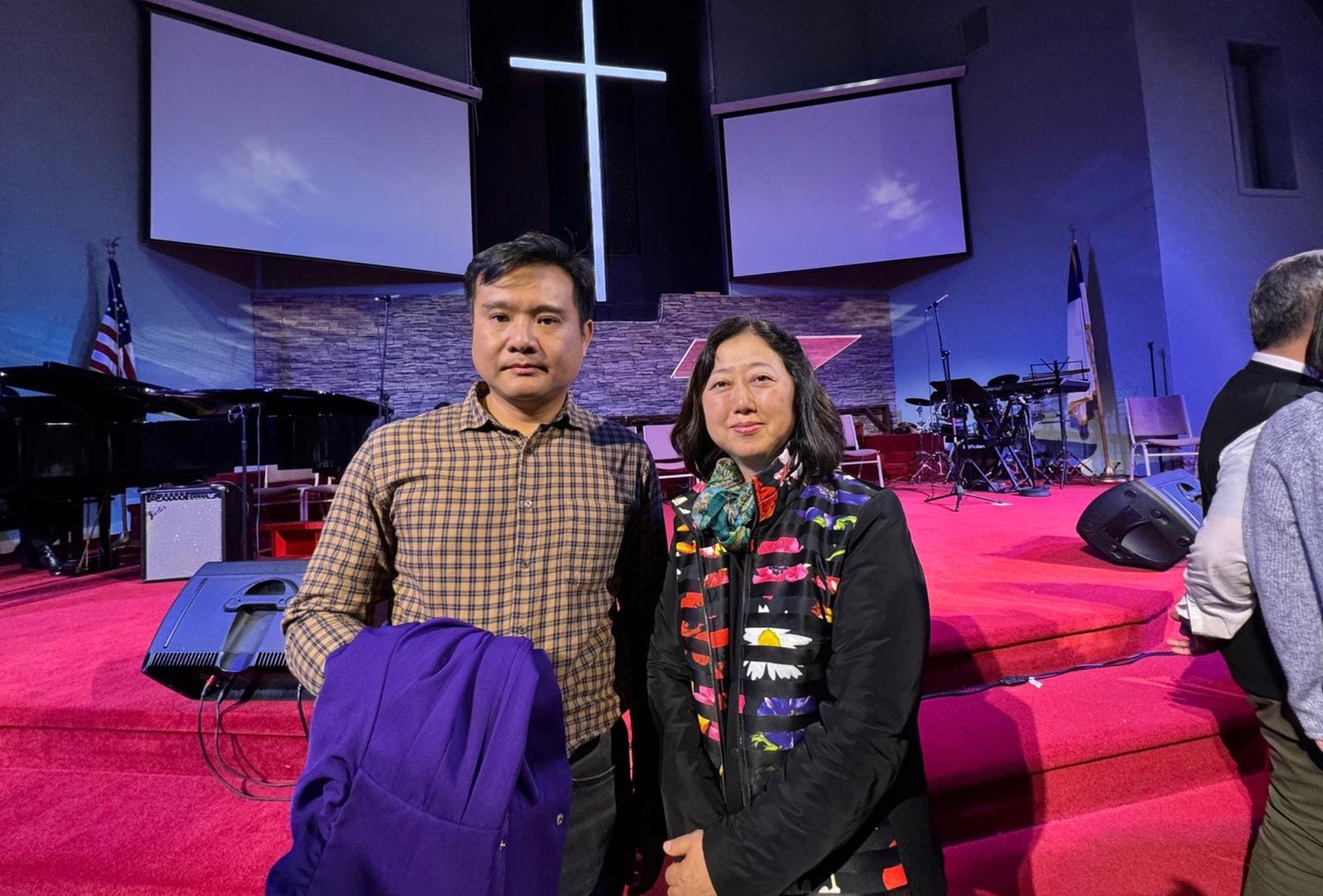
As I left, I felt certain: Establishing January 9 as “China Religious Freedom Day” and designating the 9th of every month as a day of fasting and prayer is not about commemorative rituals. Its significance lies in creating a long-term spiritual rhythm—unbroken by fear—that enables the church to keep seeing, keep interceding, and keep speaking out.
May we remember those in chains, not just tonight. May each fast and prayer become not merely a religious ritual, but an act against forgetting. May religious freedom in China cease to exist only on paper, and one day become the very air each person breathes.

Feng Reng was a businessman in China and a dissident who escaped the country in 2022. He is currently based in Los Angeles. He converted to Christianity overseas and became a member of Pastor Zhang Boli’s Harvest Chinese Christian Church. He has contributed articles to several newspapers and magazines about the persecution of Christians in China.