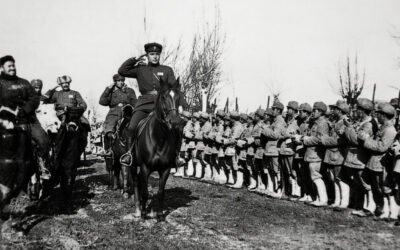
His passing removes a major thinker whose theory of myth shaped contemporary scholarship—and whose intellectual courage brought decades of repression.
by Massimo Introvigne
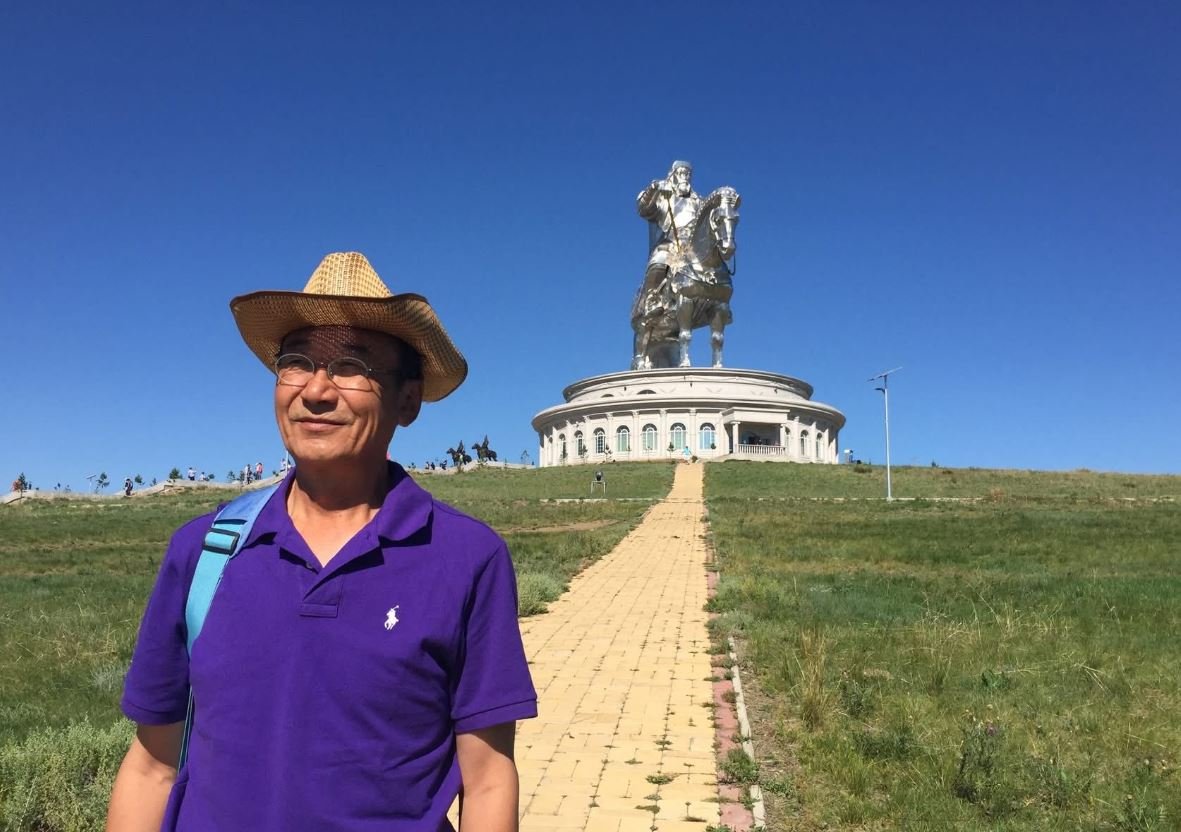
Ga. Sharavjamts died only weeks ago, and with him, one of the most original scholarly voices of Southern Mongolia (which China calls Inner Mongolia) disappeared. He was a writer who treated myths as the deep grammar of a people’s identity, a scholar who believed that legends carry the philosophical, moral, and historical DNA of a nation. He was also a dissident whose clarity of thought and refusal to bend made him intolerable to the Chinese authorities. His life’s work was an attempt to preserve Mongolian cultural memory; the state’s response was to try to erase his own.
Sharavjamts’ theory of myth was unusually sophisticated. He argued that legends are not passive remnants of the past but dynamic expressions of collective consciousness, repositories of moral principles, historical truths, and social aspirations. In his essays—especially those collected in “Ga. Sharavjamts on Myths and Legends”—myths become analytical instruments. He read them as allegories of bravery, loyalty, ecological balance, and ethical responsibility, insisting that they reveal a society’s fears, hopes, and moral dilemmas more accurately than official histories. For him, myths were bridges between eras, connecting ancestral experience with contemporary crises. They were also diagnostic tools: when a society neglects its legends, he warned, it risks losing its moral compass and cultural cohesion.
The myths that Sharavjamts analyzed range across the full landscape of Mongolian cultural memory, from local sacred site legends to narratives embedded in the wider steppe imagination. Among them are stories surrounding the construction of Baruun Guur, a bridge whose origins are wrapped in regional lore and geomantic symbolism; the tale of how Mongols ceased hunting the Hoon goose, a bird long regarded as sacred and protected by taboo; and the dream of Togoont Tömör Khan, the last Yuan emperor, whose prophetic visions have been retold for centuries as allegories of imperial decline and moral reckoning. He also drew on legends tied to specific landscapes, such as Darvaas Khairkhan and Huy Gol, where mountains and rivers become animate presences that shape human fate.
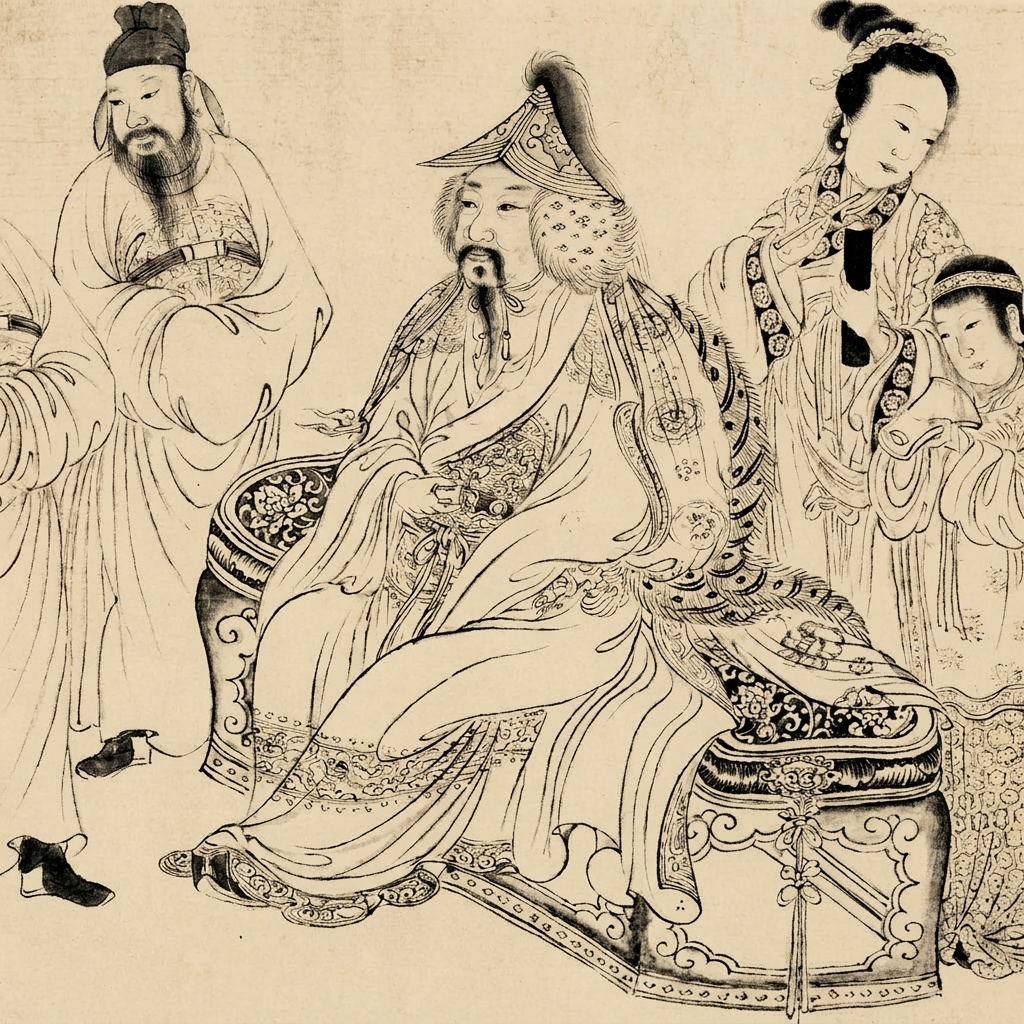
Figures like Tostoi Toon, who appears in heroic and shamanic narratives, illustrate the porous boundary between history and myth in Mongolian storytelling. The legend of Vanbain Van’s palace, associated with ghostly ruins and karmic retribution, reflects the moral dimension of local memory. Sharavjamts also explored animal myths—white and green serpents, bears, and the white elephant—each carrying layers of shamanic, Buddhist, and ecological meaning. Even the story of Genghis Khan’s retreat from India, though historically impossible, survives as a mythic episode expressing the Mongols’ sense of cosmic geography and the supernatural limits of conquest.
By weaving these diverse narratives together, Sharavjamts demonstrated how Mongolian myths function as a living archive of ethical values, ecological knowledge, historical experience, and collective identity, revealing a cultural world far richer and more complex than political boundaries allow.
Sharavjamts believed that myths evolve with society, offering guidance in moments of disorientation. He used them to critique environmental degradation, the erosion of social values, and the stagnation produced by political repression. He saw in Mongolian legends a reservoir of philosophical insight capable of renewing national identity in a rapidly changing world. His work was a call to cultural responsibility, urging Mongolians to understand their stories as living sources of wisdom.
Such ideas made him an internationally respected academic. In Southern Mongolia, they also made him dangerous. Sharavjamts wrote openly about the destruction of the Mongolian language, culture, and autonomy under Chinese rule. His work “Southern Mongolia under the Chinese Plough” circulated underground (“under the plough” is a common Mongolian metaphor for land being forcibly transformed or exploited). It described how settler colonialism had transformed the region into a place where the grasslands were dying, the ecosystem was collapsing, and the foundations of Mongolian identity were coming under assault. He wrote with precision and without euphemism, documenting a reality the authorities preferred to hide.
As a result, his books were banned, and he lived for years under de facto house arrest. State Security agents followed him everywhere. Even street vendors were ordered to report what he said and what he bought, and were pressured not to serve him. Attempts by human rights organizations to assist him were blocked. His world shrank to a monitored perimeter, but his writing did not stop. He continued to work, quietly and defiantly, convinced that cultural survival required intellectual honesty.
Sharavjamts’ persecution was the direct consequence of his insistence that myths matter—that they are the vessels of a people’s memory and the foundation of their resilience. A state that seeks to assimilate a minority must first sever its connection to its stories. Sharavjamts refused to allow that severing. He believed that a society that understands its myths understands itself, and that a society that loses them becomes vulnerable to domination. His scholarship was therefore an act of resistance, and the authorities treated it as such.
His death is a profound loss for Mongolian letters. But his legacy endures in the very myths he spent his life interpreting and defending. They remain alive, circulating through the consciousness of the people he wrote for, offering the moral and cultural grounding he believed essential for survival. In that sense, Ga. Sharavjamts has not been silenced. He has joined the realm he understood best—the realm where stories become memory, memory becomes identity, and identity becomes the quiet, enduring form of resistance that no surveillance can extinguish.

Massimo Introvigne (born June 14, 1955 in Rome) is an Italian sociologist of religions. He is the founder and managing director of the Center for Studies on New Religions (CESNUR), an international network of scholars who study new religious movements. Introvigne is the author of some 70 books and more than 100 articles in the field of sociology of religion. He was the main author of the Enciclopedia delle religioni in Italia (Encyclopedia of Religions in Italy). He is a member of the editorial board for the Interdisciplinary Journal of Research on Religion and of the executive board of University of Pennsylvania Press’ Nova Religio. From January 5 to December 31, 2011, he has served as the “Representative on combating racism, xenophobia and discrimination, with a special focus on discrimination against Christians and members of other religions” of the Organization for Security and Co-operation in Europe (OSCE). From 2012 to 2015 he served as chairperson of the Observatory of Religious Liberty, instituted by the Italian Ministry of Foreign Affairs in order to monitor problems of religious liberty on a worldwide scale.