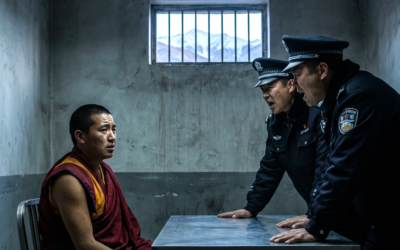
Yet another demolition sparks public outrage and police brutality.
by Zeng Liqin
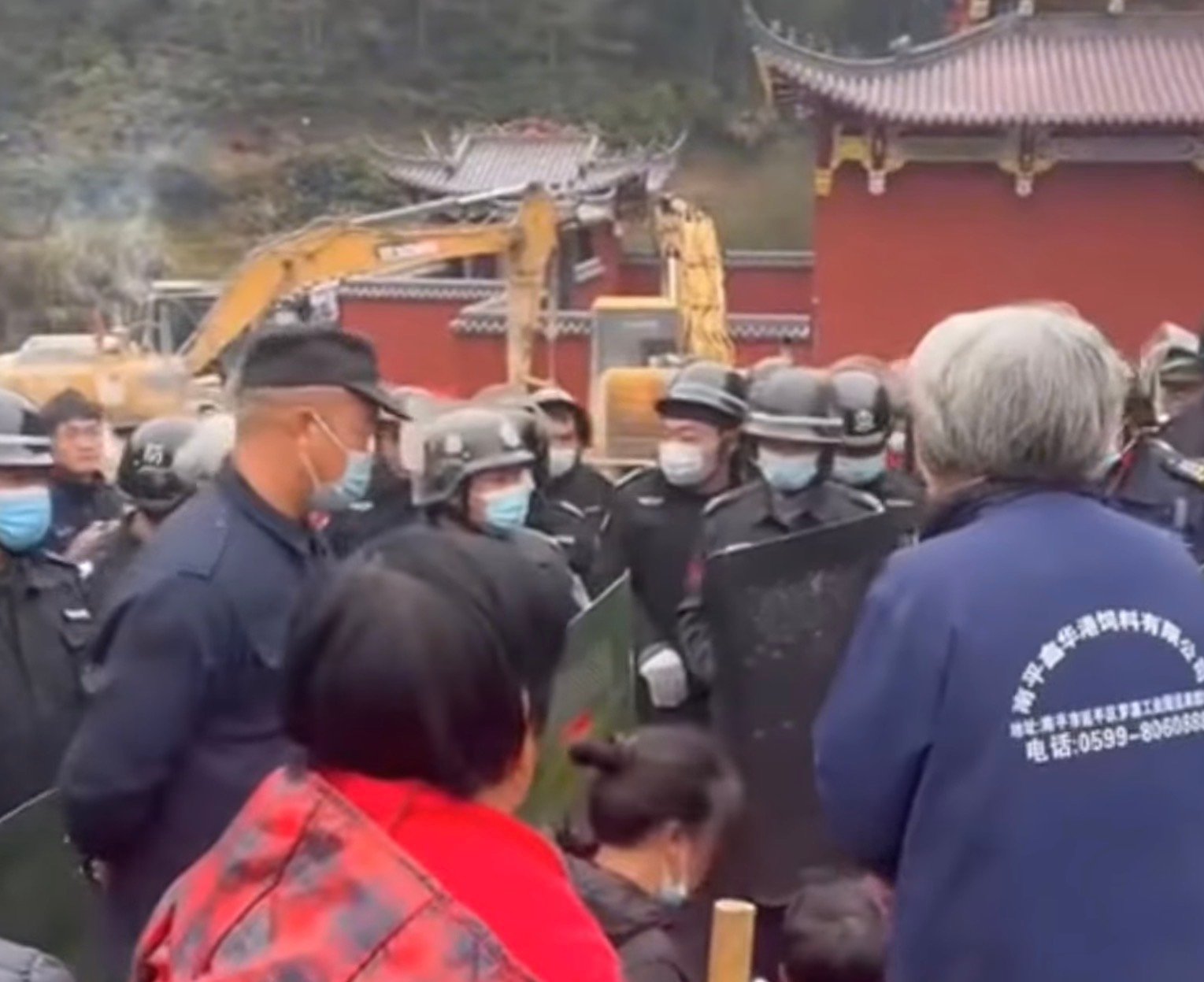
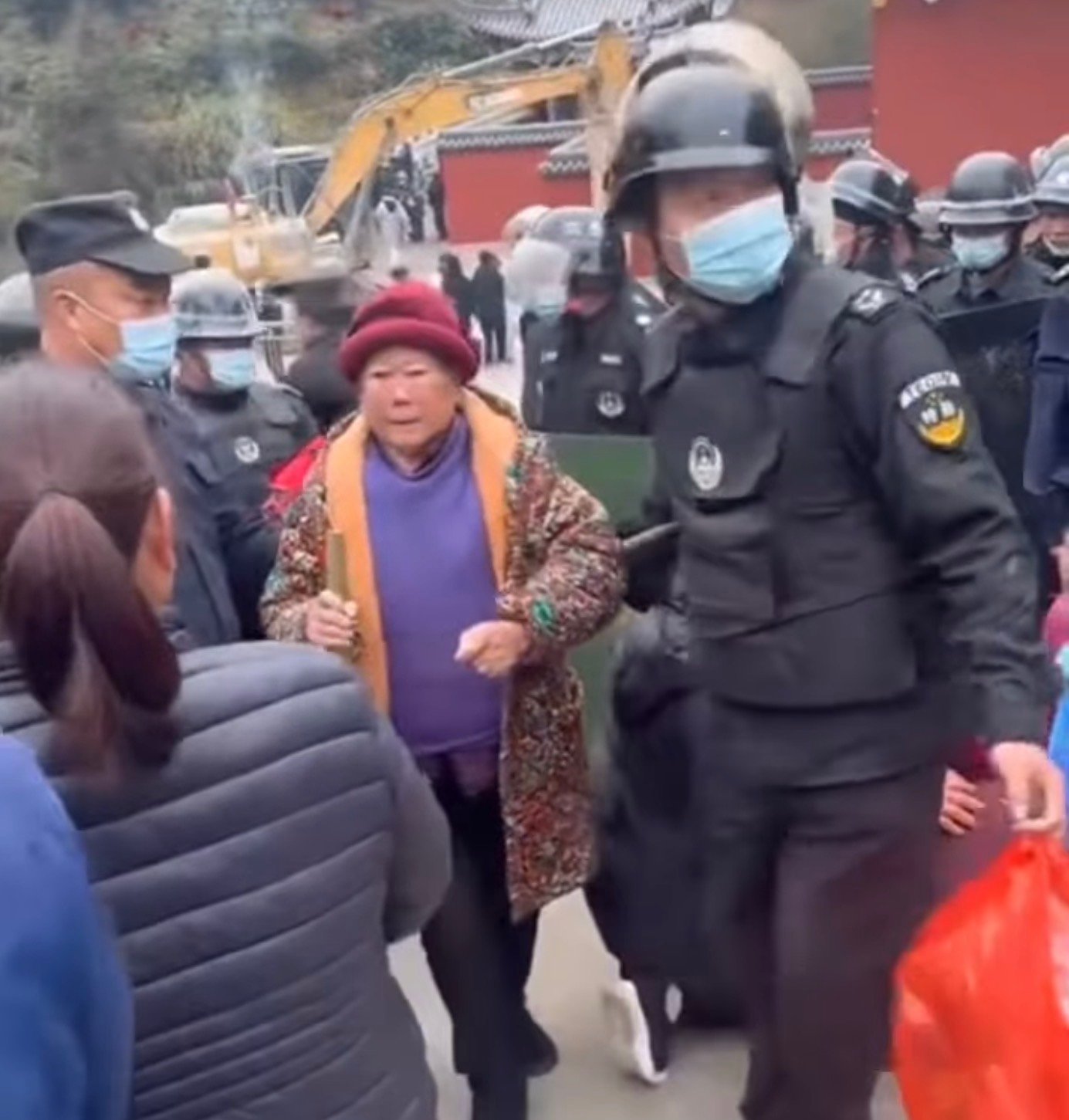
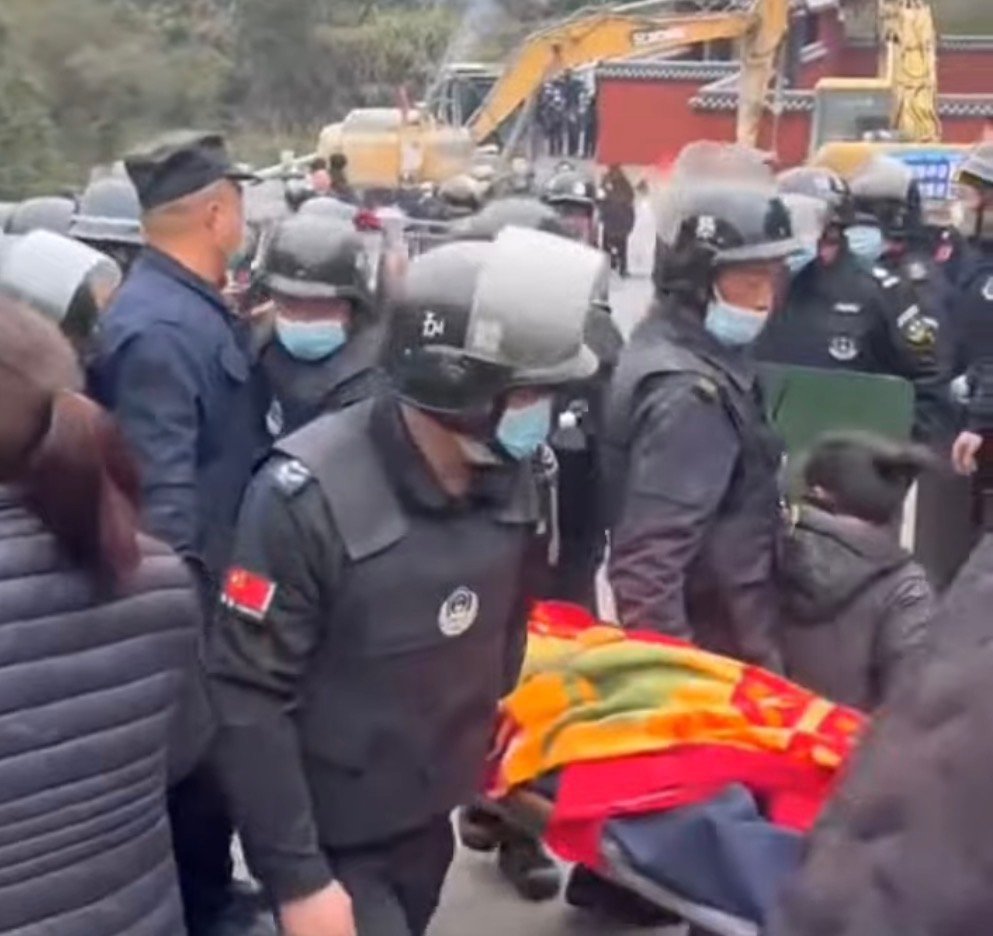
A violent clash erupted in Panling Village, Minhou County, Fuzhou, on January 25, when the Chinese authorities deployed more than one hundred police officers to demolish a village‑funded temple forcibly. Several residents were injured as they attempted to block the operation.
Villagers told “Bitter Winter” that the temple had been under construction for 5 years and was entirely financed by local donations—over 2 million yuan (approximately USD 280,000). Throughout the construction period, they say, no government department issued warnings, objections, or demolition notices.
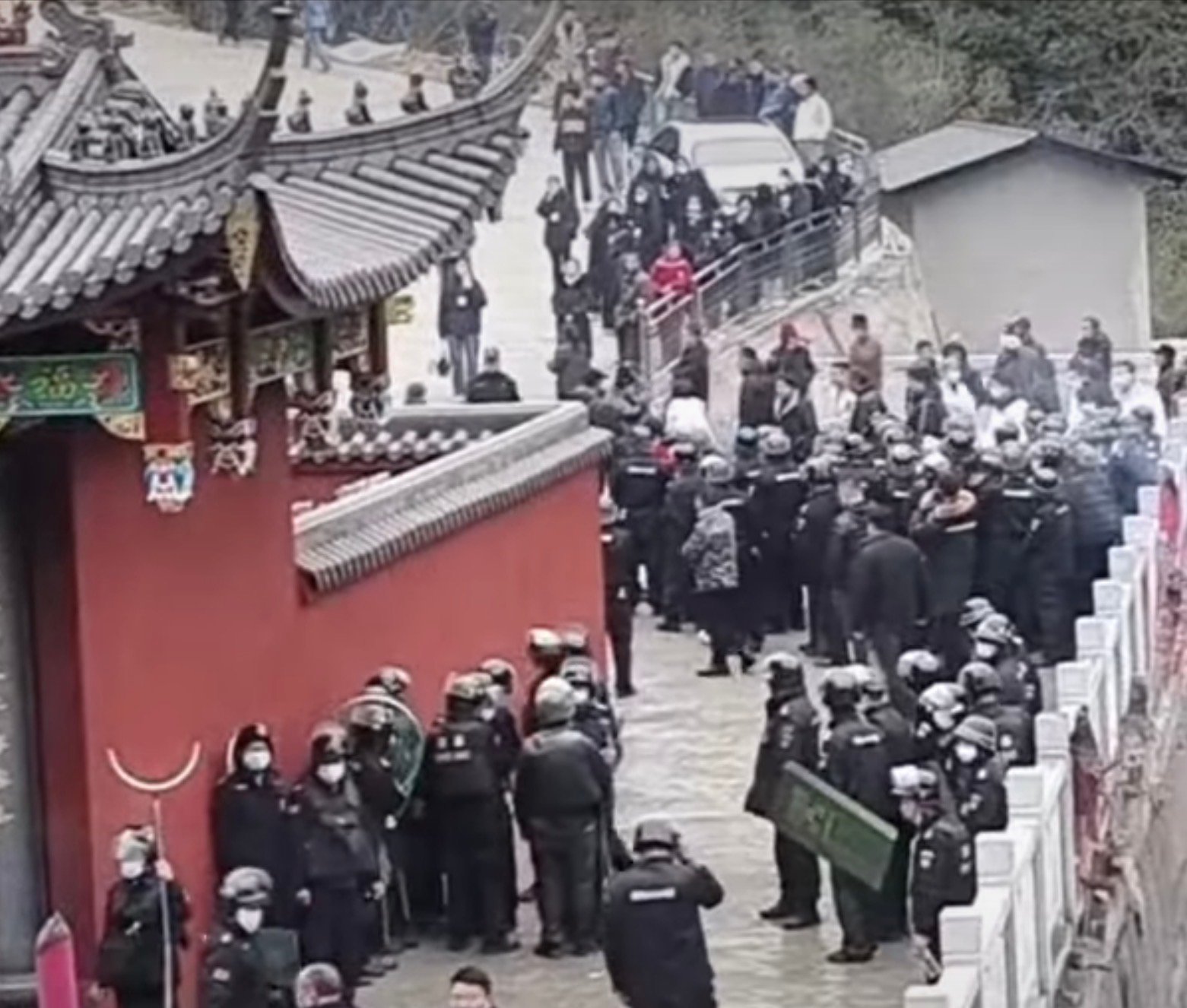
Despite this, police arrived in large numbers before dawn on January 25, surrounding the site and ordering residents to disperse. When villagers refused, officers reportedly used force to push them aside and secure the demolition perimeter.
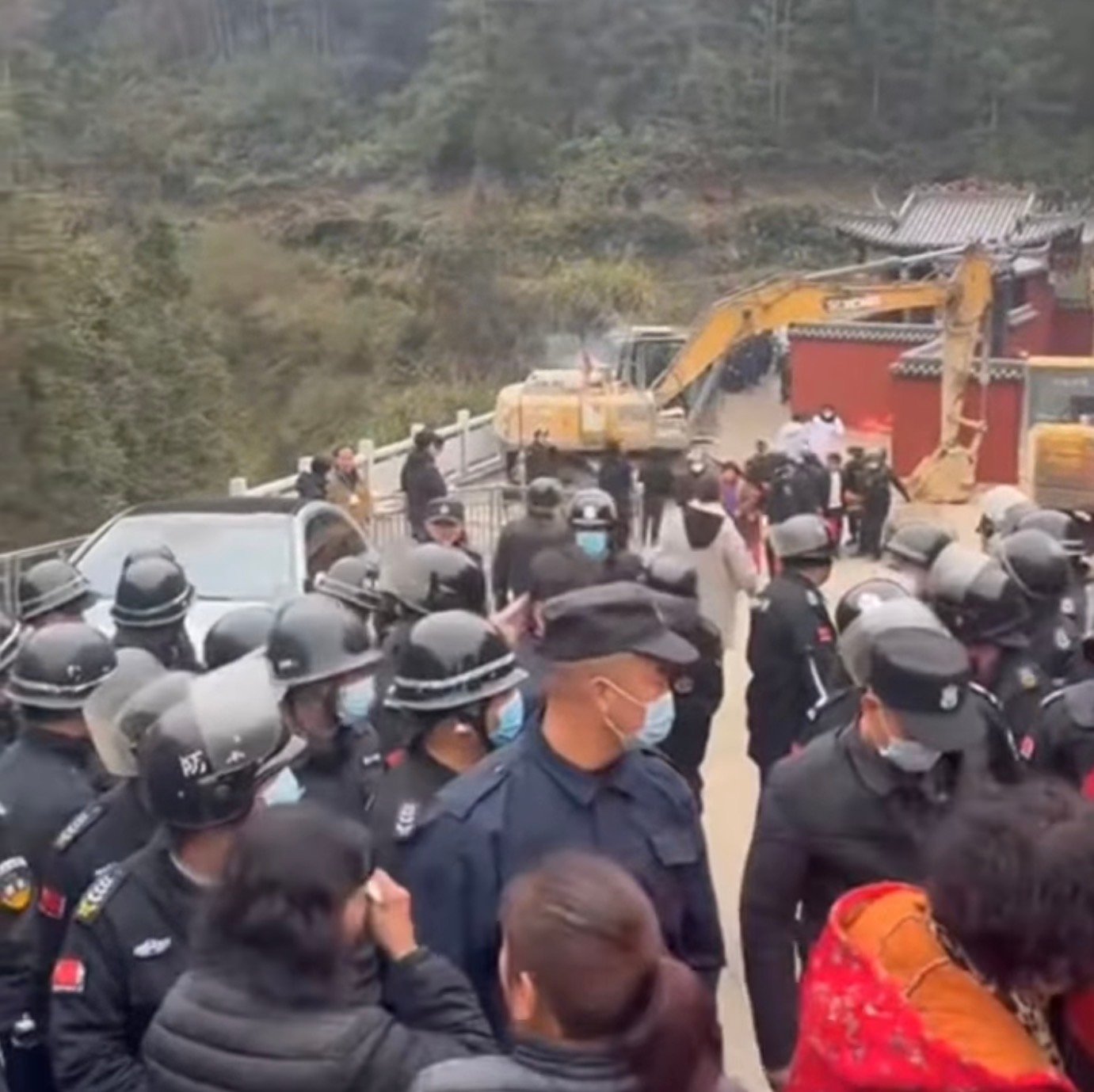
Photos and footage provided to “Bitter Winter” (blurred but eloquent enough) show villagers confronting police, an older woman being restrained and taken away, and at least one resident carried off on a stretcher after what locals describe as a beating. Witnesses say several others suffered minor injuries in the scuffle.
Residents insist that the temple was a collective project that represented the village’s cultural and religious identity. “We built it ourselves, with our own money,” one villager said. “If it was illegal, why didn’t they stop us five years ago?”
The demolition fits a broader national pattern in which temples—whether newly built, renovated, or historically longstanding—are destroyed or repurposed under the CCP’s tightening control of religious life. In Fujian and other provinces, authorities have increasingly targeted grassroots religious structures, even when they are community‑funded and previously tolerated.
Villagers in Panling say they will seek legal redress, though few expect a favorable outcome. For now, the temple site remains sealed off, and the community is left with injuries, arrests, and the rubble of a project they spent years building together.

Uses a pseudonym for security reasons.