Properties of Uyghur “dissidents” are auctioned on Taobao and end up in the hands of Han Chinese.
Abdulhakim Idris
Article 2 of 2. Read article 1.
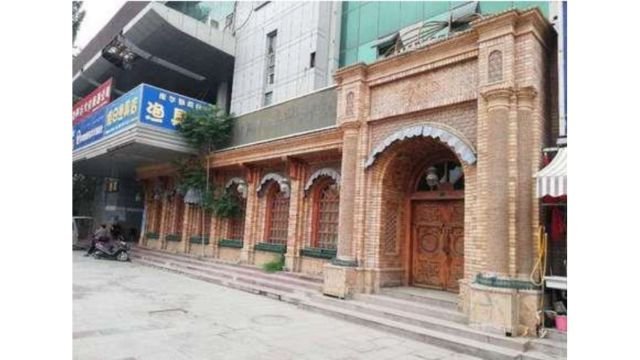
The judicial auction process of Uyghur properties is also one of the bitter consequences of the Uyghur Genocide. It begins with the arrest and imprisonment of Uyghur businesspeople, often on so-called “terrorism” or “extremism” charges. These arrests are typically carried out with little due process or transparency. Following arrest, Chinese authorities confiscate the assets of imprisoned Uyghurs. These assets include real estate, businesses, company shares, and personal property. Chinese courts then issue orders for the confiscated assets to be auctioned off. These court orders are often the only official documentation of arrests and asset seizures.
The seized property is then listed on the judicial auction section of Taobao, an e-commerce platform owned by Alibaba Group. Taobao has been used by the Chinese judicial system since 2012 to auction properties seized in criminal cases and properties that serve as collateral for overdue loans. When a property is auctioned on Taobao, potential buyers can bid on assets ranging from household appliances to multi-million-dollar real estate. Once the auction is complete, the property is transferred to the highest bidder. The proceeds from these sales often go to the Chinese Communist Party rather than to the families of imprisoned Uyghurs.
One example cited in a report on this issue is that of Abduljelil Helil, a prominent Uyghur real estate developer in Kashgar. He was arrested in 2017 for allegedly “aiding terrorist activities.” Following his arrest, several properties owned by his company were auctioned on Taobao. One of these properties is a 17-story building in Kashgar, which was sold in 2021 for 750 million yuan (about $116 million). Another case is that of Akbar Imin, a wealthy businessman from Khotan who was arrested in 2018 for allegedly making unauthorized Hajj pilgrimages. Following his arrest, his assets were seized and auctioned, including a valuable property in Urumqi sold on Taobao for 23 million yuan (about $3.6 million).

Similarly, another Uyghur businessman, Rozi Haji Hemdul, was wrongfully arrested in 2017. Following his arrest, his assets were seized and auctioned on Taobao; a large commercial building in Urumqi was sold for over 100 million yuan (approximately $15.5 million). The UHRP report also revealed a previously unreported case of a Uyghur individual whose property was auctioned in Hotan. The auction listing on Taobao included a court order stating that the individual had been imprisoned for “aiding terrorist activities.” The property being auctioned is a residential building worth several million yuan. In another case, the report found evidence of property auctions linked to multiple members of the same family. Three people, all over the age of 75, were accused of allegedly “aiding terrorist activities.” Shared family properties, including farmland and residences, were auctioned on Taobao.
Since 2019, courts in the Uyghur region have auctioned at least 150 assets on e-commerce sites, ranging from household appliances to real estate and company shares, belonging to at least 21 individuals and worth $84.8 million. Amid a large-scale government campaign to assimilate Uyghur and other Turkic Muslim communities, tens of millions of dollars in assets belonging to imprisoned Uyghur business owners have been seized and auctioned off.
The role of the Xinjiang Production and Construction Corps (XPCC), or Bingtuan as it is known, in confiscating Uighur assets is also worth highlighting. Bingtuan has been involved in expropriating Uyghurs’ land for agricultural and industrial projects. These projects often prioritize Han Chinese settlers and workers, marginalizing Uyghur farmers and communities. The XPCC is not only involved in expropriating Uyghurs’ land but also manages critical natural resources in the region, including water and minerals. Profits from these resources primarily benefit state-owned enterprises and Han Chinese interests rather than local Uyghur communities.

Bingtuan has been involved in surveillance operations, contributing to the broader control system over the Uyghur population. Its dual role as an economic entity and a paramilitary force enables it to implement government policies effectively. This unique structure allows the XPCC to serve as both an instrument of economic dominance and social control, playing an essential role in the systematic marginalization of Uyghurs. The XPCC’s activities align with broader government strategies aimed at assimilating ethnic minorities and consolidating control over the region. The XPCC ensures that Uyghur communities remain economically dependent and politically repressed through its control over land, resources, and economic activities.
The destruction of Uyghur wealth through genocidal criminalization by the Chinese Communist Party in violation of human rights, international law and universal values is a calculated effort deeply intertwined with policies of control, assimilation, and economic domination. From the early land reforms that confiscated orchards and farms to the current auctions of Uyghur businesses and properties, this process has methodically eroded the financial and cultural foundations of the Uyghur people.
The introduction of organizations such as the Xinjiang Production and Construction Corps (XPCC) further increases the scale and intensity of this economic repression, ensuring that the benefits of the region’s wealth flow to Han Chinese settlers and state-owned enterprises. At the same time, Uyghurs are left marginalized and economically powerless. What is happening to Uyghurs is not just a series of isolated incidents but part of a broader strategy to weaken Uyghur identity by removing the material and cultural wealth that sustains it. As the world watches, the brutal confiscation of Uyghurs’ assets continues to reshape the region, leaving behind a legacy of loss, displacement, and economic devastation.
***
Appendix: Suggestions for further reading
1- History of Xinjiang: In the People’s Republic of China (1950s-1980s), Eurasian Crossroads: A History of Xinjiang, Columbia University Press, 2007 https://omnilogos.com/history-of-xinjiang-in-people-republic-of-china-1950s-1980s/
2- Dikötter, Frank. (2017) The Tragedy of Liberation: A History of the Chinese Revolution, 1945-57. London: Bloomsbury. – https://chinesehistoryforteachers.omeka.net/exhibits/show/chinese-land-reform/land-reform-overview
3- “Break Their Lineage, Break Their Roots,” Human Rights Watch, 2021. https://tinyurl.com/t8ufpb59
4- “Belt and Road Initiative (BRI),” European Bank, https://www.ebrd.com/what-we-do/belt-and-road/overview.html
5- “Under the Gavel: Evidence of Uyghur-owned Property Seized and Sold Online” UHRP, https://uhrp.org/report/under-the-gavel-evidence-of-uyghur-owned-property-seized-and-sold-online/, September 2021
6- Hoja, Gulchera, “Xinjiang Authorities Arrest Sibling Uyghur Real Estate Moguls, Jail One For Decades.” RFA, https://www.rfa.org/english/news/uyghur/moguls-arrests-09042019163052.html, September 2019.
7- Hoshur, Shohret, “Uyghur Who Appealed Jail Sentence Charged With Additional Crimes,” Radio Free Asia, March 2021 https://www.rfa.org/english/news/uyghur/appeal-03312021195653.html
8- Hoshur, Shohret, “Uyghur Real Estate Magnate Confirmed Jailed Along With Brothers, at Least 20 Employees” Radio Free Asia, January 2020, https://www.rfa.org/english/news/uyghur/magnate-01172020175553.html
9- Xiao, Eva and Cheng, Jonathan “China’s Xinjiang Crackdown Reaps Millions of Dollars in Assets for the State” Wall Street Journal, September 2021, https://www.wsj.com/articles/chinas-xinjiang-crackdown-reaps-millions-of-dollars-in-assets-for-the-state-11632494787

Abdulhakim Idris was born in Hotan city in East Turkestan (Ch. Xinjiang). He was educated in Islamic religious studies and Arabic language in underground Islamic schools in Hotan before he left his hometown in 1986 to study Islam in Egypt at Al-Azhar University. He settled in Munich, Germany in 1991 as one of the first Uyghurs to seek asylum in Europe. Mr. Idris moved to the United States in 2009. He is is the founder and Executive Director of the Center for Uyghur Studies, a Washington D.C.-based think tank. In 2017, Mr. Idris and his wife Rushan Abbas founded the non-profit organization Campaign for Uyghurs. He currently lives in Northern Virginia with his family.