The law against “extremism” has been applied by the Novosibirsk court, following lobbying by Russian anti-cultists.
by Massimo Introvigne

On November 10, 2020, the Fifth General Court of Appeal of Novosibirsk designated Falun Gong as an “extremist organization,” and “liquidated” its branch in the Siberian region of Khakassia. The judges also recommended a nation-wide “liquidation” of Falun Gong in Russia, which should be however pronounced by higher courts.
The judges in Novosibirsk acted as an appellate court and judged an appeal by the deputy prosecutor general of Khakassia against a decision rendered in July by the Supreme Court of Khakassia, which had refused to liquidate the local branch of Falun Gong and had concluded it was not an “extremist” organization. This decision favorable to Falun Gong has now been reversed on appeal.
The Novosibirsk decision comes after intense anti-Falun-Gong lobbying by both China and Russian anti-cultists, led by Roman Silantyev who, according to several observers, is gradually replacing Alexander Dvorkin as the leading voice for the anti-cult movement in Russia.
Silantyev claims to have founded a new “science” called “destructology,” and in 2019 opened a “Laboratory of Destructology” at Moscow State Linguistic University. “Destructology” should be able to identify which organizations are “destructive cults,” a label applied to new religious movements such as the Jehovah’s Witnesses or Falun Gong, and also to groups of political dissidents.
Silantyev called the Novosibirsk decision “a milestone,” described Falun Gong as “the world’s largest cult” and concluded that, “starting from this moment, it should be possible to ban it throughout the territory of our country, as happened with the Jehovah’s Witnesses.”
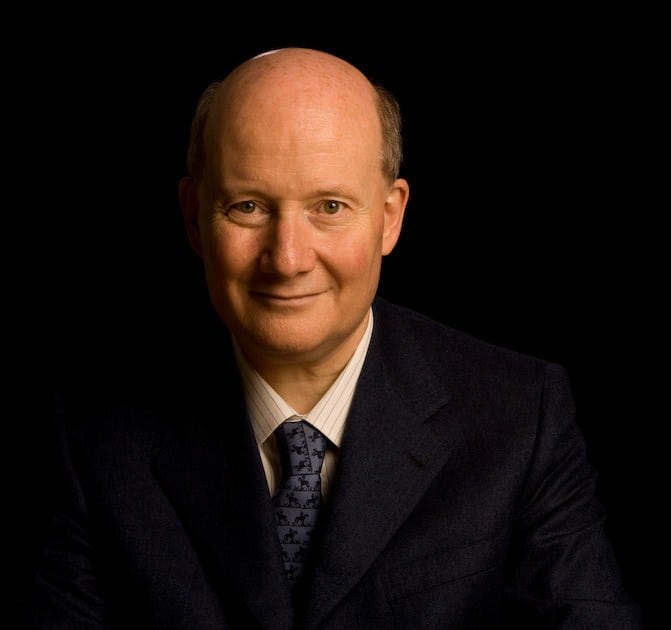
Massimo Introvigne (born June 14, 1955 in Rome) is an Italian sociologist of religions. He is the founder and managing director of the Center for Studies on New Religions (CESNUR), an international network of scholars who study new religious movements. Introvigne is the author of some 70 books and more than 100 articles in the field of sociology of religion. He was the main author of the Enciclopedia delle religioni in Italia (Encyclopedia of Religions in Italy). He is a member of the editorial board for the Interdisciplinary Journal of Research on Religion and of the executive board of University of California Press’ Nova Religio. From January 5 to December 31, 2011, he has served as the “Representative on combating racism, xenophobia and discrimination, with a special focus on discrimination against Christians and members of other religions” of the Organization for Security and Co-operation in Europe (OSCE). From 2012 to 2015 he served as chairperson of the Observatory of Religious Liberty, instituted by the Italian Ministry of Foreign Affairs in order to monitor problems of religious liberty on a worldwide scale.