But beware: many non-Chinese companies also use suspicious Xinjiang-produced polysilicon in their solar modules.
by Massimo Introvigne
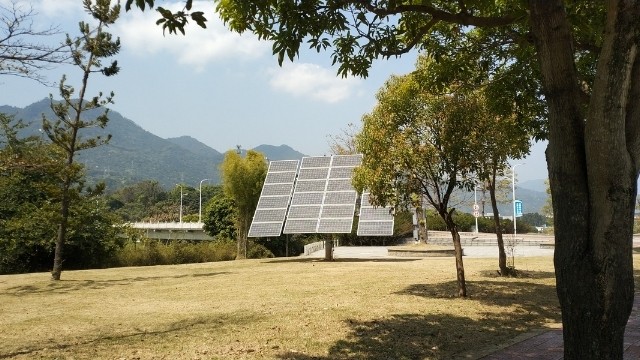
When your friendly installer recommends Chinese solar panels, since they are effective and cheap, you should consider saying no. It is very probable that slave labor in Xinjiang went into their productions.
After The New York Times had suggested in January that solar panels, not cotton only, had a slave labor problem involving the Uyghurs, on April 13, Bloomberg blew the whistle with a very detailed report, which Chinese propaganda organ Global Times tried to refute on April 16, repeating the old rigmarole that all Uyghur work in Xinjiang is “volunteer,” and blaming the campaign on international competitors of Chinese solar panel companies.
Unfortunately for the CCP, on April 19 the Center for Strategic and International Studies (CSIS), named the most authoritative think tank in the United States and the fourth most prestigious in the world, followed up and substantially confirmed Bloomberg’s accusations.
Solar panels use photovoltaic cells (PVC). Although not all, most PVC are made with polysilicon components. According to CSIS, 82% of world’s polysilicon is produced in China, overwhelmingly in Xinjiang. Almost all solar panels produced in China use Xinjiang-produced polysilicon. But in fact, even solar panels produced outside China, if they use polysilicon, likely include polysilicon from Xinjiang.
Bloomberg reported that four factories in Xinjiang account for half of the world’s production of polysilicon. Their access is restricted, and China may have there not only a problem of slave labor, but also one of “dirty coal” and violation of ecological regulations. Bloomberg’s report showed that polysilicon factories are located suspiciously close to transformation through education camps, making it likely that inmates are forced to work there. Bloomberg also quoted researchers Nathan Picarsic and Adrian Zenz, who analyzed Chinese data on polysilicon factories to conclude that slave labor is at work there, noting that the CCP is trying to discredit them.
Both Bloomberg and the CSIS commented that it is difficult for consumers to know whether Xinjiang polysilicon is used in the solar panels they buy. Certainly, when it comes to solar panels manufactured in China, that Xinjiang-produced components are there is almost certain. Consumers should be aware that yes, Chinese products are cheaper, but buying them may very well involve cooperating with a genocide.
As for foreign companies buying Xinjiang polysilicon, the CSIS believes that the only solution is governmental intervention, which in the U.S. may be soon mandated by the Uyghur Forced Labor Prevention Act, which has large bipartisan support. However, while in the U.S. the government can support local producers that would offer alternatives to China, without international action involving the European Union, India, and Japan (where the other largest manufacturers of solar panels are located), the Chinese will simply sell their polysilicon to countries with less strict anti-slave-labor provisions, which in turn will be able to produce cheaper solar panels than their American counterparts.
However, educating consumers to at least refuse solar panels produced in China will already send to the CCP a message that slave labor, when its horrors become known, hurts rather than promoting Chinese economy.

Massimo Introvigne (born June 14, 1955 in Rome) is an Italian sociologist of religions. He is the founder and managing director of the Center for Studies on New Religions (CESNUR), an international network of scholars who study new religious movements. Introvigne is the author of some 70 books and more than 100 articles in the field of sociology of religion. He was the main author of the Enciclopedia delle religioni in Italia (Encyclopedia of Religions in Italy). He is a member of the editorial board for the Interdisciplinary Journal of Research on Religion and of the executive board of University of California Press’ Nova Religio. From January 5 to December 31, 2011, he has served as the “Representative on combating racism, xenophobia and discrimination, with a special focus on discrimination against Christians and members of other religions” of the Organization for Security and Co-operation in Europe (OSCE). From 2012 to 2015 he served as chairperson of the Observatory of Religious Liberty, instituted by the Italian Ministry of Foreign Affairs in order to monitor problems of religious liberty on a worldwide scale.