Letters and pictures describing pro-democracy exiles as sex workers and advertising their “services” are sent to their families, neighbors, and employers.
by Gladys Kwok
It is hard to imagine a more grotesque Christmas present for Hong Kong’s exiled activists than the one they have just received: envelopes stuffed with sexually explicit letters, apparently signed by them, arriving at workplaces, universities, and even family homes in the UK and Australia. The handwriting looks authentic, the phrasing plausible, and the stationery official. Only later does the victim realize it is a forgery—a deepfake hallucination printed on paper.
Several prominent activists who fled Hong Kong after the imposition of the National Security Law in 2020 report being targeted. The pattern is consistent: obscene letters, doctored images, and emails designed to humiliate and discredit. Employers are unsettled, colleagues confused, families distressed. The activists spend weeks explaining that the material is fake, while the perpetrators achieve their goal: sowing suspicion, draining energy, and isolating dissenters.
It is more than random trolling. The scale and precision suggest organization. The timing coincides with renewed pressure on diaspora networks, and the fingerprints point unmistakably to Beijing’s long arm.
Deepfakes exploit our instinct to trust the visual. A signature, a photograph, a letterhead—once symbols of authenticity—can now be fabricated in minutes. The technology is dazzling, but the use is sordid. It is the digital equivalent of stuffing poison into the mailbox.
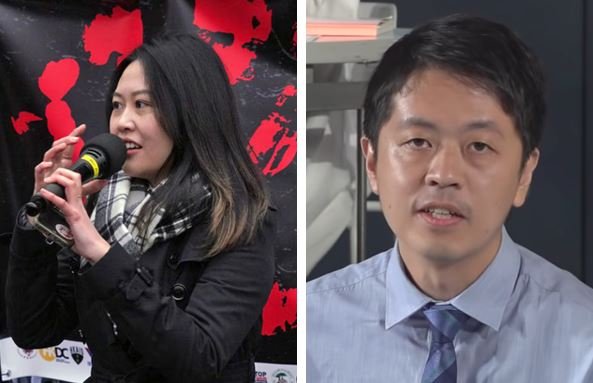
Victims describe the indignity of having to reassure employers that they are not the authors of obscene fantasies. One of the most disturbing recent episodes involved Carmen Lau Ka-man, a former district councillor now living in exile in the United Kingdom. In Maidenhead, where she once resided, several of her former neighbours received envelopes containing fabricated letters and manipulated photographs. The images crudely pasted her face onto the bodies of women posed in lingerie or nude, one even pixelated to suggest a sex act. The letters, mailed from Macau, went so far as to list her full former address and invented body measurements, accompanied by a bizarre invitation to “visit” her as if she were advertising sexual services.
The campaign has not been confined to Britain. In Australia, former legislator Ted Hui Chi-fung and his wife were targeted with a counterfeit poster that recycled an old family photograph under the lurid headline “Hong Kong lonely housewife.” The flyer included a menu of sexual services priced in Australian dollars and an address unconnected to the couple. Copies were circulated in Adelaide and even sent to Hui’s employer, a calculated attempt to humiliate and discredit.
Beijing has a record of harassing exiles through proxies, from online trolling to pressure on employers. The deepfake campaign fits the pattern: plausible deniability for the state, maximum humiliation for the target.
For Hong Kong activists, exile was supposed to mean safety. Instead, it has become a new battlefield. They cannot return home without risking prison under the National Security Law. Abroad, they face harassment campaigns designed to make them unemployable, untrustworthy, and unwelcome.
The message conveyed is that there is no escape. Beijing’s reach extends to London, Sydney, and beyond. The tools are not tanks or tear gas but printers and pixels.
“Bitter Winter” has long documented how the Chinese state blurs the line between official repression and covert harassment. The deepfake letters are not isolated pranks. They are part of a strategy to silence dissent, intimidate communities, and remind exiles that they remain under surveillance.
One might almost admire the creativity if it weren’t so vile. The empire that once prided itself on porcelain and poetry now exports forged pornography and fake signatures. The “world’s factory” has become the “world’s forgery workshop.” It is cowardly bullying. It is the abuse of technology to silence voices that already risked everything for freedom.
The persecuted dissidents in China face prison and torture. The exiles of Hong Kong face printers and algorithms. Both are instruments of intimidation, designed to break the spirit. Yet both reveal the same truth: persecution adapts, but courage endures.
The deepfake letters may stain paper, but they cannot erase conviction. And every forgery mailed abroad is another reminder that Beijing fears the truth more than it fears ridicule.

Uses a pseudonym for security reasons.