The new regulations institutionalize a system known for its abuses and often used against religious dissidents.
by Hu Zimo

China’s revised regulations on residential surveillance, recently unveiled, have sparked concern among legal experts, human rights advocates, and scholars of religious freedom. While propaganda presents residential surveillance as more humane than incarceration, the new rules risk entrenching a system of “secret jails” that has long been criticized for secrecy, abuse, and arbitrary application—including against religious dissidents.
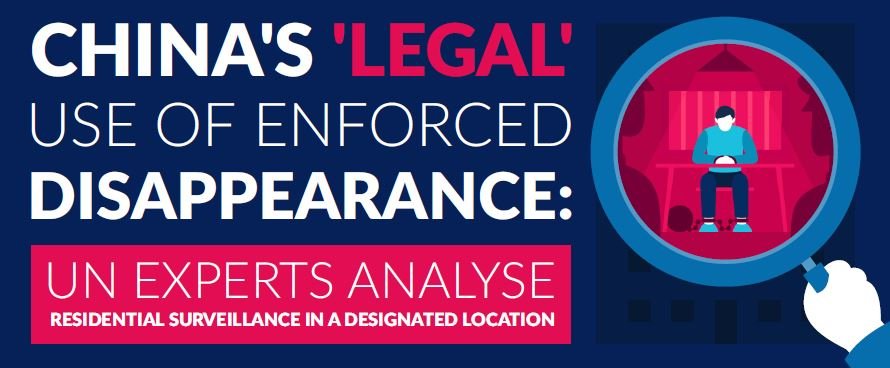
The updated provisions, called “Regulations on the Application and Supervision of Residential Surveillance at a Designated Location in Accordance with the Law” (关于依法规范指定居所监视居住适用和监督的规定), are part of broader reforms to China’s criminal procedure system. They aim to standardize “residential surveillance at a designated location” (RSDL). This form of detention allows authorities to hold individuals outside formal jail settings, often in secretive locations, for up to six months.
The new rules expand the legal framework for RSDL, codifying procedures and oversight mechanisms. They emphasize the use of RSDL in cases involving national security, terrorism, and corruption (note that several religious movements have been designated “national security risks,” including Falun Gong and The Church of Almighty God). They also introduce language suggesting greater “protection of detainees’ rights,” including access to medical care. However, critics argue that these changes may legitimize and normalize a practice that has already been abused for years.
RSDL has frequently been used against religious dissidents, human rights lawyers, and civil society activists. While technically different from arrest, it often involves: detention in secret locations, such as rented apartments or guesthouses, far from the detainee’s home; isolation from family and legal counsel, sometimes for months; and psychological and physical abuse, including sleep deprivation and coercive interrogation. In 2018, eight United Nations Special Rapporteurs, along with the representatives of the UN Working Groups on Arbitrary Detention and on Enforced or Involuntary Disappearances, wrote to China, denouncing the RSDL system.
In many cases, the individuals targeted are not violent or dangerous; they are simply voices of dissent. The new rules, by formalizing RSDL without robust safeguards, may worsen the situation by giving authorities broader discretion and legal cover.
Religious minorities are particularly vulnerable. Members of underground Christian churches, Falun Gong practitioners, Church of Almighty God devotees, Tibetan Buddhists, and Uyghur Muslims have all faced RSDL. The system allows authorities to detain individuals in secret locations without trial, often under vague accusations of “endangering national security.”
For these communities, the new rules do not offer relief. Instead, they may reinforce a climate of fear and repression, where spiritual leaders and believers can be disappeared into a legal gray zone.
China’s new RSDL rules may be framed as reform, but they risk entrenching a system that facilitates secretive, arbitrary, and abusive practices. For religious dissidents and other vulnerable groups, this may not be progress but a deepening of repression under the guise of legality.
Until China addresses the root issues—namely, a lack of judicial independence, vague national security laws, and intolerance of dissent—no procedural reform will truly protect human rights.

Uses a pseudonym for security reasons.