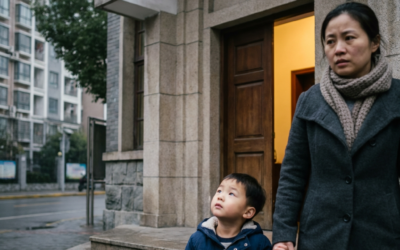
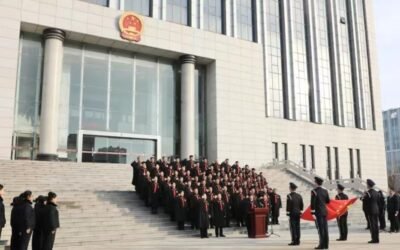
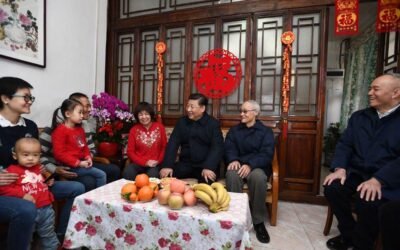
The government-controlled church rushes to embrace the Party’s new ideological rulebook, proving once again that its deepest creed is political obedience.
by Wang Zhipeng
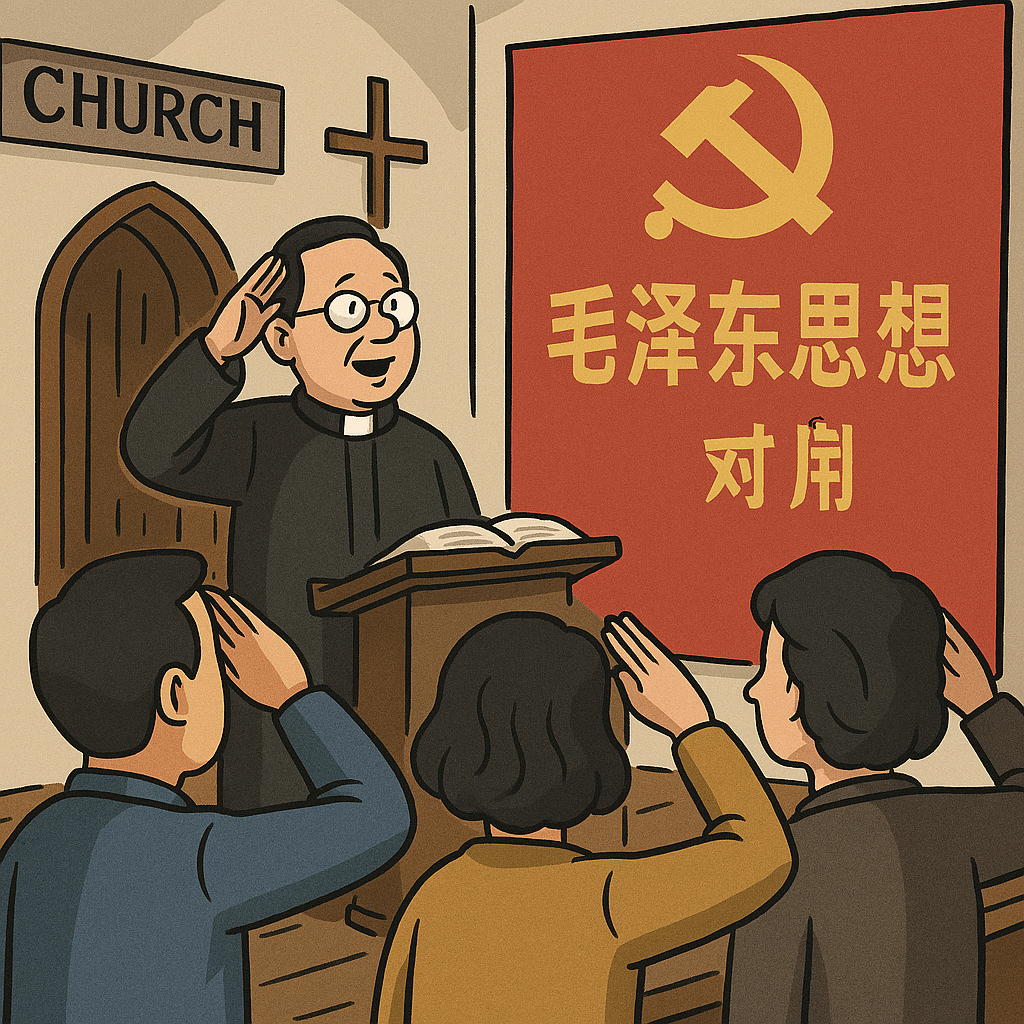
The Chinese Communist Party’s new “Regulations on Ideological and Political Work” were introduced with the seriousness typically reserved for constitutional changes or the launch of a new space station. As “Bitter Winter” has noted, this document is a solemn call for total ideological mobilization. Every sector, every institution, and every citizen must now serve as a channel for Xi Jinping Thought.
As usual, the government-controlled Three-Self Church has eagerly stepped up, ready to show it is the most compliant channel of them all.
In a January 21 interview, Shan Weixiang, vice-chairman of the Three-Self Patriotic Movement, speaks as if he is paying tribute not to Christ, but to the Central Committee. When asked about the new Regulations, Shan confidently states they are a “milestone,” a “guiding principle,” and a “new height” for the Party’s understanding of ideological work. One might expect him to declare that the Holy Spirit has come to bless the document, though he wisely refrains from doing so.
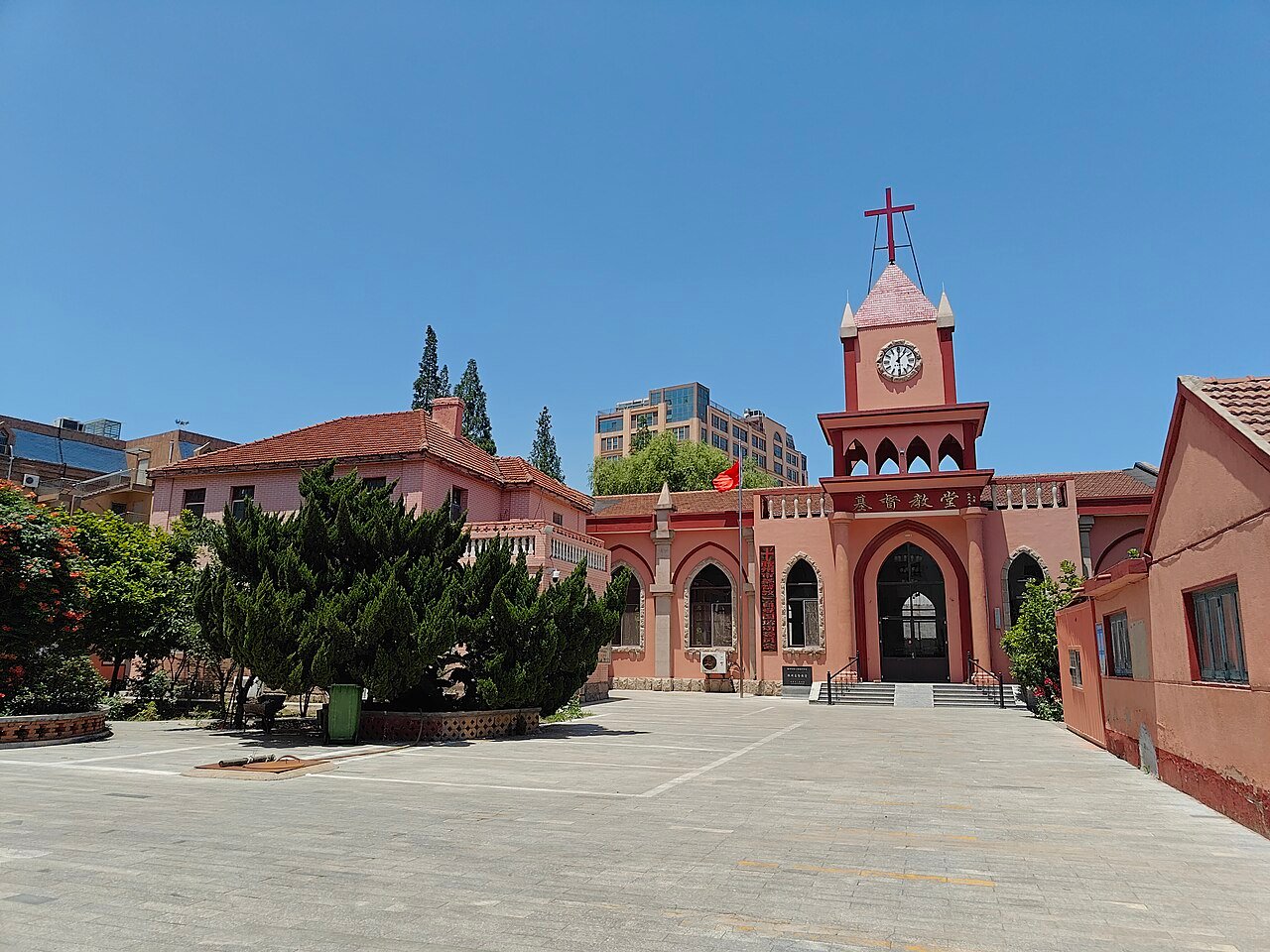
The interview showcases how political theology is framed with Chinese traits. Shan explains that the Three-Self Church has made Xi Jinping Thought the “first agenda item” at its meetings. Seminary students learn not only theology but also “political consciousness,” ensuring they align with “the same direction as the Party.” Churches are told to display the national flag, sing the national anthem, present the Constitution, showcase socialist core values, and even feature traditional crafts. The aim is to create “immersive ideological spaces,” whatever that means.
The interview highlights how seminaries now include “large ideological and political classes” in their programs. Students need to grasp both Christian teachings and “Chinese culture and national conditions.” Fujian Theological Seminary is praised for developing its own political textbooks, making sure that the Sinicization of Christianity is both preached and documented.
Church buildings are also being converted into patriotic education centers. Some have set up “China-style bases” with red-themed exhibition rooms. Others host calligraphy classes, craft displays, and lectures on Confucian classics. The message is that Christianity may persist, but only as an accessory within a broader framework of Party-approved culture.
Clergy are now expected to participate in regular “law and policy study months,” during which they learn to recognize “religious extremism” and “foreign infiltration.” These terms conveniently encompass everything from unregistered house churches to foreign missionaries, and likely even the Apostle Paul. They must “rectify church practices,” “enhance self-discipline,” and present a “pure and solemn image,” which practically means avoiding any independent religious expression.
Future plans are even more ambitious. The Three-Self Church pledges to build a new ideological system suited to Christianity, develop a method to evaluate political loyalty tied to funding, and produce “high-quality ideological works” that reinterpret doctrine to align with socialist values. It also vows to deepen cultural immersion through traditional arts, expand education on national security to help believers resist “foreign infiltration,” and merge Christian faith with “the great dream of national rejuvenation.”
One might almost forget that, in its original form, Christianity was not meant to serve as a tool for boosting national development strategies.
What the interview ultimately shows is how thoroughly the Three-Self Church has embraced its role as a political tool. The new Regulations demand complete ideological conformity, and the Three-Self leadership responds with an enthusiasm that borders on zeal.
It is a peculiar sight: a church that once claimed to represent Chinese Protestantism now strives to outshine secular institutions in its loyalty to Party doctrine. The language of faith remains, but it is drained of meaning, repurposed, and filled with Communist slogans.
In the end, the message of the Three-Self Church is: “We are loyal. We are useful. We are safe.”
In today’s China, that is the only belief that counts.

Uses a pseudonym for security reasons.