Villagers in Wuchuan were prevented from carrying out a centuries-old ritual as authorities tighten control over grassroots spiritual life.
by Zheng Liqin
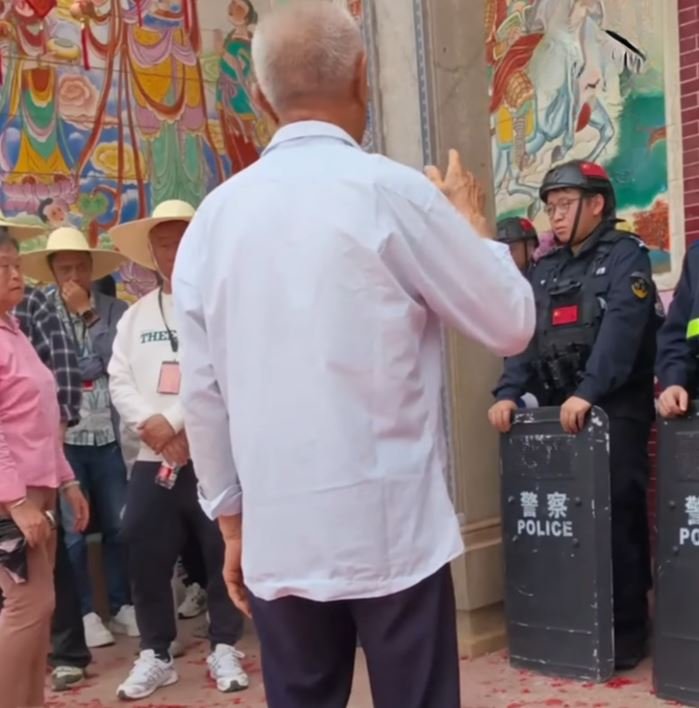
On March 22, in Nalu Village, Tanba Town, Wuchuan City, Guangdong Province, a small rural community faced a growing national trend. Police officers sealed the gates of the local temple to stop the annual “Parade of the Gods” (You Shen), a ritual that marks the arrival of spring and seeks protection for the village.
Villagers were shouting “Bless the Gods” and “We want to worship the Gods,” while officers responded with a firm “No worship.” With the temple blocked and the procession canceled, residents had to bow and offer incense from outside, in front of the uniformed police.

What happened in Nalu is not an isolated event. Across China, especially in the southeast, authorities have increased restrictions on folk religion, targeting temple fairs, processions, and community-run rituals that have lasted for centuries. Officials often label these events as “superstition,” but they remain vital to the cultural and spiritual life of rural communities.
In Guangdong and Fujian, the “Parade of the Gods” processions rank among the most important rituals of the year. They are believed to protect the village, bless the land before planting, and strengthen the community’s bonds.
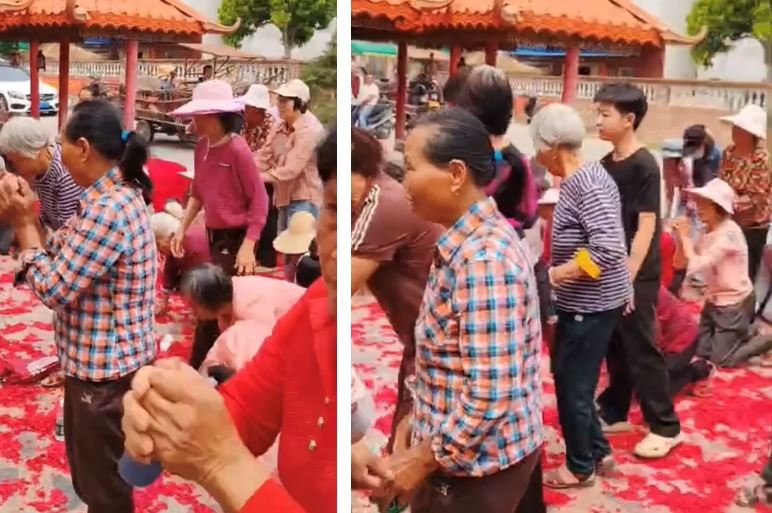
The timing is significant. Early spring is when many villages bring their deities out of the temples and through the streets, symbolically cleansing the community and inviting good fortune. These processions are central to local identity. However, their very nature—large gatherings, independent organization, and strong local ties—makes them increasingly uncomfortable for a political system that insists on controlling all forms of collective expression.
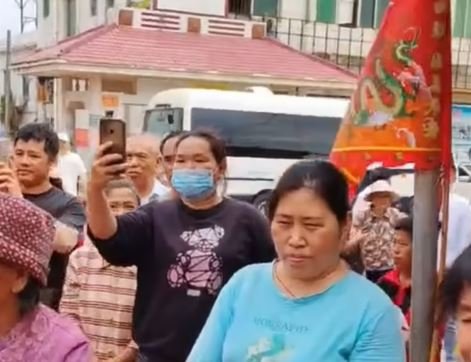
The confrontation in Nalu Village clearly illustrates this tension. Villagers were not protesting or challenging state authority; they were attempting to perform a ritual their ancestors had practiced for generations. The police blockade and the villagers’ efforts to worship despite it show the shrinking space for cultural practices that fall outside state-approved religious frameworks.
As similar incidents continue to arise, they reveal a deeper struggle over who defines the boundaries of cultural life in China. For many rural communities, the “Parade of the Gods” is a reaffirmation of identity and continuity. For the authorities, it is increasingly viewed as something to be managed, restricted, or eliminated. The scene in Nalu—villagers pleading to worship while police stand firm—provides a stark glimpse into the future of religion in China under tightening ideological control.

Uses a pseudonym for security reasons.