In his autobiographical book, USCIRF’s chair combines scholarship and personal memories to paint a dreadful scenario.


In his autobiographical book, USCIRF’s chair combines scholarship and personal memories to paint a dreadful scenario.

Sixteen years of efforts by the CCP were aimed at building a “Marxist” theory of China’s history—proving inter alia that the Uyghurs are in fact Chinese.

The President’s recent visit to Xinjiang, where he promised to enforce a “Marxist view of religion,” is reminiscent of Scipio sowing the city of Carthage with salt.

As told in the movie “Welcome to Yoga Village,” the story is funny and even inspiring. However, the CCP strategy behind it may be more subtle.

An important theoretical article published on June 15 evidenced once again that Xi uses “human rights” with a different meaning than the rest of the world.

Despite official denials, the policy is not only continuing. In fact, it is accelerating, as Adrian Zenz’s research shows.

The religious and ritual features of groups such as the Tiandihui did not resist the competition of Christianity, Communism, and the new religions. In the end, only the criminal element remained.
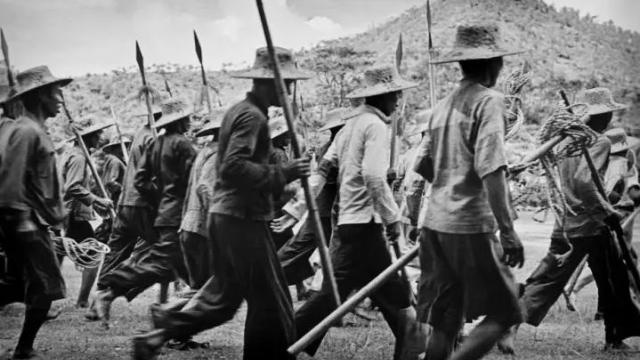
Confusion and ambiguity in the use of “fandong huidaomen” (reactionary secret societies) and “xie jiao” (heterodox teachings) has persisted to this day.

Both Sun Yat-Sen and some Marxists interpreted at least certain societies as forms of political or social rebellion.

By the 19th century, the society operated a wide range of criminal enterprises in several continents. But esoteric rituals were never forgotten.