Anti-cultists persuaded prosecutors to reintroduce discredited mental manipulation theories by interpreting anti-prostitution and forced labor statutes.
by Massimo Introvigne
Article 1 of 2

The prosecution of OneTaste and the sentencing of its founder, Nicole Daedone, along with her co-worker Rachel Cherwitz, by a federal court in Brooklyn on March 30, 2026, marks an unwelcome return of the pseudoscientific theory of “cultic brainwashing” in American courts of law.
The idea that “cults” use “brainwashing,” “mental manipulation,” or “mind control” to coerce their “victims” has always been the beating heart of anticult ideology, a point denounced—among others—by the U.S. Commission on International Religious Freedom in a 2020 report. Throughout the twentieth century, scholars of new religious movements mobilized to expose “brainwashing” as pseudoscience, no more respectable than theories about a Flat Earth. After years of courtroom battles, they succeeded in securing recognition of the mainstream academic consensus by judges.
In the United States, the decisive moment came in 1990, when a federal court examined the scientific status of “coercive persuasion” in the “Fishman” case. After hearing extensive expert testimony, the court concluded that such theories lacked empirical grounding and could not be admitted as evidence. It ruled that “Theories regarding the coercive persuasion practiced by religious cults are not sufficiently established to be admitted as evidence in federal courts of law.” The judge also excluded expert testimony—including that of clinical psychologist Margaret Singer, the most prominent proponent of anticult “brainwashing” theories—because her models failed to meet even minimal standards of scientific reliability.
European jurisprudence reached similar conclusions. In 2010, the European Court of Human Rights observed that “there is no generally accepted and scientific definition of what constitutes ‘mind control.’” It added that behaviors often cited as evidence of coercion—intense commitment, deference to leaders, communal living, enthusiastic proselytism—are common across a wide spectrum of religious traditions. Decades earlier, in 1981, the Italian Constitutional Court had abolished the Fascistera crime of plagio, a statute akin to “brainwashing,” declaring it incompatible with both scientific knowledge and religious liberty.
By the beginning of the twenty-first century, scholars believed that—except in France, which had passed an anti-cult law in 2001—the judicial use of pseudoscientific “cult brainwashing” models had been relegated to the past. The theories survived in the media, where deprogrammer Steven Hassan tirelessly promoted a popularized version of Singer’s ideas, but they rarely resurfaced in courtrooms.
Recently, however, “cultic brainwashing” theories, expelled through the front door, have begun creeping back in through the windows. One strategy has been to stretch the notion of “coercive control”—originally developed to describe abusive intimate relationships—until it covers religious groups. This maneuver ignores the fact that coercivecontrol theories were formulated for the specific dynamics of domestic abuse. While they may have legitimate applications in that field, extending them to religious organizations is simply a backdoor attempt to revive the pseudoscience of “brainwashing.”
A second strategy, which appears to benefit from the efforts of an international lobby, is to smuggle brainwashing theories into the interpretation of humantrafficking statutes. Anticultists quickly realized that the trafficking law offered a promising new terrain. The judicial weaponization of antitrafficking statutes began in Argentina.
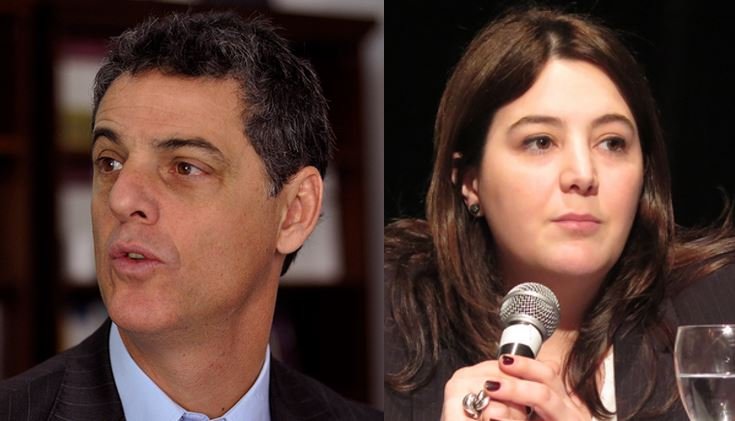
There, heated campaigns against trafficking led to the adoption of Law 26.364 in 2008, which defined the crime and established a network of state agencies to develop public policies and handle cases. The law, and its 2012 amendment under Law 26.842, emerged from intense political debates and were widely criticized by academics and jurists. In particular, the law’s abolitionist approach—treating all prostitution as violence against women—sparked fierce controversy, since it failed to distinguish between consensual sex work and trafficking. This blurred distinction, in turn, encouraged the construction of expansive categories of “vulnerability” and “victimhood.”
Beginning in 2018, the special Argentinian prosecutorial office for human trafficking,
PROTEX, established ties with domestic and international anticult activists and began prosecuting groups stigmatized as “cults” on the theory that they were also engaged in trafficking. This included cases where religious groups taught doctrines involving sexuality—reinterpreted by PROTEX as promoting prostitution—and cases where volunteers worked without a regular salary. Some Argentinian scholars, including prosecutors, believe that this expansion of “trafficking” into the religious sphere was partly motivated by PROTEX’s desire to justify a larger budget. Reinterpreting volunteer work as trafficking soon led prosecutors to target organizations within mainline religions as well, including the Catholic Opus Dei and the respected Evangelical charity REMAR.
In these “cult” cases, the overwhelming majority of alleged “victims”—and in some cases all of them—testified that they did not consider themselves victims and had voluntarily joined the groups. PROTEX countered that their testimonies should be disregarded because they had been “brainwashed” and remained under “brainwashing.” In several cases, Argentinian courts rejected this argument, and prosecutors lost their cases against the Christian group Cómo vivir por Fe (a branch of the Australiabased Jesus Christians), Pastor Roberto Tagliabué, and the Iglesia Tabernáculo Internacional. In other cases, PROTEX found sympathetic judges. Several prosecutions remain pending.
The United States has had a complicated relationship with Argentina’s approach. Argentina achieved the coveted “Tier 1” ranking in the U.S. State Department’s evaluations for its antitrafficking efforts. Yet for years, the State Department urged Argentina to amend its law so that force, fraud, or coercion would be essential elements of the crime, in line with the UN TIP Protocol, rather than mere aggravating factors. The 2023 TIP Report even warned that, given the breadth of conduct that could be construed as trafficking under Argentine law, “it was unknown how many of the cases prosecuted under Law 26842 involved trafficking offenses as defined by international law.”
One reason some in the U.S. antitrafficking establishment praised Argentina is that they, too, had been influenced by anticultists, including Steven Hassan. The FBI had cooperated with anticult activists before and during the events that led to the tragic end of the Waco siege in 1993, where 82 Branch Davidians, including 28 children, died. In the immediate aftermath, the FBI defended its actions and suggested that the Branch Davidians had set the fire themselves—a version no serious scholar of Waco now accepts.
The agency then sought academic guidance. Nancy Ammerman, a leading scholar of religion, was asked to submit a report to the Justice and Treasury Departments. She emphasized the catastrophic consequences of relying on anticultists. She reminded the government that “The notion of ‘cult brainwashing’ has been thoroughly discredited in the academic community, and ‘experts’ who propagate such notions in the courts have been discredited by the American Psychological Association and the American Sociological Association.”

Afterward, the FBI’s Critical Incidents Response Group began seeking cooperation from academic specialists on new religious movements. I myself was asked to coorganize a seminar for FBI agents in 1998 in Fredericksburg, Virginia, where Eileen Barker, J. Gordon Melton, James T. Richardson, Catherine Wessinger, Susan Palmer, and the late Jane WilliamsHogan also spoke—a veritable who’s who of scholars critical of anticult theories and the “brainwashing” hypothesis.
Unfortunately, different FBI departments would later resume their cooperation with the anti-cultists.

Massimo Introvigne (born June 14, 1955 in Rome) is an Italian sociologist of religions. He is the founder and managing director of the Center for Studies on New Religions (CESNUR), an international network of scholars who study new religious movements. Introvigne is the author of some 70 books and more than 100 articles in the field of sociology of religion. He was the main author of the Enciclopedia delle religioni in Italia (Encyclopedia of Religions in Italy). He is a member of the editorial board for the Interdisciplinary Journal of Research on Religion and of the executive board of University of California Press’ Nova Religio. From January 5 to December 31, 2011, he has served as the “Representative on combating racism, xenophobia and discrimination, with a special focus on discrimination against Christians and members of other religions” of the Organization for Security and Co-operation in Europe (OSCE). From 2012 to 2015 he served as chairperson of the Observatory of Religious Liberty, instituted by the Italian Ministry of Foreign Affairs in order to monitor problems of religious liberty on a worldwide scale.