A popular television series confronts viewers with the forbidden theme of false accusations of blasphemy and the risk of being lynched by mobs.
by A. Sahara Alexander

In Pakistan’s television landscape, often dominated by melodrama and sanitized morality, “Case No. 9” has emerged as a rare beast: a prime-time drama that dares to confront the unspoken. Episode 11 of the hit series, already gripping audiences with its central storyline of Seher’s courageous legal battle against her rapist—a powerful businessman named Kamran—takes an even bolder turn. It introduces a subplot so politically and socially volatile that it’s rarely touched on screen: the weaponization of blasphemy accusations against religious minorities in Pakistan.
At the heart of this subplot is Rohit, Kamran’s business partner and a Hindu—a member of a community that makes up 2% of Pakistan’s population and is often treated as second-class citizens. Rohit is portrayed as a man of integrity, someone who knows Kamran is guilty of raping Seher, yet protects his partner. The reason, revealed in a haunting flashback, is devastating: years ago, as a university student, Rohit was falsely accused of blasphemy. A mob gathered, ready to kill him. Kamran, then a fellow student, intervened and saved his life.
In Pakistan, this is not fiction—it’s history. False accusations of blasphemy have led to lynchings, imprisonments, and entire communities living in fear. The law, which carries the death penalty for defiling the name of the Prophet Muhammad or Islam, has often been misused to settle personal scores or target minorities. According to human rights organizations, dozens of people have been killed extrajudicially after being accused, and hundreds more languish in prison awaiting trial.
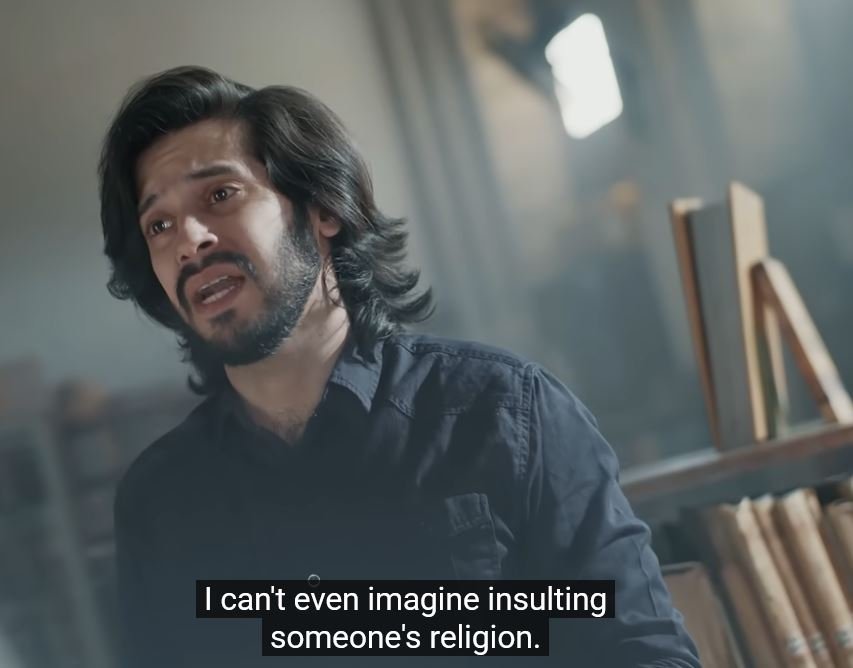
By dramatizing this reality, “Case No. 9” does something extraordinary: it puts the viewer inside the moral labyrinth that such a system creates. Rohit’s silence is not cowardice—it’s a debt, a trauma, a survival mechanism. He owes his life to Kamran, and in a society where justice is selective and memory is political, that debt becomes a chain.
The scene of young Rohit threatened by a furious mob, accused of a crime he didn’t commit, is one of the most chilling moments in Pakistani television history. And it forces viewers to ask: how many Rohits walk among us, silenced by fear, loyalty, or the knowledge that justice is not guaranteed?
The genius of “Case No. 9” lies in its refusal to offer easy answers. Kamran is both savior and predator, Rohit is both principled and complicit, Seher is both victim and warrior, and the system is both the backdrop and the villain.
In a country where even discussing false blasphemy accusations can be dangerous, “Case No. 9” has cracked open a door. Whether viewers choose to walk through it—or slam it shut—is the question that lingers long after the credits roll.

Uses a pseudonym for security reasons.