When religious freedom faces a new threat in media reports that obscure and distort reality
by Marco Respinti*
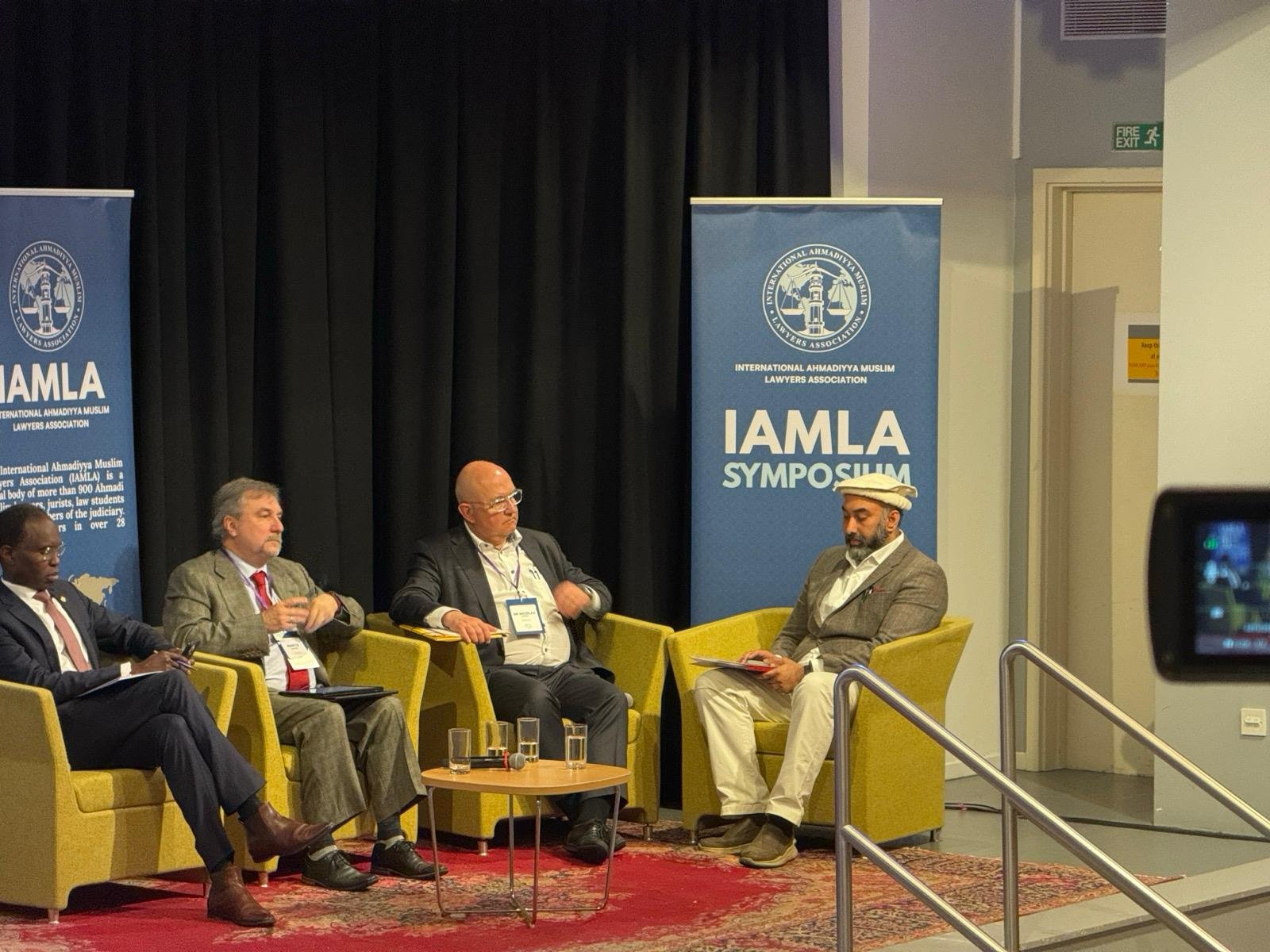
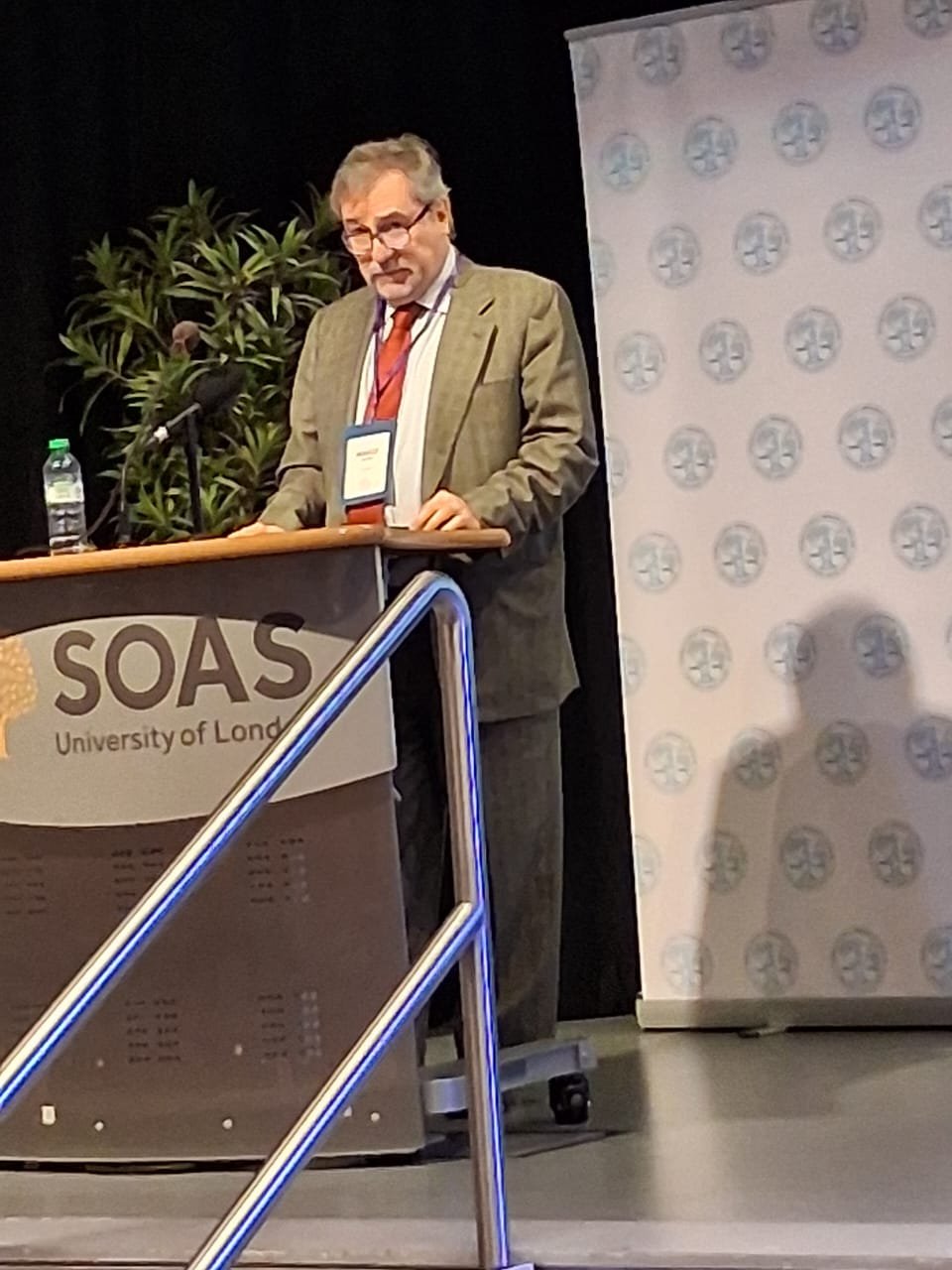
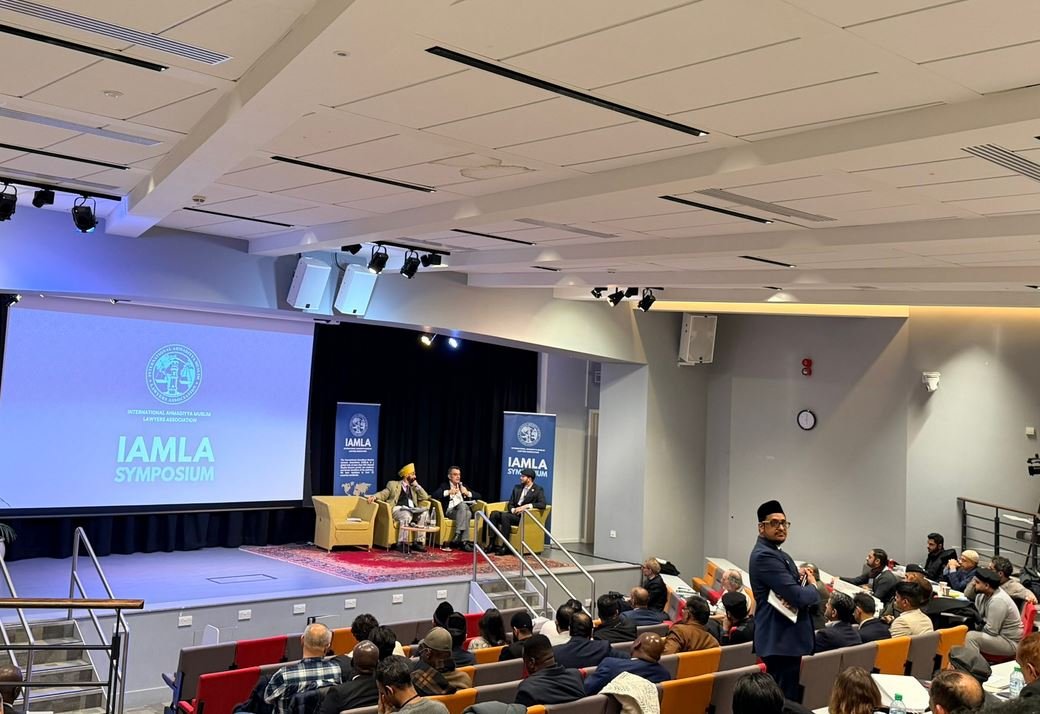
*A paper presented during the second panel, “Constitutional Discrimination Against Religious Minorities: International Human Rights, National Blasphemy Laws, and the Shrinking Space for Refugee Protection,” of the symposium “International Law on Trial: Justice in a Divided World,” organized by the International Ahmadiyya Muslim Lawyers Association (IAMLA) and held on February 7, 2026, at the Gallery Lecture Theatre, School of Oriental and African Studies (SOAS), University of London.
Media institutions undeniably wield substantial influence in religious liberty. The general public can, in fact, become aware of human rights violations worldwide—particularly in uncommon or sensitive contexts—only through media reporting. This primary responsibility of the media, however, becomes culpability when inaccurate or deliberately misleading coverage distorts public understanding of religious phenomena. Persistent misrepresentation and selective framing shape societal perceptions and produce especially detrimental effects on religious minorities, which consequently suffer a double injustice: first, from the violations they endure, and second, from the gratuitous stigma generated by superficial or hostile media portrayals. Moreover, the consequences of media distortions extend far beyond the audiences who read newspapers, watch TV, listen to radio shows, or follow online media. They shape policymakers’ attitudes, institutional responses, and ultimately the formulation of policy itself.
If this is the difficult situation already observable within certain sectors of democratic societies, it is easy to imagine the state of affairs in countries where the rule of law is precarious, the protection of personal liberty fragile, and the relationship between political power, various interest groups or lobbies, and the media at least opaque. One of the worst scenarios arises in countries where political authority is closely intertwined with a dominant religion and democratic transparency is limited. In such contexts, the weakened legal framework and the close interconnection between the political system and the religious establishment produce direct consequences: political and religious power together define civil and religious orthodoxy, effectively blurring the distinction between state and religion. Social and religious groups that fall outside these definitions are consequently rendered illegal, whether formally or substantively.
This dynamic manifests in various ways. The most pronounced forms include constitutional provisions and public laws that label certain beliefs as heterodox or heretical, thereby entangling politics and religion. More subtle mechanisms involve administrative persecution and complex registration procedures that prevent marginalized religious communities from obtaining legal recognition.
In countries where a close—or even formally structural and legal—link exists between political power and a single religion, and where this link, while not illegitimate per se, is not defined transparently, clearly, and objectively to protect other religious groups, the result is likely to be discrimination against all religious realities other than the privileged one. All the more so in countries where the privileged religion (whether or not it represents the majority of the population) becomes a state religion in the absence of, or in open disregard for, the aforementioned criteria: in these cases, not only is discrimination realized, but open persecution of other religious communities occurs and is even justified and promoted in the name of state interests, shielded by the consequential notion of defending public order, social peace, and border security.
About the role of the media, the crucial problem in this context is not merely the existence of these operative frameworks and regulatory constructs, but the fact that media outlets often uncritically echo the narratives of states that discriminate against or persecute religious minorities, thereby amplifying the damage by failing to scrutinize the legal architecture and social structures on which such narratives rest. It is worth emphasizing that the previously mentioned registration processes are increasingly becoming a significant barrier for minority religions even in democratic countries, and one can only imagine how much their restrictive potential is amplified in semi-democratic and despotic regimes.
In practice, although the media are theoretically expected to provide oversight, the crux of the matter is that, when reporting critically on non-democratic or semi-democratic states, they rarely challenge the systems that sustain discrimination—particularly when such scrutiny is deemed inconvenient—or they do so selectively, sometimes to comply with informal and ethically questionable arrangements. Several factors explain this. In democratic countries, the media sometimes refrain from challenging conditions abroad because they de facto align with the foreign policies of their own governments, which are shaped by economic or political considerations. Religious minorities bear the brunt of these alignments, suffering the consequences of policies designed to avoid international friction.
Also, media professionals have their price too, which need not be crassly monetary; it can take the form of public approval, career advancement, or fame. One should not imagine only trivial blackmail, for example, by politicians against media personnel. I have personally observed—and anyone attentive to public life can witness this almost daily—the willingness of journalists to seek recognition from political actors and, for this reason, to become more royalist than the king—acting on command even before the command is issued.
One important element reinforces the bias that the media either directly produce or disseminate: the difference between formality and substance, lip service and reality. Here, religious liberty serves as a true litmus test. Formally, freedom of religion is guaranteed in nearly every constitution worldwide. Even the successive constitutions of the staunchly anti-religious USSR included provisions granting religious liberty on paper, dating back to the time of Stalin. Yet political power invariably defines religious liberty to its own advantage, making the state the ultimate arbiter of such liberty. In countries where political and religious authorities are intertwined, this results in laws and practices that systematically disadvantage dissenting groups, creating a sharp divide between the formal provisions of law—often deceptively reassuring—and the harsh reality.
Too many media professionals appear satisfied with the mere formal articulation of religious liberty contained in constitutions and laws, and avoid questioning how such provisions are implemented in practice.
As a professional journalist, I have repeatedly observed this phenomenon among groups enduring severe hardships, such as the Ahmadiyya Muslim Jama’at in Pakistan and Bangladesh, the Hazara—primarily in Afghanistan—and the Ahmadi Religion of Peace and Light (not to be confused with the Ahmadiyya Muslim Jama’at) in several countries. Indifference has been, and remains, widespread, reflecting a reluctance among media outlets to confront the status quo in certain regions. In this context, I deliberately highlighted three distinct Muslim groups to illustrate the issue. A further, compounding problem is media ignorance, which often presents Islam as monolithic to meet public expectations through a standardized—and frequently highly prejudiced—portrayal.
A critical point is that the media’s failure to inform the public genuinely may even exacerbate the situation when national and international institutions, as well as policymakers, rely on inaccurate media reports. At “Bitter Winter,” we are well aware of the dangers that many asylum seekers belonging to persecuted religious groups face when the institutions responsible for evaluating their applications rely on journalistic accounts that mirror the persecutors’ narratives—perhaps because they are readily available or written in the evaluators’ own language.
What persecuted religious groups truly need is the opposite: diligent and careful media, honest and responsible reporting, and evidence-based insight. Media should, in fact, be part of the solution, not part of the problem. Journalists and other communication professionals must therefore consistently critique misinformation and dispute ignorance.
But this is already well known, and repeating it serves little purpose. To prevent these observations from degenerating into mere statements of principle—or even platitudes—while remaining fully aware that evil can never be eradicated once and for all, the media must begin to correct itself. Yet this necessary correction cannot come from outside, nor be imposed from above; those responsible for communication must take it upon themselves to change. The first step is to recognize that an accomplice, even indirectly, or an instigator of a crime is morally as guilty as the person who commits it materially. The second is to understand that the primary offense of any wrongdoer—and of their accomplices—is fundamentally moral: a crime remains a crime even when it falls outside legal categories or escapes formal sanctions. As Plato famously states in the “Apology of Socrates,” “The unexamined life is not worth living.”
In the same work, Socrates adds that true wisdom lies in recognizing one’s own ignorance. Too often, relevant actors operate in isolation, without adequate knowledge of conditions on the ground—a reflection of a broader—and indeed increasing—societal illiteracy characteristic of our time.
Let me therefore offer a personal contribution to this indispensable yet enormous task. The case of the Ahmadiyya Muslim Jama’at is serious, even bloody in several places. Yet the majority of people, including those living in countries that could potentially offer protection or assistance, remain largely unaware. They often do not know who the Ahmadis are, what they believe, or why they are persecuted to the point of death. For this reason, I initiated a modest informational project, consisting of a video documentary that illustrates their history, beliefs, current situation, and the discrimination they face. It is aimed at the general public, to serve truth through information and education, and to contribute—however modestly—to the relief of the Ahmadis. When it is finished, it will be but a drop in the ocean; yet my main goal is to compel people to avoid saying, “I didn’t know.”
Nevertheless, progress requires momentum. Effective responses demand coordinated action among media, civil society, policymakers, security professionals, and experts in religious studies and human rights. Comprehensive reforms are also necessary worldwide, including immigration legislation, protections for individuals persecuted in their countries of origin, and strengthened international cooperation. Existing laws are often misused to refuse or deport migrants, or to repatriate refugees facing persecution or death. Reforms must consistently protect those fleeing life‑threatening situations. Democratic governments, moreover, bear responsibility to advocate for human rights and religious liberty reforms in their engagement with non‑democratic states.
Everyone in the sectors mentioned above, and the individuals within them, has a role to play in envisioning and achieving improvement. Yet the media occupy a pivotal position at the point of convergence of all these dynamics. They are the voice—and they must decide whose voice they choose to be. There can be no middle path here.

Marco Respinti is an Italian professional journalist, member of the International Federation of Journalists (IFJ), author, translator, and lecturer. He has contributed and contributes to several journals and magazines both in print and online, both in Italy and abroad. Author of books and chapter in books, he has translated and/or edited works by, among others, Edmund Burke, Charles Dickens, T.S. Eliot, Russell Kirk, J.R.R. Tolkien, Régine Pernoud and Gustave Thibon. A Senior fellow at the Russell Kirk Center for Cultural Renewal (a non-partisan, non-profit U.S. educational organization based in Mecosta, Michigan), he is also a founding member as well as a member of the Advisory Council of the Center for European Renewal (a non-profit, non-partisan pan-European educational organization based in The Hague, The Netherlands). A member of the Advisory Council of the European Federation for Freedom of Belief, in December 2022, the Universal Peace Federation bestowed on him, among others, the title of Ambassador of Peace. From February 2018 to December 2022, he has been the Editor-in-Chief of International Family News. He serves as Director-in-Charge of the academic publication The Journal of CESNUR and Bitter Winter: A Magazine on Religious Liberty and Human Rights.