Uyghur food is a bridge to introduce and protect Uyghur culture. But the eateries should not humor Beijing in their language and symbols.
by Abdurehim Gheni Uyghur
“If you do not protect your own honor, the crows will peck at your flesh” (Uyghur proverb).
“To yearn for a life of colonization and slavery while living in a free world is the greatest threat to our nation’s struggle for independence” (from my diary).
Recently, my critical articles about certain Uyghur restaurant owners living as political refugees in Western countries have sparked a massive uproar online. I wrote about how some owners, despite living in free societies, continue to engage in Chinese state propaganda and excessively flatter Chinese customers, thereby damaging our nation’s dignity and reputation. After this, some people began to slander me, saying, “He is nitpicking Uyghur restaurants,” or “He is against the restaurant business.” Those who say such things either do not understand me or are deliberately trying to distort the truth.
The truth is simple: I am not against Uyghur restaurants. On the contrary, I see them as an important bridge for introducing Uyghur culture, and I have always supported them.
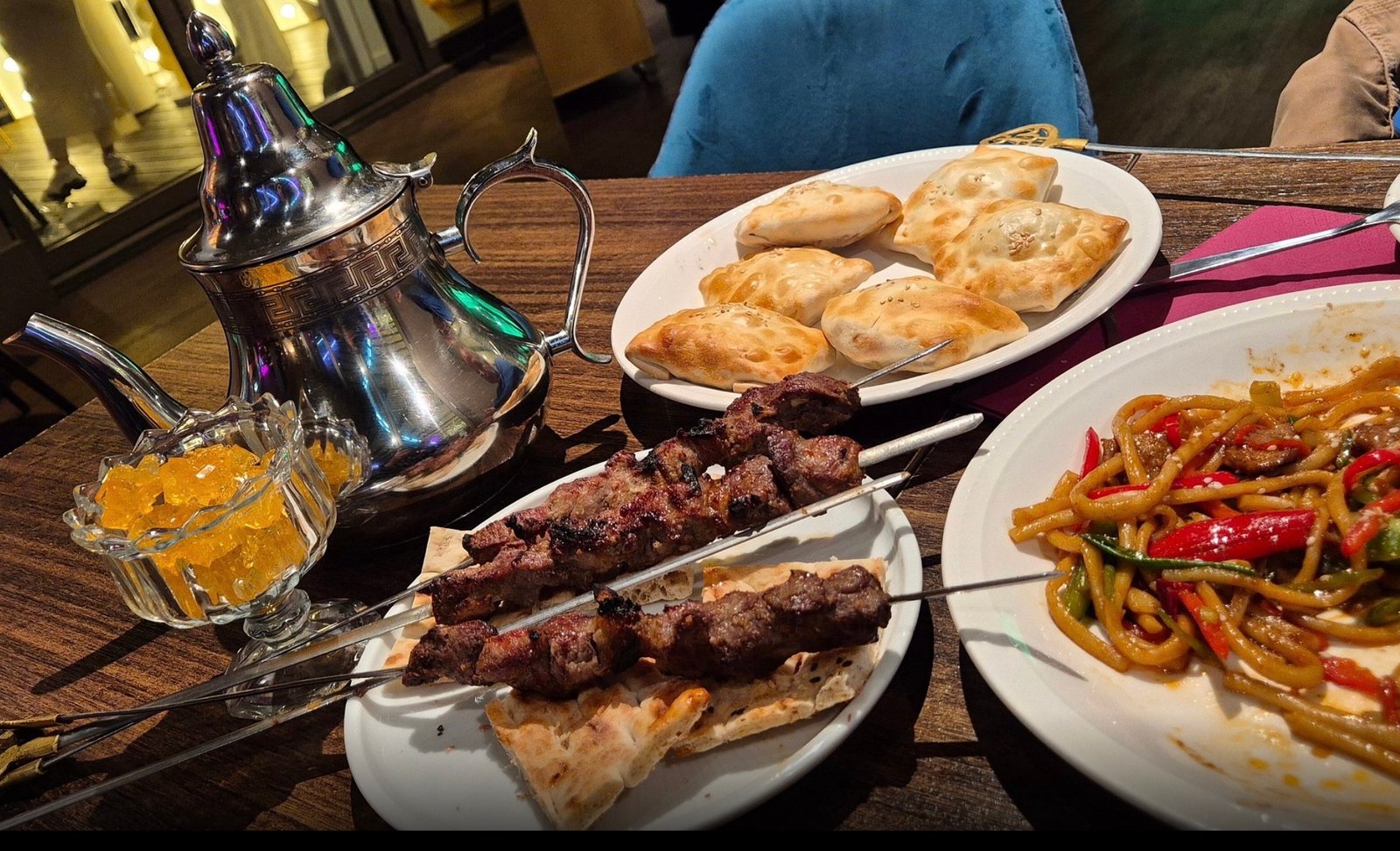
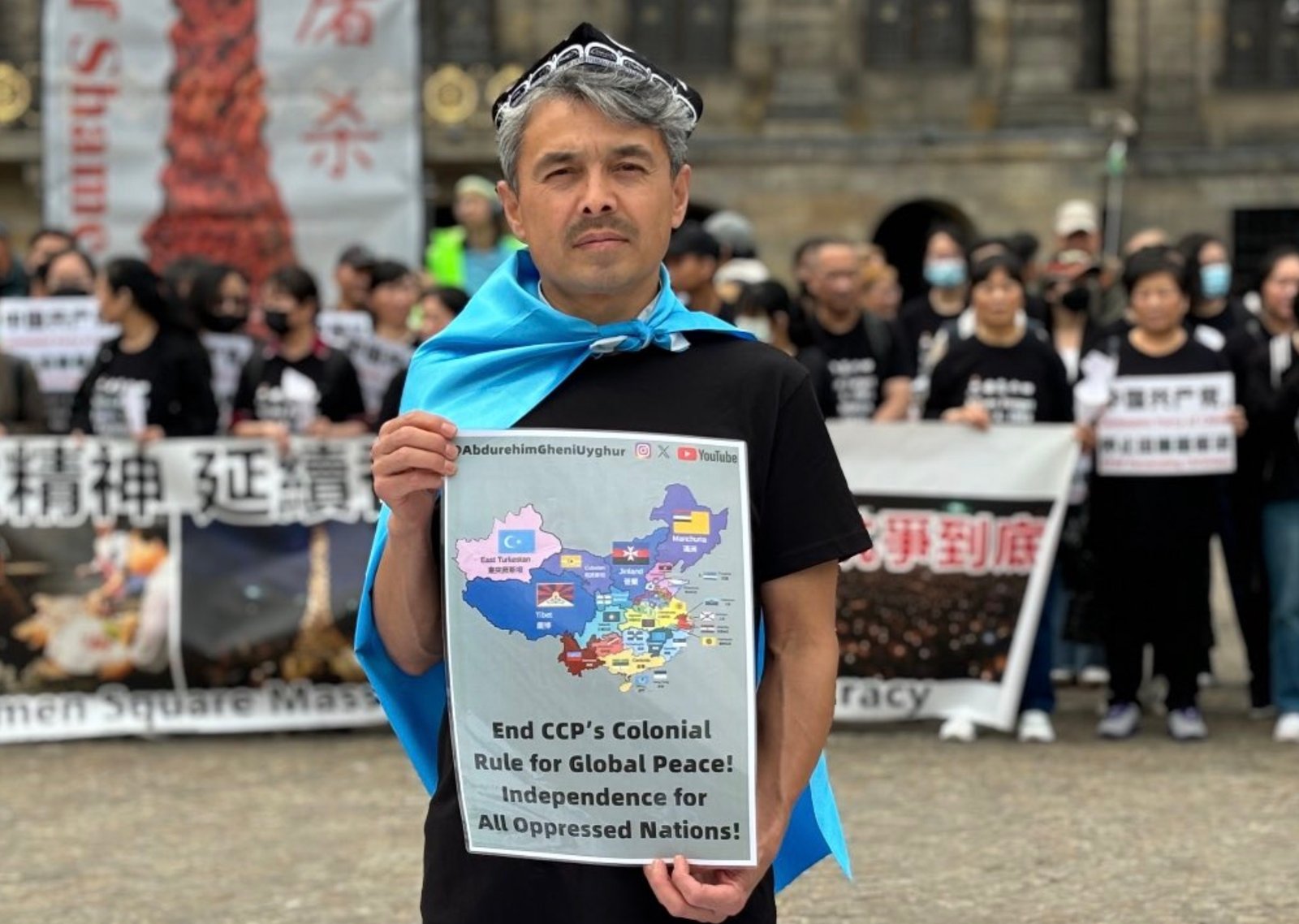
During the years I spent conducting solo protests at Dam Square in Amsterdam, tourists from all over the world would ask me, “Is there a Uyghur restaurant in the Netherlands?” I would enthusiastically recommend the Uyghur restaurants in different cities, naming them one by one. I would encourage people by saying, “Support the Uyghurs, go to Uyghur restaurants, eat Uyghur food, and try to understand us through our culture.”
Many tourists visited Uyghur restaurants because of these conversations. After enjoying the food, they would tell the owners, “A Uyghur man with a Central Asian skullcap protesting at Dam Square sent us here; your food is truly delicious.” The restaurant owners, grateful for this, would call me and say, “You are the best promoter of Uyghur restaurants; whenever you come, we will host you as our guest and won’t take money from you.” As a political activist opposing the Chinese government, I have supported restaurants that introduce our culture through real, practical actions.
So, what am I against? I am not against selling food to Chinese customers; anyone can enter a place of business. What I oppose are certain practices that undermine our dignity.
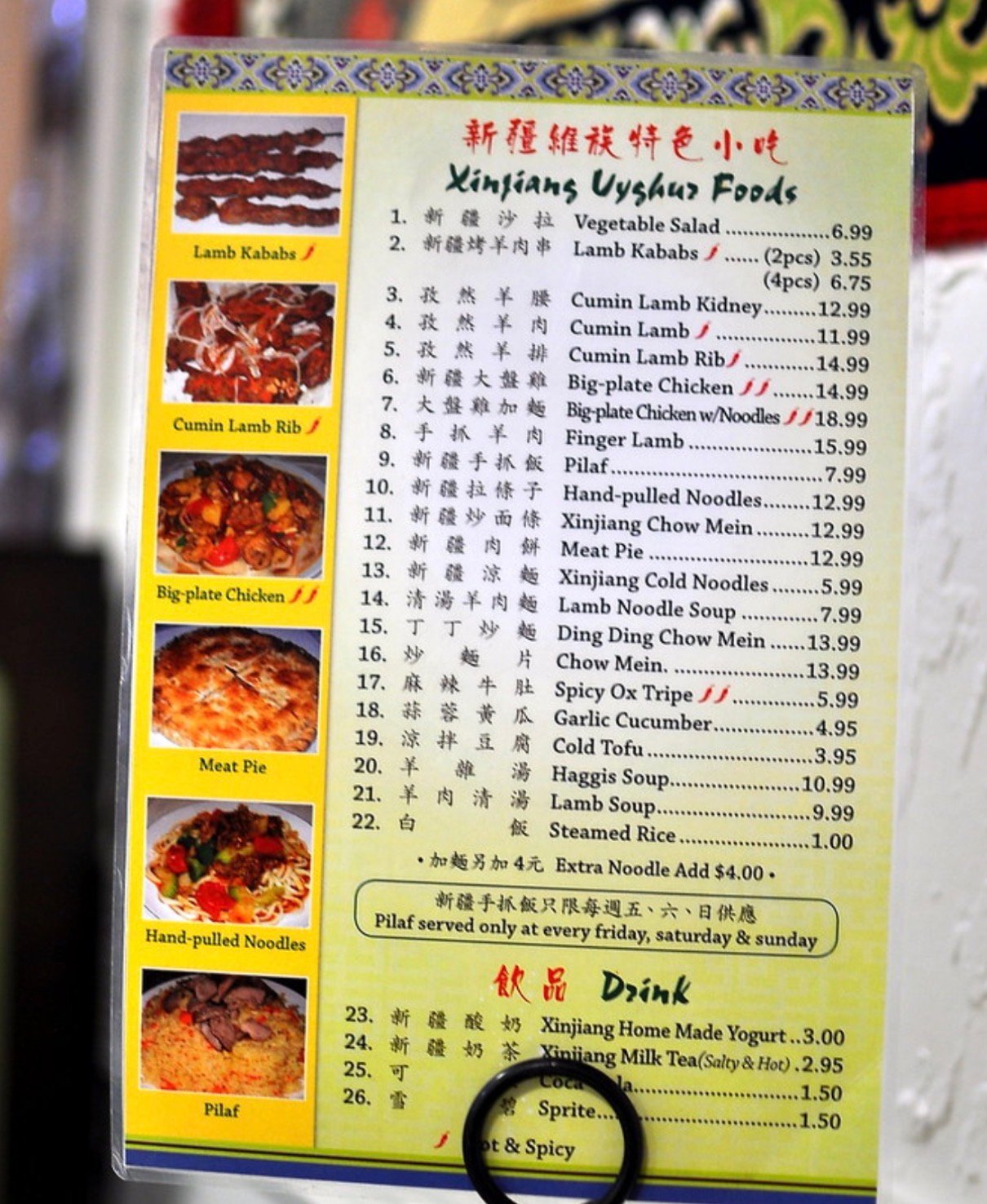
A dignified person living in a free country should not use the colonial name “Xinjiang,” imposed by the Chinese occupying government, to sell their national identity. This is not cultural introduction; it is undignified, shameful, and a form of mental slavery. It reflects the proverb: “The dog loves the one who beats it.”
In the countries where you sought asylum, you received citizenship or residency by testifying that “the Chinese government occupied our homeland East Turkestan, renamed it ‘Xinjiang,’ restricted our language and writing, deprived us of opportunities, and practiced national discrimination.” Protecting the name and honor of the nation is therefore a moral duty you cannot evade. Excessively flattering Chinese customers—far more than others—and even going as far as to put food into their bowls or mouths wounds our dignity and harms our reputation.
Look at Tibetan restaurants in the diaspora. Tibet is also under Chinese colonization, and their political situation is similar to ours. Yet Tibetan restaurants proudly hang the Tibetan flag and do not write in Chinese. Why not take inspiration from their national spirit? Even if you cannot hang a flag, at least do not use the colonial name “Xinjiang” in speech or writing.
As we all know, the Chinese government has forcibly imposed the Chinese language for years. The process of squeezing our mother tongue out of education began in the 2000s and ended with its complete removal from schools in 2017. Our children were deprived of the right to learn their own language; Uyghur writing disappeared from public life; our people were pushed into a situation where they cannot live without Chinese; and our language was brought to the brink of extinction before our eyes.
Under such circumstances, when diaspora restaurants choose not to write the names of our dishes in our own language, but instead use the colonial language imposed by the occupying government—as if echoing its policies—it breaks one’s heart. It makes one think. It means we are repeating China’s “inseparable” narrative even in the diaspora.
My recommendation is simple: in Uyghur restaurants, let the Uyghur language take the place of Chinese on menus. This is the rightful place of our language. Alongside it, write in the language of the country you live in. Our script adds a unique character to your restaurant and can help your business grow, because people in Western countries are interested in distinctive cultures. Promoting your restaurant in the local language will bring more customers. In doing so, you also help preserve our disappearing language and introduce it to other nations.
Many of you believe your restaurant cannot survive without the small minority of Chinese people living in these countries. But you forget that you are now in the free world. There is a vast society around you, with millions of local people who form the overwhelming majority. If you focus only on that small minority and sacrifice your dignity, you are ignoring the real potential of the local market. It is like the frog that never leaves the well. But you left that well long ago. If you simply feel like a free person who has left it, open your eyes, look around, and reach out—you can attract far more customers than that small group.
If you patiently and consistently promote your restaurant and our cuisine to local people, you can build a strong market. At first the path may seem difficult, but later it becomes like a spring that never stops flowing. Many Uyghur restaurants in the diaspora have prospered by introducing Uyghur food to local people, reaching more customers, and flourishing with dignity. If you do this, I will support you with all my strength, help you with promotion, and I believe our people will support you as well.
Why, then, do you sacrifice your own dignity—and our nation’s dignity—just to appear charming in the eyes of the Chinese?
After I consistently raised these issues and held a discussion on “Sinicization and Uyghur Restaurants” with sociologist Dr. Abdureshit Jelil Qarluq at the “Uyghur Tea House,” many Uyghurs expressed their gratitude. The issues that troubled me were troubling them as well. They had not been able to persuade the restaurant owners, even when politely asking them not to use the name “Xinjiang” or write in Chinese on menus.
After these sharp criticisms, some restaurants removed the colonial name “Xinjiang” from their signs and added Uyghur to their menus. This is a victory, because it created an atmosphere in which people fear public anger and worry about being shamed. However, some restaurants with ties to Chinese embassies remain unmoved. As a political activist opposing the Chinese occupying government, I will continue my struggle against this planned “Xinjiang” propaganda.
We Uyghur customers must also take responsibility. If we see the colonial name of our homeland or menus written in Chinese—the language forcibly imposed for years and now a direct cause of the disappearance of our mother tongue—let us politely remind them. If they do not listen, let us show our stance by not eating in restaurants that desecrate our dignity. Let us criticize by taking pictures and videos. The stance of the public educates the businessperson.
I am a political activist fighting for the freedom of Uyghurs against Chinese colonization, and I will never give up this mission. To those who threaten to sue me, I say: I am ready at any time. The hardships I endure in defending the common interests of our nation only temper my will like steel.
Although the garden that connects you and me is the garden of “Uyghur-ness,” the fundamental difference between us is the slavery toward China in you and the rebelliousness against China in me. Future generations will judge who stands on the honorable page of history and who on the dishonorable one. History itself will show who truly burned for the nation.
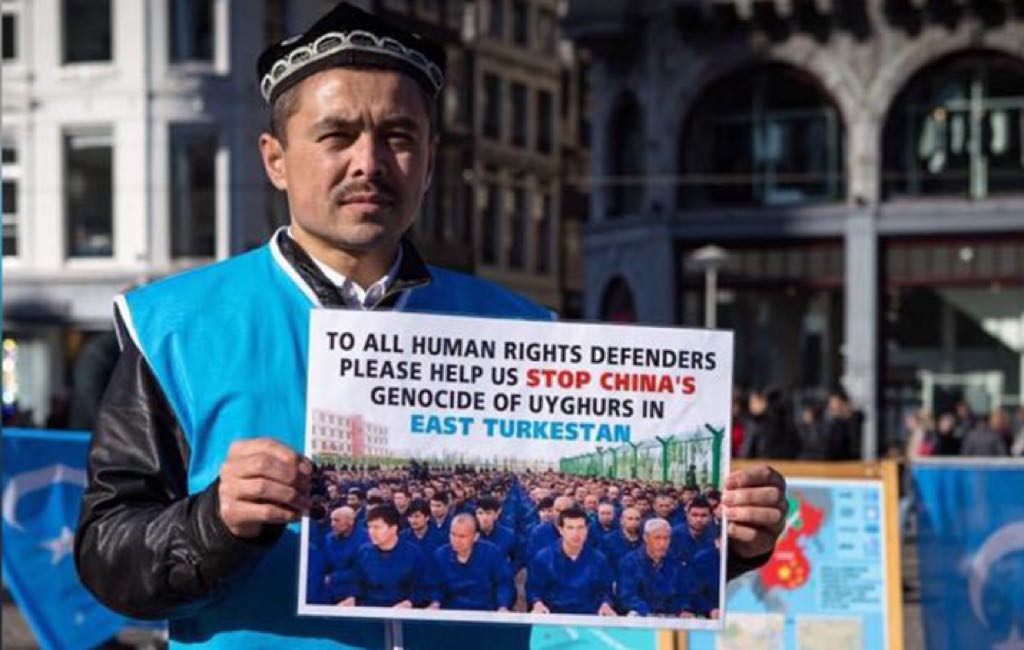
Abdurehim Gheni is a Uyghur activist living in the Netherlands who became famous for his solo protests in Dam Square in Amsterdam. He also educates tourists to the reality of the Uyghur genocide.