Shincheonji and others under threat: CAP‑LC sounds the alarm on Korea’s slide toward religious repression.
by Massimo Introvigne
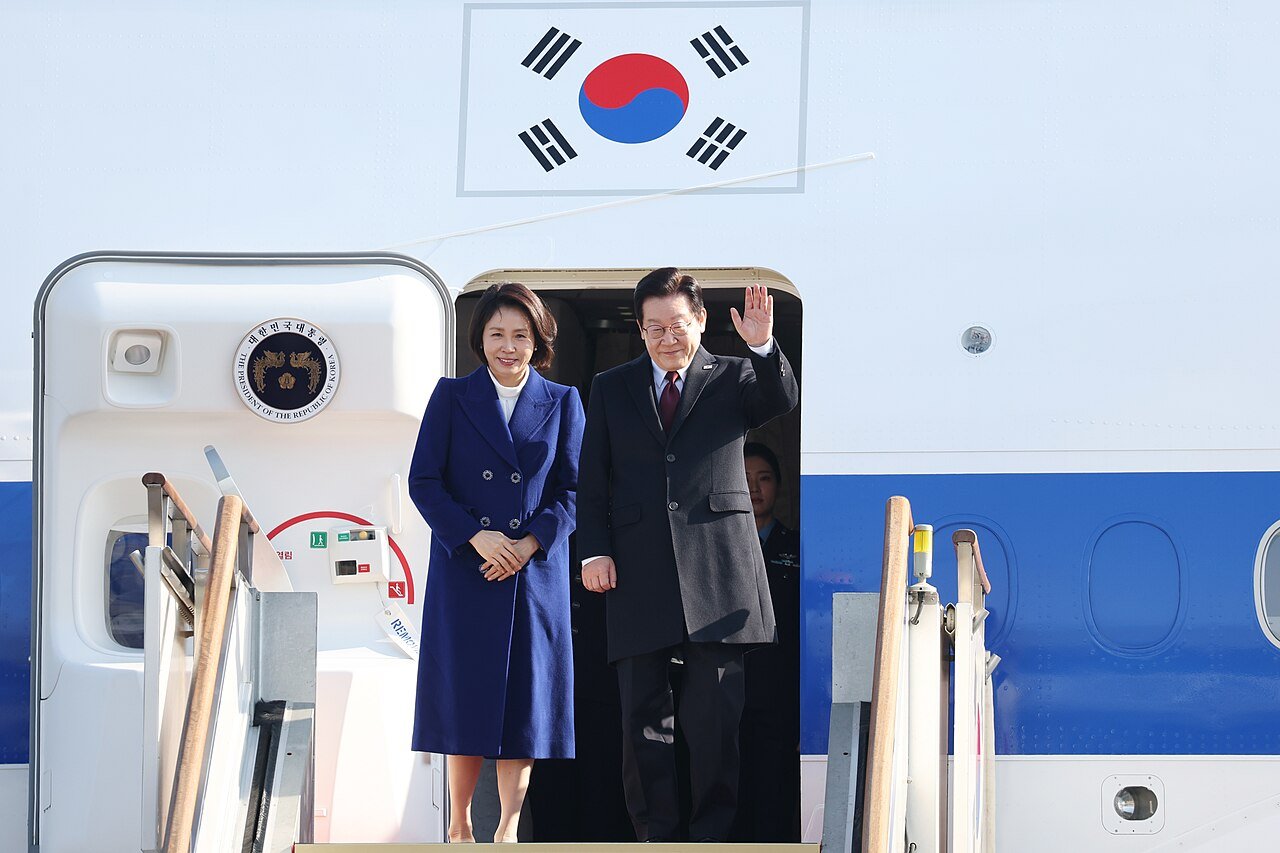
On January 19, CAP‑LC (Coordination des associations et des particuliers pour la liberté de conscience), an ECOSOC-accredited NGO specializing in freedom of religion or belief, filed a written statement with the UN Human Rights Council in Geneva denouncing what it describes as a rapidly escalating religious liberty crisis in the Republic of Korea. The document focuses on the government’s threats to dissolve Shincheonji and other minority religious organizations, warning that such actions violate the ICCPR and revive the language and logic of anti-heresy campaigns of old.
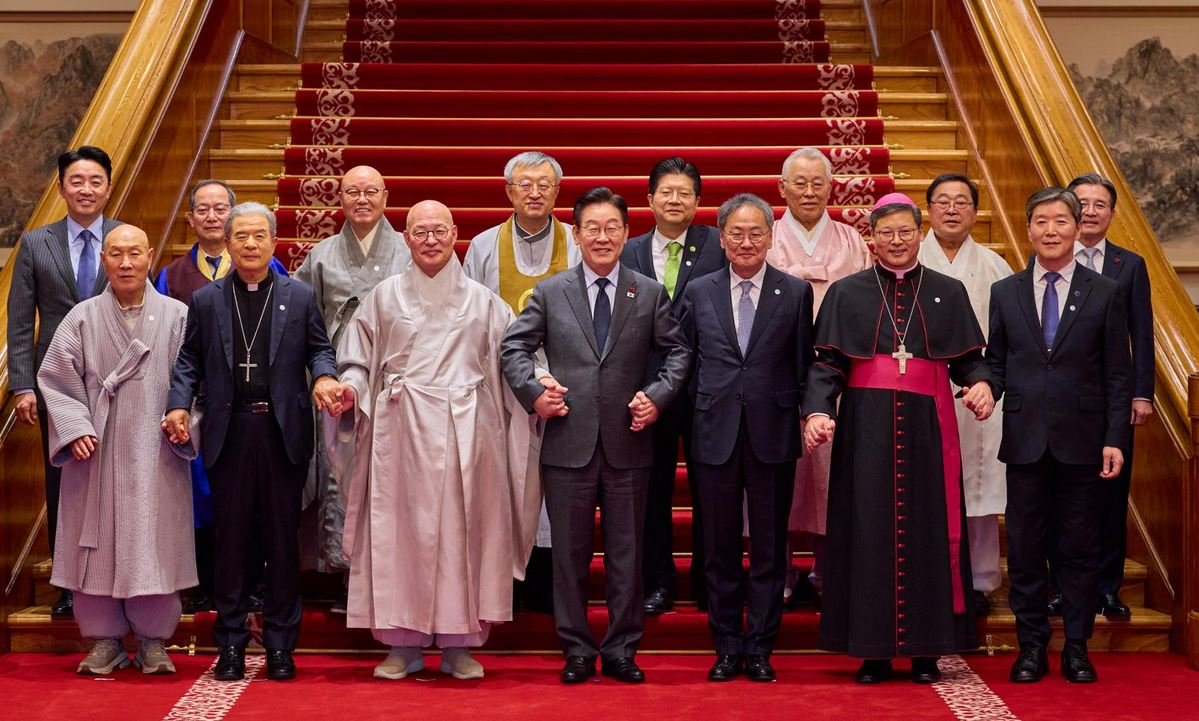
The statement opens by recalling that President Lee Jae Myung, as widely reported in Korean and international media, has threatened to pursue the legal dissolution of several religious groups, including the Shincheonji Church of Jesus. CAP‑LC cites the President’s January 12, 2026 meeting with leaders of majority religions, who told him that “The damage caused by pseudo-cult religions like the Unification Church and Shincheonji is severe,” that “Dissolving religious groups that harm the nation and its people would likely gain public consensus,” and urged the government to consider “using the assets of problematic religious foundations to support victims of pseudo-religions.” According to the statement, the President replied that “the harm to our society [caused by these ‘pseudo-cult religions’] has been neglected for too long, leading to enormous damage.”
Another newspaper reported that “President Lee Jae Myung voiced his agreement with religious leaders’ calls to disband the Unification Church, the Shincheonji Church of Jesus and other ‘illegitimate, heretical religious organizations’.” Prime Minister Kim Min-seok reinforced this rhetoric, declaring that “Pseudo-religions are social evils that need to be eradicated,” and calling for “a thorough joint investigation into the Unification Church, Shincheonji and other groups.”
CAP‑LC notes that Korean authorities have invoked Japan’s 2025 dissolution of the Unification Church as a precedent, while seemingly ignoring the fact that four UN Special Rapporteurs sharply criticized that decision on October 3, 2025, as “based on civil tort judgments that invoked the vague concept of ‘public welfare’.” The Rapporteurs warned that “The civil tort rulings on which the dissolution decision was based rely on the violation of ‘social appropriateness’ which were deemed to constitute a serious harm to ‘public welfare.’ As previously noted by the Human Rights Committee, the concept of ‘public welfare’ is vague and open-ended and may permit restrictions exceeding those permissible under the ICCPR.” They also stressed that “any restrictions on the exercise of Article 18 rights must comply strictly with the limitations set out in Article 18.3 of the ICCPR.”
According to CAP‑LC, the situation in Korea is “even more blatant than in Japan.” In Japan, the dissolution of the Unification Church was tied to allegations of excessive pressure to solicit donations. In Korea, the arguments invoked for dissolution “do not focus on donations” at all. The statement asks the essential question: “What, precisely, is Shincheonji accused of?”
CAP‑LC expresses concern over the repeated use of expressions such as “heretical religious organizations,” “pseudo-religions,” and “pseudo-cult religions,” noting that such terminology is “clearly impermissible under Article 18 of the ICCPR.” Governments, it argues, cannot act as theological arbiters deciding which religions are “true” or “pseudo,” nor can they initiate “witch hunts against ‘heretics’.” The statement finds it troubling that President Lee discussed dissolving “heretical” organizations with leaders of mainline churches that have long viewed Shincheonji as a competitor, “guilty of promoting non-conventional (‘heretical’) theologies and ‘stealing their sheep.’”
Download the written statement (date of distribution subject to change).
The President’s claim that Shincheonji has caused “enormous damage” is challenged directly. CAP‑LC notes that Shincheonji is currently being investigated for alleged electoral law violations, but that such cases have historically resulted only in small fines and “certainly do not justify the draconian measure of dissolution.” The statement also warns that recent commentary in Korea appears to question “the right of all citizens—including members of minority religions—to participate freely in political life.”
The document then addresses the revival of old accusations that Shincheonji spread COVID-19 or engaged in harmful “deceptive evangelism.” CAP‑LC recalls that Shincheonji’s leader was acquitted of all COVID‑related charges by the Suwon District Court (2021), the Suwon High Court (2021), and the Supreme Court (2022), which found “no evidence of obstruction” and confirmed that “Shincheonji actively cooperated with the submission of data and promptly provided them to the CDCH [Central Disease Control Headquarters].”
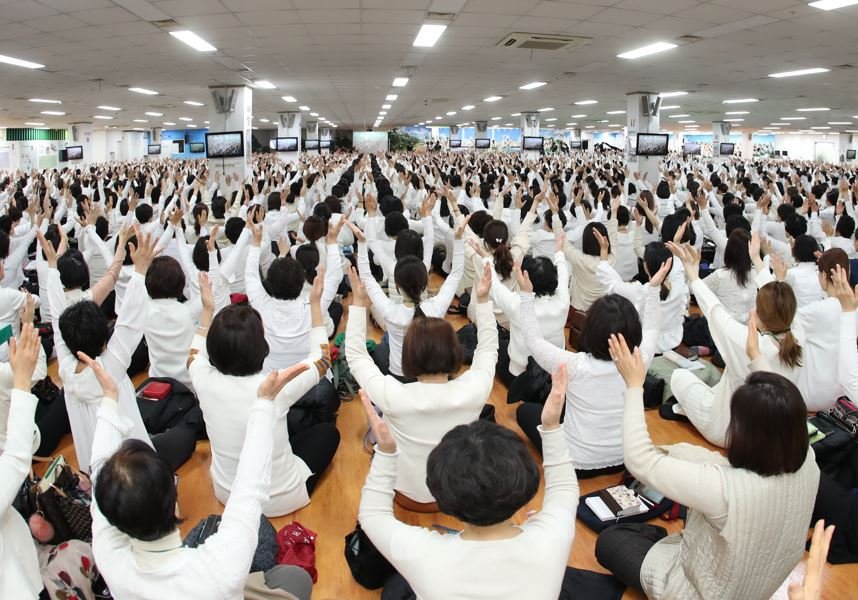
On evangelism, the Supreme Court ruled on August 11, 2022, that Shincheonji’s former “covered” evangelism may perhaps be regarded as ‘deserving social or ethical condemnation,’ but lacks the ‘coercive element’ that would make it illegal.” CAP‑LC notes that the Court’s decision “closed a window through which theories of ‘brainwashing’—discredited and unanimously rejected by mainline scholars of new religious movements—had attempted to re-enter legal discourse.”
The statement concludes that “there is no evidence whatsoever that Shincheonji caused ‘enormous damage’ to Korean society.” If anything, it may have caused “damage to mainline Christian denominations by converting some of their members.” But as the Supreme Court affirmed, “Freedom of religion includes the freedom of mission to promote one’s religion and gather new believers, and the freedom of mission includes freedom to criticize other religions or to encourage conversion of believers of other religions.”
CAP‑LC warns that “the anti-heresy witch hunt, once the domain of Christian fundamentalists and now seemingly embraced by the President, is incompatible with Korea’s obligation to respect religious liberty under the ICCPR.” It urges the Republic of Korea “to uphold freedom of religion or belief and to renounce plans to dissolve Shincheonji and other religious organizations whose principal ‘offense’ is their success, perceived as unwelcome competition by other denominations and churches.”
CAP‑LC’s statement is both timely and essential. South Korea has long been a vibrant democracy. Still, the rhetoric now coming from its highest officials—speaking of “heretics,” “pseudo‑religions,” and “eradication”—signals a dangerous drift toward state-endorsed religious discrimination. The Human Rights Council should take this warning seriously. Freedom of religion or belief is a universal right, not limited to the majority faiths. CAP‑LC rightly insists that Korea must reverse course before the damage becomes irreversible.
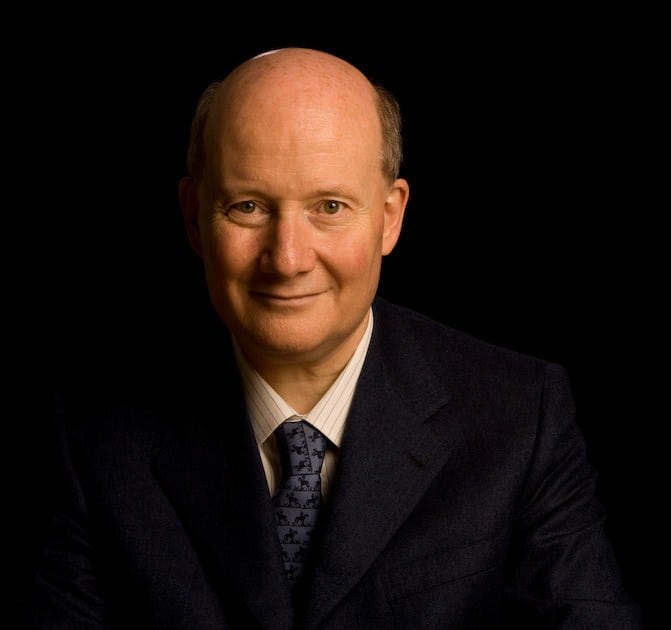
Massimo Introvigne (born June 14, 1955 in Rome) is an Italian sociologist of religions. He is the founder and managing director of the Center for Studies on New Religions (CESNUR), an international network of scholars who study new religious movements. Introvigne is the author of some 70 books and more than 100 articles in the field of sociology of religion. He was the main author of the Enciclopedia delle religioni in Italia (Encyclopedia of Religions in Italy). He is a member of the editorial board for the Interdisciplinary Journal of Research on Religion and of the executive board of University of California Press’ Nova Religio. From January 5 to December 31, 2011, he has served as the “Representative on combating racism, xenophobia and discrimination, with a special focus on discrimination against Christians and members of other religions” of the Organization for Security and Co-operation in Europe (OSCE). From 2012 to 2015 he served as chairperson of the Observatory of Religious Liberty, instituted by the Italian Ministry of Foreign Affairs in order to monitor problems of religious liberty on a worldwide scale.