The recent Zion Church incident represented a shocking but unsurprising escalation in the crackdown on independent Christian communities.
by Vivian Ren
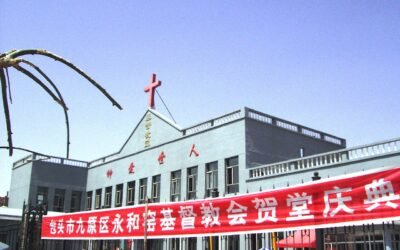
Within the landscape of Christianity in China, the “Three-Self Church” represents safety and legality—but it is a church tightly controlled and distorted by an atheist government. By contrast, the “house church” stands for fidelity to authentic faith, and for that very reason has become the primary target of persecution and suppression. Since 1949, the Chinese Communist Party has never ceased its campaign against house churches. This persecution is not accidental; it is part of a systematic strategy of religious control, pushing uncompromising believers underground and stripping them of the freedom to gather and to express their spirituality. The Zion Church incident of 2025 marked a shocking escalation of this repression, drawing widespread international attention and condemnation.
House churches originated as a refusal to accept the Three-Self Church’s politicization. Many Christians, unwilling to submit their faith to government censorship, chose to meet in private homes or discreet venues, continuing to preach the whole Bible and the pure gospel. These churches are not clandestine, yet the authorities brand them “illegal,” subjecting them to raids, dispersing their gatherings, and even labeling believers as “reactionaries.” The derogatory term “underground church” not only tarnishes their legitimacy but also provides a pretext for violent intervention. For years, house church believers have endured layers of surveillance: phones tapped, cameras installed in their homes, meetings infiltrated. Even a small Bible study or prayer gathering can suddenly turn into a mass arrest.
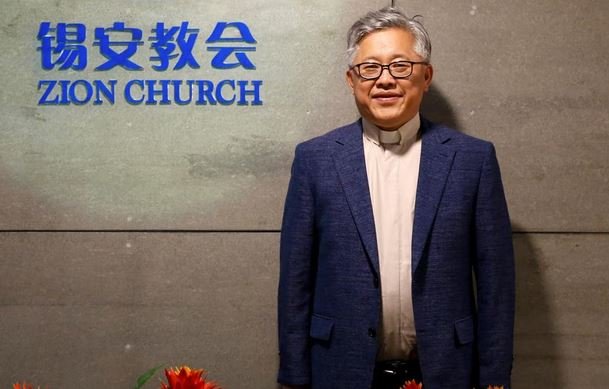
On the evening of October 10, 2025, persecution reached a new height. Police in Beihai, Guangxi Province, raided the home of Zion Church’s founding pastor, Ezra Jin (Jin Mingri), and took him away. Dozens of church leaders were also arrested. At least 18 pastors and staff members were formally charged with “illegal use of information networks.” Zion Church, one of the largest house churches in China, counts tens of thousands of believers across multiple provinces. This large-scale crackdown signaled an escalation in the government’s campaign against house churches, with those arrested facing up to three years in prison. The operation was not isolated but the culmination of years of systematic pressure: surveillance, harassment, property seizures, forced closures of meeting places, and repeated short-term detentions. The October 2025 action was highly coordinated across provinces, sweeping up pastors, elders, and co-workers, revealing the authorities’ meticulous planning and determination.
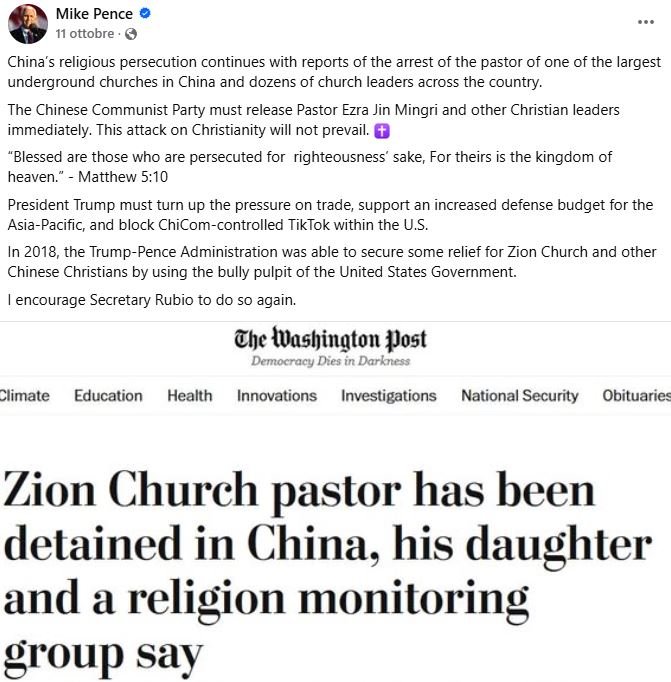
Former U.S. Vice President Mike Pence remarked, “China’s religious persecution continues to escalate. Reports indicate that the pastor of one of China’s largest underground churches and dozens of church leaders nationwide have been arrested.” He urged the CCP to immediately release Pastor Ezra Jin Mingri and other Christian leaders, stressing that this assault on Christian faith will ultimately fail.
This incident is not unique. Surveillance, arrests, and prison sentences against house church believers occur frequently, even affecting foreign visitors, underscoring the regime’s zero tolerance for religion. In recent years, similar crackdowns have repeatedly struck large house churches such as Chengdu’s Early Rain Covenant Church: pastors sentenced to long prison terms, believers placed under house arrest, and children’s education interfered with. In 2023, thousands of house church members were jailed on charges of “illegal publishing” or “inciting subversion.” In 2024, church properties across multiple regions were confiscated, leaving believers displaced. The scale and coordination of the Zion incident show that the authorities are shifting from “localized harassment” to a “nationwide sweep,” aiming to dismantle the independent Christian network entirely.
Many Chinese Christians find themselves trapped in a painful dilemma. To preserve pure faith and join a house church means living under constant threat of surveillance, interrogation, arrest, torture, and imprisonment, with no guarantee of safety for themselves or their families. Police can storm ordinary Bible study groups: women and children screaming in fear, Bibles confiscated, worshippers handcuffed and dragged away; pastors beaten in interrogation rooms to force them to sign “repentance statements.” To protect their families, believers must abandon authentic faith and join the government-controlled, distorted Three-Self Church. The holy cross is bound in chains, and countless devout believers weep in anguish, suffering spiritual torment.
The deeper root of this persecution lies in the CCP’s atheist ideology and its hostility toward Christianity. Scripture teaches, “Seek first his kingdom and his righteousness.” Still, the authorities demand that believers “love the Party and the nation” above all else, treating Christian faith as a potential threat. House churches refuse such compromise, insisting that Christ is the head, and thus they become the primary target. The result is bloodshed among church leaders, exile for believers, obstruction of the gospel, and a Christian community plunged into a long, bitter winter.
Yet after the darkest hour, light will surely come; after the coldest winter, spring will inevitably arrive. I call on the international community to continue monitoring the state of religious belief in China, to apply diplomatic pressure, and human rights sanctions. I continue to pray for my brothers and sisters in Christ in China, that together we may witness God’s power through prayer. Let us work together to bring change, to restore genuine space for faith. The echoes of the Zion incident will awaken more consciences and ultimately break the iron chains of persecution.

Uses a pseudonym for security reasons.