His younger brother, Amoon, was acquitted after twelve years in jail. Two days later, a mob in Punjab burned the clinic of another accused believer.
by A. Sahara Alexander
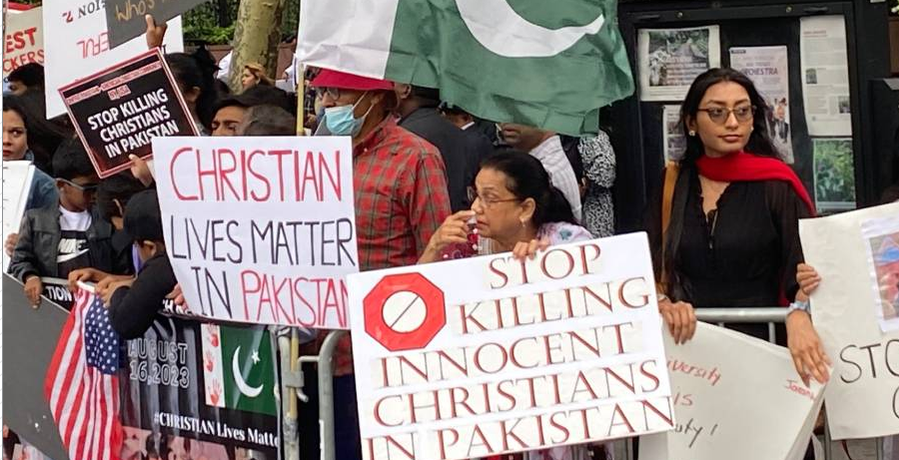
On October 7, 2026, with a decision only recently published, the Supreme Court of Pakistan rejected the appeal of Qaiser Ayub, a Christian and the father of three children, and confirmed the death sentence pronounced against him for blasphemy. The same bench acquitted his younger brother, Amoon Ayub, finding the evidence against him insufficient. For Amoon, freedom comes after almost twelve years in prison. For Qaiser, very few legal options remain.
The story began in 2011, with allegations that blasphemous material had appeared on a website linked to Qaiser’s name. His defense has always been simple. He said he had shut down the website in 2009, and that someone else later reactivated it, leaving his name in the copyright notice. In this version of events, whoever posted the offending content was a third party exploiting an abandoned site. The brothers were arrested only in 2014, three years after the accusation. In December 2018, a trial court sentenced both to death, and in June 2022 the Lahore High Court confirmed the convictions.
The prosecution built its case largely on electronic evidence. Human rights advocates have questioned how this material was authenticated and whether anyone established who actually controlled the website when the content was uploaded. Digital files can be manipulated, and a name in a copyright line proves little about who wrote what appears on a page. The Supreme Court found the evidence too weak to sustain Amoon’s conviction, yet strong enough to send his brother to the gallows. Observers may legitimately wonder how the same body of material could lead to such different conclusions.
The Centre for Legal Aid, Assistance and Settlement (CLAAS), a UK-based organization that has supported the two brothers throughout the proceedings, expressed its concern about the decision and called for every remaining legal avenue to be pursued on Qaiser’s behalf. Pakistani law allows a review petition before the Supreme Court itself, and the Constitution gives the President the power to grant clemency.
Qaiser was convicted under Section 295-C of the Pakistan Penal Code, which punishes anyone who defiles the name of Muhammad, the Prophet of Islam, by words, images, or “imputation, innuendo, or insinuation.” The provision was introduced in 1986 under the military regime of General Zia-ul-Haq, and since a 1990 ruling of the Federal Shariat Court, death has been the only penalty it allows. Pakistani courts have pronounced many death sentences under Section 295-C, while the state has never actually executed anyone for blasphemy. This offers little comfort. Defendants may spend a decade or more on death row, and the case of Asia Bibi, a Christian woman acquitted by the Supreme Court in 2018 after eight years under a death sentence, showed that even an acquittal does not end the danger. Threatened by extremists, she eventually had to leave the country.
In blasphemy cases, the real executioners are often mobs. Accusations have triggered lynchings and extrajudicial killings, and human rights organizations have long documented how the law is used to settle private disputes, seize property, or intimidate religious minorities. Defense lawyers and judges who acquit the accused have also received threats.
The danger surfaced again two days after the Supreme Court decision in Narang Mandi, a town in the Sheikhupura district of Punjab. On October 9, police registered a First Information Report at Narang Police Station against a Christian man, Kamran Gill Masih, on the complaint of a local resident, Raees Ahmed. The complainant accused Masih of uploading and sharing on social media a video with content offensive to the Prophet Muhammad and his family. Police arrested Masih.
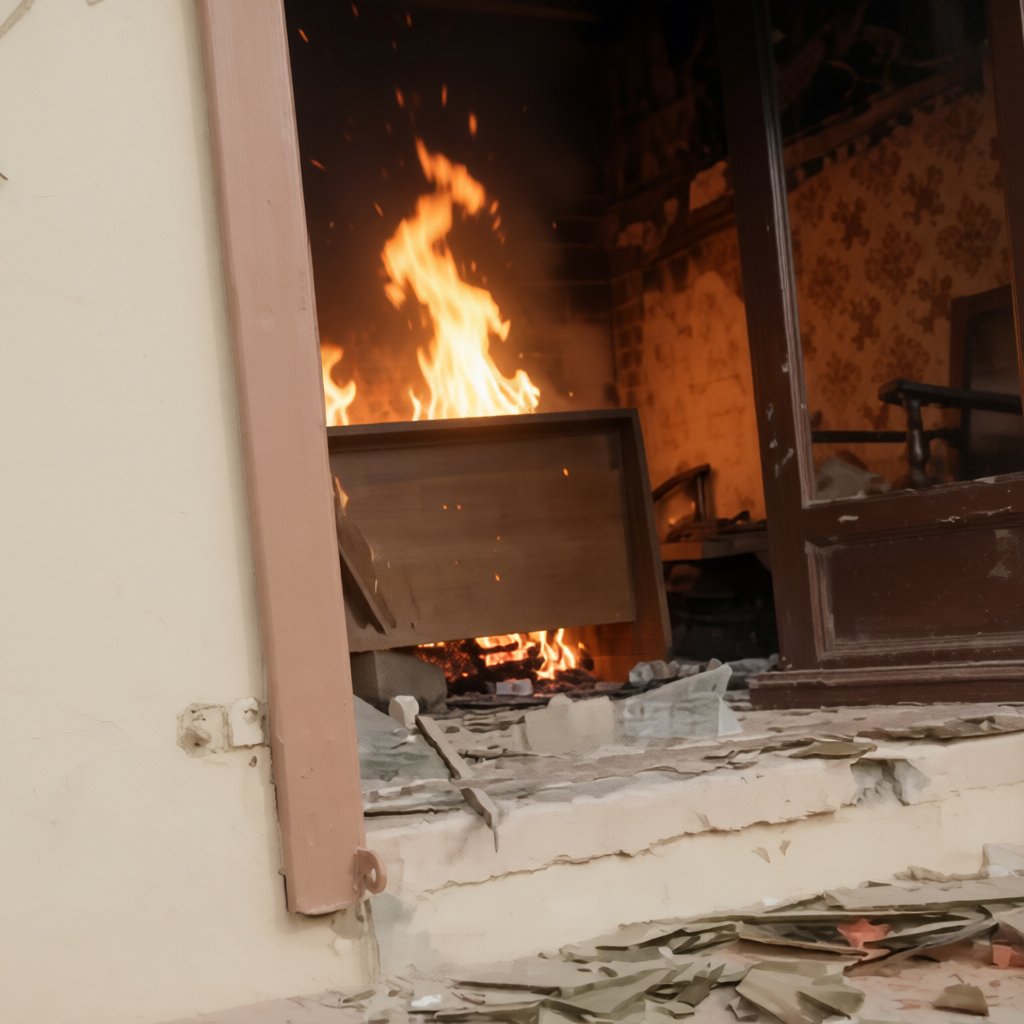
His arrest did not satisfy part of the local population. A crowd set fire to the clinic where Masih practiced traditional medicine, a modest structure attached to his home that also housed a small pharmacy. Fearing further attacks, Christian families of the area abandoned their houses.
Human Rights Focus Pakistan (HRFP), which sent a fact-finding team to verify the available evidence and assess the needs of the displaced families, condemned the violence. Its president, Naveed Walter, stated that “no allegation can justify mob violence, arson, intimidation, or collective punishment,” and asked the government, the police, and the local administration to protect Masih, his relatives, and the Christian community. He insisted that only courts have the authority to decide whether an accused person is guilty, and that Masih is entitled to a lawyer and a fair, impartial trial.
Read together, the two cases describe the predicament of Pakistan’s Christians. In Narang Mandi, the accusation alone was enough to destroy a family’s livelihood and empty a neighborhood before any judge had seen the video. The Ayub brothers, for their part, went through every stage of the judicial process Walter invokes, over fifteen years, and the result for Qaiser is a death sentence resting on disputed digital evidence about a website he says he had abandoned. Pakistani authorities often present the courts as the protection the accused need against the street. Critics answer that judges also work in a climate where acquitting a blasphemy defendant may put their own safety at risk, and that the law itself, with its mandatory death penalty and vague wording, is the root of the problem.
Qaiser Ayub now waits in his cell for what may be his last chance before the courts or the President.

Uses a pseudonym for security reasons.