Hong Kong police raid two bookstores over a Taiwan‑published study of identity under Xi Jinping.
by Gladys Kwok
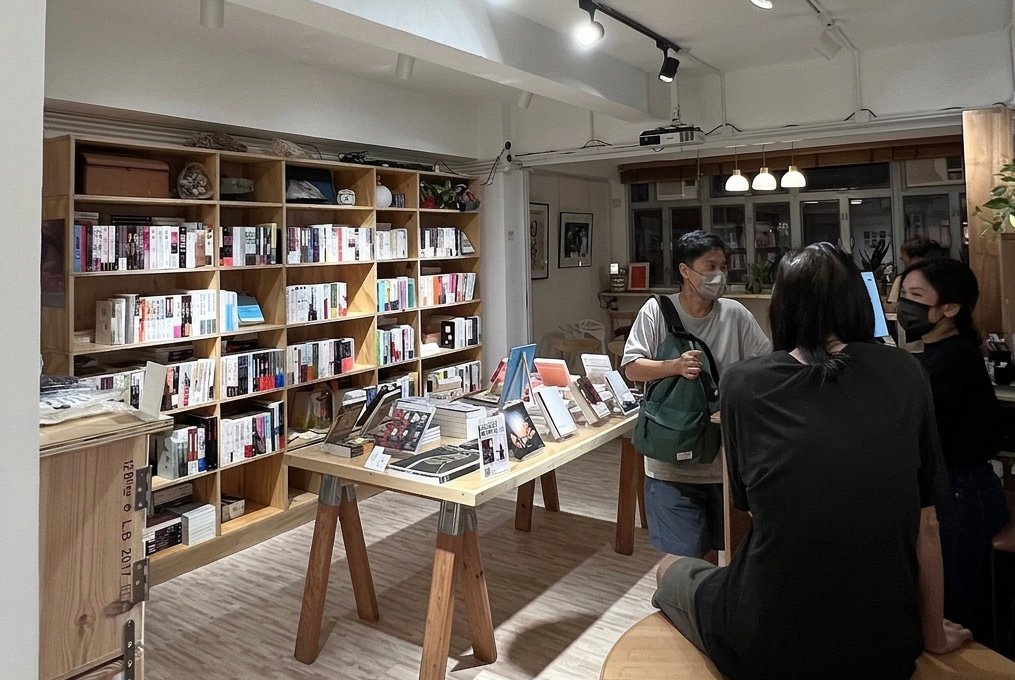
The coordinated raids on Have a Nice Stay and Greenfield bookstores on 15 July, on the opening day of the Hong Kong Book Fair, mark another episode in Hong Kong’s shrinking cultural space and a revealing moment in the Chinese Communist Party’s evolving censorship priorities. Five staff members were arrested under the Safeguarding National Security Ordinance for allegedly displaying and selling publications deemed “seditious.” The book at the center of the case is “Let Only Red Flowers Bloom: Identity and Belonging in the Xi Jinping Era,” the Chinese edition of award-winning journalist Emily Feng’s widely discussed study of ideological engineering in contemporary China, published in Taiwan by Acropolis Publishing.
The book’s title alone explains part of Beijing’s anxiety. Feng’s work examines how the CCP has attempted to reshape identity—from school curricula to workplace culture, from grassroots propaganda to the policing of memory—so that only “red flowers,” i.e., politically acceptable forms of belonging, may flourish. Her analysis, grounded in interviews, policy documents, and field reporting, argues that the Party’s project is a systematic attempt to monopolize emotional loyalty. In Taiwan and among overseas Chinese readers, reviewers have highlighted how the book exposes the mechanisms through which dissenting identities are pathologized, erased, or criminalized. One Taiwanese critic described it as “a map of how the state enters the private garden of the mind.”
For Hong Kong authorities, this is precisely the kind of text that crosses the new red lines. Feng devotes several chapters to Hong Kong after 2019, tracing how the CCP reframed the city’s political crisis as a struggle over identity. The “correct” Hongkonger is patriotic, grateful, and aligned with “national rejuvenation”; the “incorrect” one is a threat to stability. The book documents how this narrative was exported through media campaigns, school reforms, and the criminalization of alternative historical accounts. In the current climate, even presenting such analysis becomes suspect. The charge of “inciting hatred” toward the government, judiciary, or police—now routinely applied to booksellers—rests on the idea that describing repression is itself a form of sedition.
The raids also reveal the increasingly extraterritorial logic of Hong Kong’s censorship. Acropolis is a respected Taiwanese publisher, and Feng’s book is widely available in democratic jurisdictions. Yet Hong Kong authorities now treat the mere importation of critical political analysis as a national‑security threat. This is not about specific passages but about the existence of a space where readers may encounter interpretations of China not curated by the Party. Independent bookstores—long the custodians of Hong Kong’s intellectual pluralism—have become symbolic targets. Their closure, whether through police action or economic suffocation, is part of a broader strategy to ensure that only officially sanctioned narratives remain accessible.
Have a Nice Stay Bookstore’s own announcement of impending closure spoke of “unpredictable red lines” and the impossibility of reading every book to determine what might suddenly become illegal. That uncertainty is the point. The boundaries of permissible thought shift without warning, and self‑censorship becomes the only rational survival strategy. The arrest of staff members wearing shirts that simply said “I am a bookstore clerk” underscores how the profession itself has been reclassified as politically dangerous.
Emily Feng’s book is not a manifesto. It is a work of reporting and analysis. The CCP fears the book because it names the mechanisms of control that the Party prefers to present as natural, consensual, and inevitable. It restores complexity to a society the state insists on flattening.
The crackdown on bookstores is becoming a central chapter in Hong Kong’s transformation. The city is losing its freedom to read and to imagine alternatives.
And that, more than any single title, is what the authorities are determined to prevent.

Uses a pseudonym for security reasons.