In yet another ridiculous attempt to rewrite history for propaganda purposes, Beijing fakes the origin of Buddhist teachings and belittles India.
by Marco Respinti
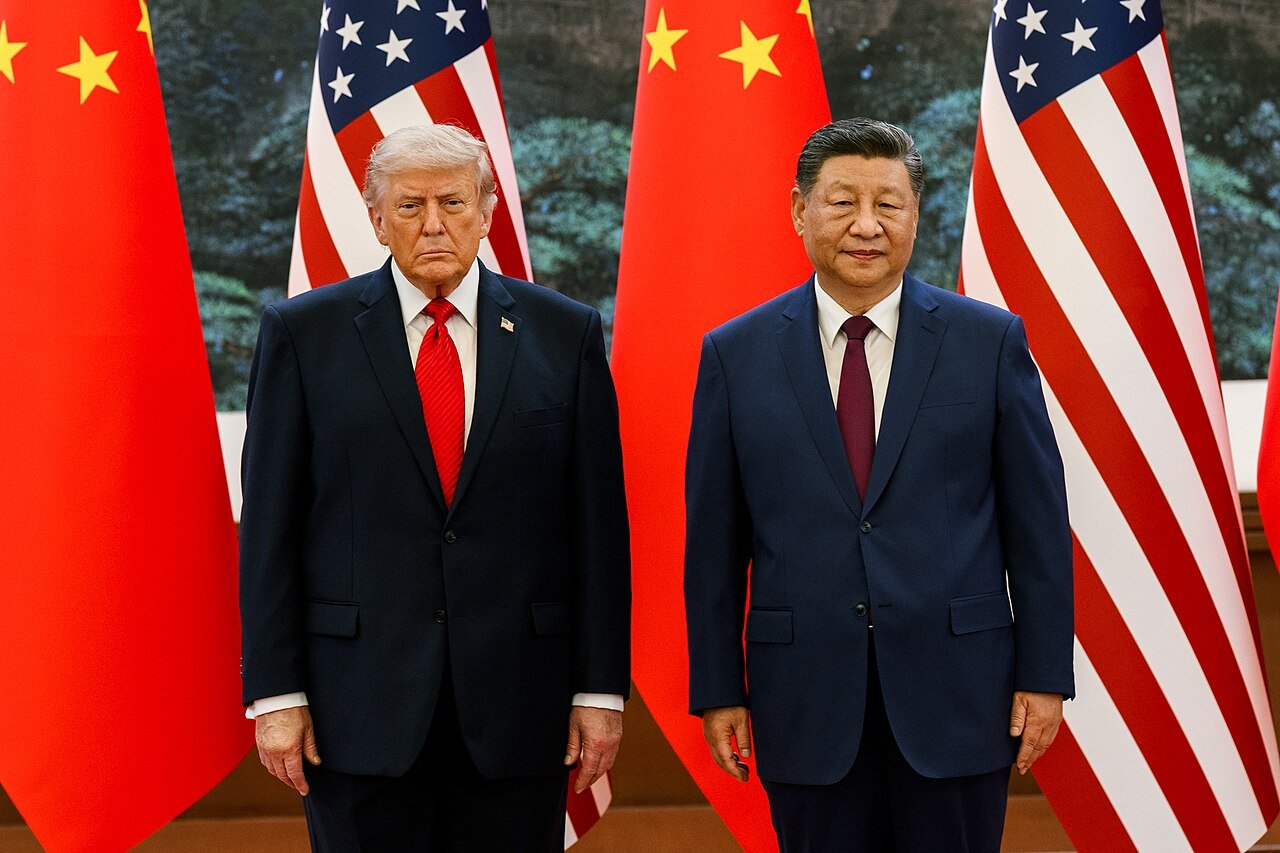
While meeting US President Donald J. Trump in Beijing, the capital of the People’s Republic of China (PRC), during Trump’s first trip to the country since 2017, which took place from 13 to 15 May 2026, PRC President Xi Jinping stated: “I have agreed with President Trump on a new vision of building a constructive China–US relationship of strategic stability.” He further wondered: “Can we meet global challenges together and provide more stability for the world?”
In practical terms, what “constructive strategic stability” means is unclear; only the future will tell.
But there is little doubt that “stability” can only help the PRC pursue its broader objective: becoming power no. 1 in the world, not only in the fields of economics and innovation. Beijing’s ambitions extend far beyond these areas. The Chinese leadership aims to secure a position of prominence across virtually every domain, including one that may, at first glance, seem surprising: Buddhism.
Since 1949, when the Chinese Communist Party (CCP) came to power in China, the country has lived under an atheist regime, fully consistent with the philosophical premises and tenets of Marxist-Leninist ideology. Accordingly, it has harassed and persecuted all religions, as readers of “Bitter Winter” know all too well. One of the strategies adopted by the CCP against religions is its strong push for “Sinicization,” which entails the forcible reshaping of faiths to bring them into conformity with the country’s official ideology. This process results in a profound adulteration of religious traditions and their gradual “communistization.” Moreover, when “Sinicization” takes the form of infiltration, it becomes a tool for the strict surveillance of believers and citizens at large.
Buddhism is no exception. In essence, Sinicization of Buddhism means that the Buddha Dharma should follow the Party line first, and the teachings of the Buddha second. At the same time, the CCP in Beijing strongly promotes a form of “soft” diplomacy in which Buddhism is presented as having originated in China. Readers may recall “Bitter Winter” articles denouncing and explaining the CCP’s strategy of rewriting history and reshaping geography as tools of propaganda. The reinterpretation of Buddhism’s origins is yet another step along that path. In these circumstances, India has taken some initiatives to counter the newly adulterated Chinese narrative of Buddhism.
The Sacred Exposition of the Holy Buddha Relics held in Ladakh and Zanskar on May 13–14, 2026, is a good step in this direction. The Holy Relics were formally inaugurated on the auspicious occasion of the 2569th Buddha Purnima (or the commemoration of Prince Siddhārtha Gautama, the historic Buddha, according to the Buddhist calendar) by Indian Minister of Home Affairs, Amit Shah. He personally attended the event and spent two days in Ladakh, “reflecting the Government of India’s commitment towards promoting Ladakh’s Buddhist heritage and spiritual traditions,” said a Press Information Bureau (PIB) release.
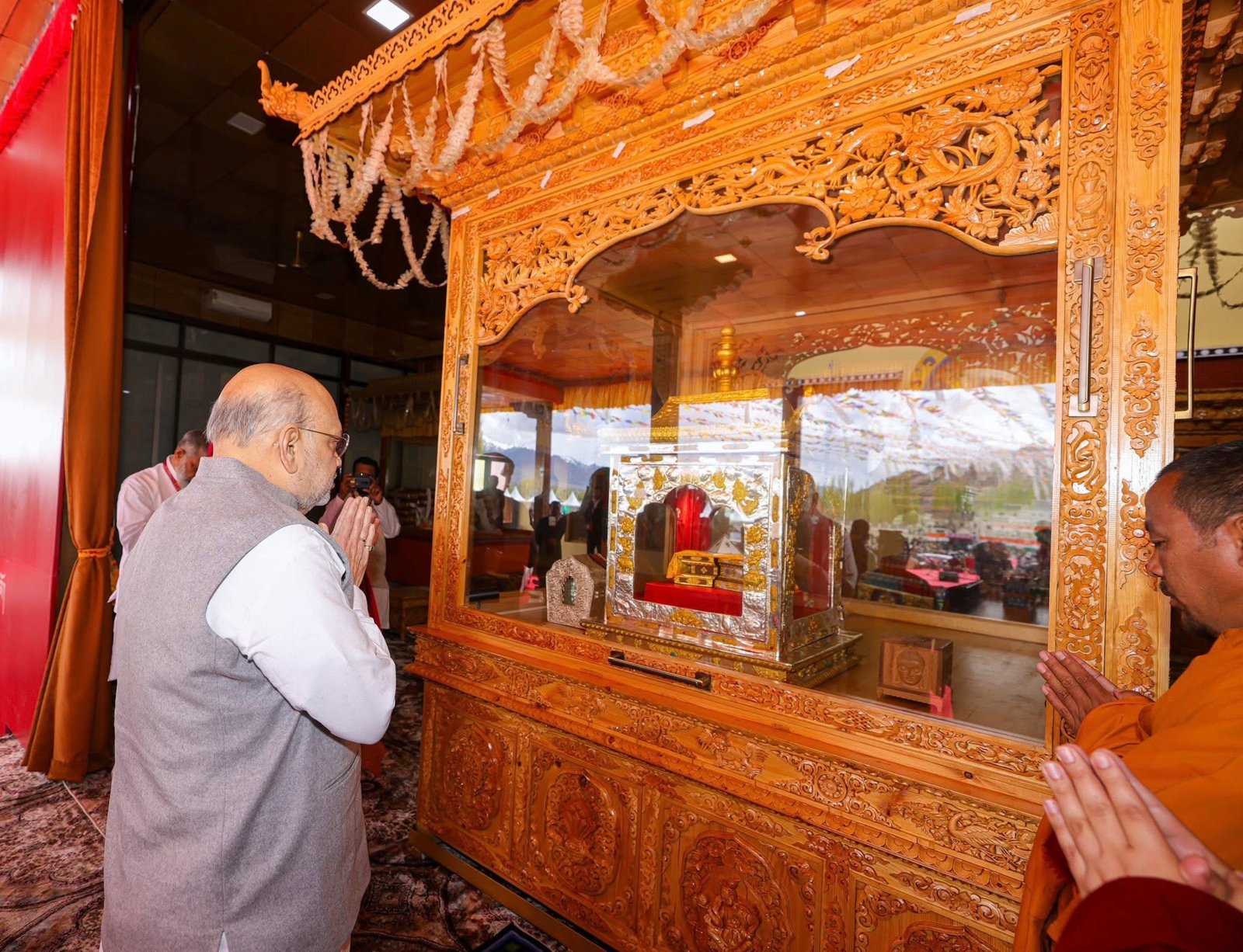
On the last day of the exhibition, PIB noted: “People from all walks of life turned up at the Dharma Centre in Leh to pay their final respects to Lord Buddha. Lieutenant Governor of the Union Territory of Ladakh, Shri Vinai Kumar Saxena, attended the closing ceremony of the 14-day Sacred Grand Exposition of the Holy Relics of the Tathagata at the Dharma Centre in Choglamsar (Leh).”
The Exposition witnessed an exceptional response from devotees across Ladakh and Zanskar: “More than 1,18,000 devotees paid obeisance to the holy relics during the fourteen-day exposition, making it one of the largest spiritual gatherings ever organized in the Union Territory of Ladakh.” The concluding ceremony coincided with the sacred Monlam Chenmo, the annual Great Prayer Festival of Ladakh, dedicated to world peace and universal happiness, which was also the theme of this Exposition.
Just a few weeks earlier, Tibetans in the Tibet Autonomous Region (TAR) of the PRC had protested, as they do every year in March, against Beijing’s propaganda, which continues to claim that the regime “emancipated” the region and liberated millions of “serfs” in 1959, following the Dalai Lama’s departure for India. Readers know that, despite the official name bestowed by Beijing, the TAR is not autonomous. It constitutes only a portion of historic Tibet, which has been divided by the CCP for ideological and administrative reasons and has remained under military occupation since the 1950s.
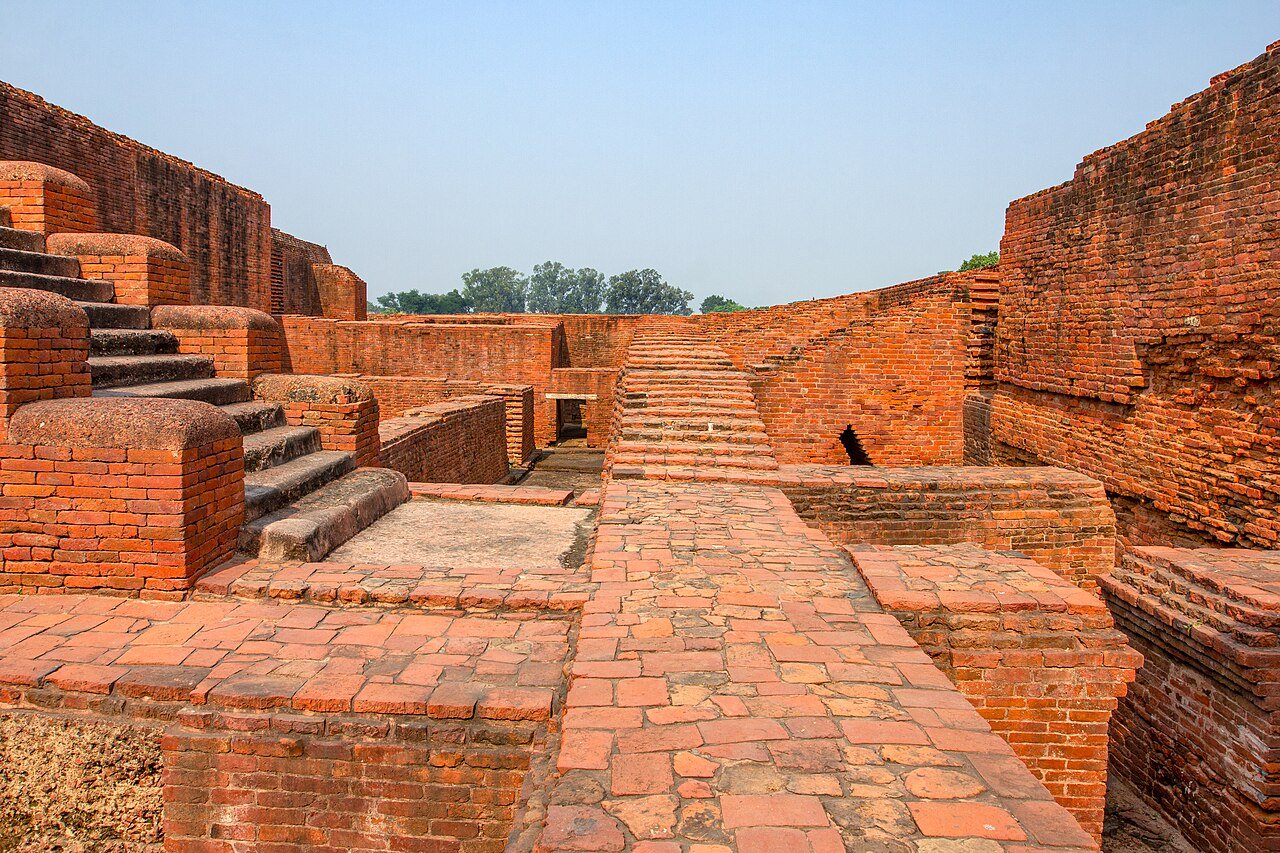
The Tibetan people and their culture are closely identified with their distinctive form of Buddhism and are subjected to continuous harassment by both local and central Chinese authorities. As noted by renowned French author and journalist Claude Arpi, an expert in Tibet and its religious culture, Beijing is now using the same old propaganda to promote another claim: that the PRC is the world’s leading Buddhist power, conveniently overlooking the fact that Tibetan Buddhism traces its origins to the Mahāvihāra (“Great Monastery”) of Nalanda, in what is now the Indian state of Bihar. For centuries, Nalanda served as one of the world’s oldest and most influential centers of higher learning. And, to belittle India, the CCP asserts that in 1959 the Dalai Lama defected to serve as a foreign lackey—i.e., of India—betraying his faith and sowing chaos in Tibet.
Can Beijing rewrite history to make the world believe that Buddhism is “Chinese”? And that the PRC should take the lead in the propagation of the teachings of the Great Monk, who more than 2,500 years ago wandered in the plains of North India, preaching compassion, mindfulness, and interdependent arising? By that, Beijing wants to teach Buddhism to Tibetan Buddhists.
When, according to President Xi’s aspirations, the PRC overtakes the US and becomes Economic Power No. 1 in the world, the religion of “ahimsa,” or “non-violence,” and “karuna,” or “compassion,” will continue to be part of Indian civilization, no matter what Marxism-Leninism and the Beijing regime may say. It was later imported to the Middle Kingdom of China, but its origin and spirit lie south of the Himalayan range. And this is history, not propaganda.

Marco Respinti is an Italian professional journalist, member of the International Federation of Journalists (IFJ), author, translator, and lecturer. He has contributed and contributes to several journals and magazines both in print and online, both in Italy and abroad. Author of books and chapter in books, he has translated and/or edited works by, among others, Edmund Burke, Charles Dickens, T.S. Eliot, Russell Kirk, J.R.R. Tolkien, Régine Pernoud and Gustave Thibon. A Senior fellow at the Russell Kirk Center for Cultural Renewal (a non-partisan, non-profit U.S. educational organization based in Mecosta, Michigan), he is also a founding member as well as a member of the Advisory Council of the Center for European Renewal (a non-profit, non-partisan pan-European educational organization based in The Hague, The Netherlands). A member of the Advisory Council of the European Federation for Freedom of Belief, in December 2022, the Universal Peace Federation bestowed on him, among others, the title of Ambassador of Peace. From February 2018 to December 2022, he has been the Editor-in-Chief of International Family News. He serves as Director-in-Charge of the academic publication The Journal of CESNUR and Bitter Winter: A Magazine on Religious Liberty and Human Rights.