The movement French mission started in 2016 and developed rapidly. Most converts are of African descent.
by Massimo Introvigne
Article 1 of 4
Shincheonji is a Korean Christian new religious movement to which I have devoted considerable attention for more than a decade. I have interviewed its founder and leader Chairman Lee Man-hee repeatedly. He will turn ninety-five in September and remains remarkably active. I also wrote the first scholarly articles on Shincheonji in languages other than Korean and by a non-Korean scholar. My purpose here is not to revisit the history of the movement, the long campaigns by Korean and international anti-cult activists, the accusations connected with COVID-19 for which Chairman Lee was jailed and later fully exonerated, or the recent crackdown by the Korean government that accuses Shincheonji of illegal involvement in politics. These matters have been discussed elsewhere. What follows is a sociological qualitative analysis of the movement in France based on observation and interviews.
This analysis acquires a special meaning at a time when Shincheonji has been attacked by the French governmental anti-cult mission MIVILUDES and by journalists specialized in anti-cult campaigns, including “Le Figaro” Étienne Jacob. Many of the accusations originate from Korean Protestant pastors who regard Shincheonji as competition and travel internationally to warn against it. Their claims are repeated by journalists and activists who often do not understand the Korean context. They also circulate allegations that can be checked and found inaccurate. One example is the claim that Shincheonji violated COVID-19 laws, something denied by three levels of Korean courts up to the Supreme Court. Chairman Lee apologized at the beginning of the controversy for mistakes Shincheonji might have committed, but in East Asian culture apologizing when a controversy arises is regarded as the right thing to do and is not considered an admission of guilt. Another example is the idea that Shincheonji is sinister and secretive. My observation of Shincheonji in several countries suggests something quite different. Most surprising is the accusation by Jacob and others, based on accounts by a few disgruntled ex-members, that Shincheonji teaches its French members not to think and simply obey. Throughout the world, I have interviewed dozens of Shincheonji members, and when asked why they joined, the most common answer is that they were unhappy in other churches where they were told to obey and discouraged from asking questions, while in Shincheonji they were encouraged to formulate questions and freely ask them.
This first article tells the story of Shincheonji in France. It begins with the arrival of a Korean woman who did not speak French and a French girl who had learned Korean in South Korea and became the only French member of the first mission. It continues with the rapid growth of the movement and the composition of its membership, which today includes a large majority of French citizens of African descent.
The leader of the French church arrived in France on February 26, 2016. She had never visited the country before. She came directly from South Korea with a mandate to evangelize France. She told me that she had imagined a Catholic country where many would be interested in the Bible. She soon discovered something very different. After one year of evangelization she realized that, in her words, people in France do not listen to religion and are not interested in religious matters. She and her small team walked the streets of Paris and tried to speak with passersby. One day they heard a young woman talking about religion and approached her. She turned out to be a British Christian who lived in the United Kingdom and was visiting France during her vacation. She had come on her own to evangelize. They spoke about the Bible. She liked what she heard and started studying in the Shincheonji academy. Through her, the missionaries met others. This was the beginning of the French church.
The leader explained that she had not intended to evangelize only young people of African descent. She tried to speak with everybody. Those who listened and showed interest were mostly Protestants, and many were of African origin. She discovered that France is home to many young people from Africa who came to study or are second-generation immigrants. They were more willing to talk about the Bible. She concluded that it was better to evangelize first those who liked the Word. This was not a strategy based on ethnicity. It was a pragmatic response to the reality of French society.
The French girl who became the first French member of the mission had a different story. She had gone to South Korea to study Korean as part of her training in translation and interpretation. She needed a rare language to complete her studies. She liked Korean culture and enrolled in language courses. She met Shincheonji there, became a member, and was later sent to France as part of the first mission. She was the only French person in a team otherwise composed of Koreans. She told me that she knew evangelization in France would be difficult. She knew that French people do not like to be approached in the street and do not like to talk about religion with strangers. She tried anyway. She described the early years as a time of trial and error. She and the missionaries approached people in the street and asked whether they were Christian or interested in the Bible. She said that French people often reacted with suspicion. People of African descent were more open to discussing religion.
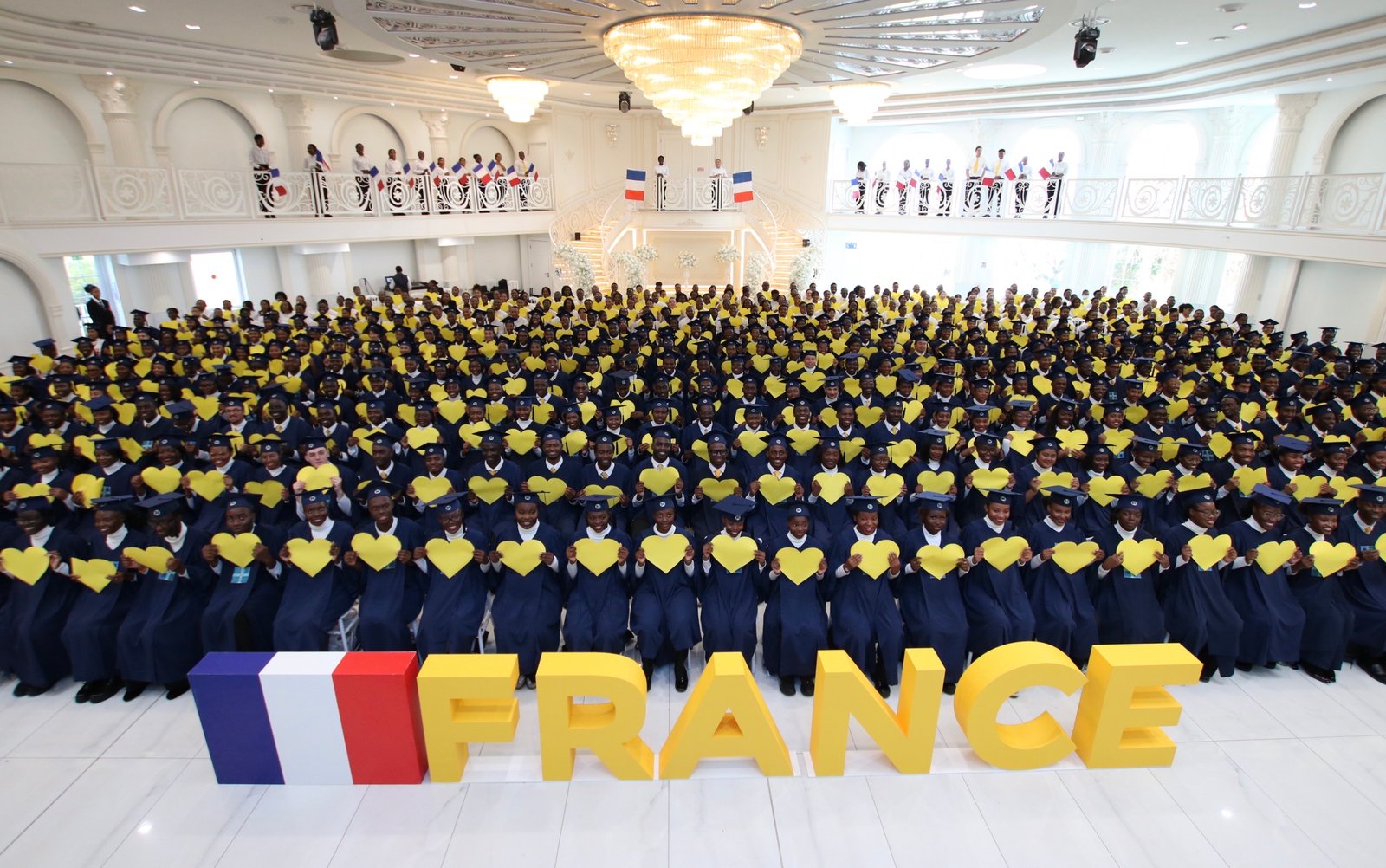
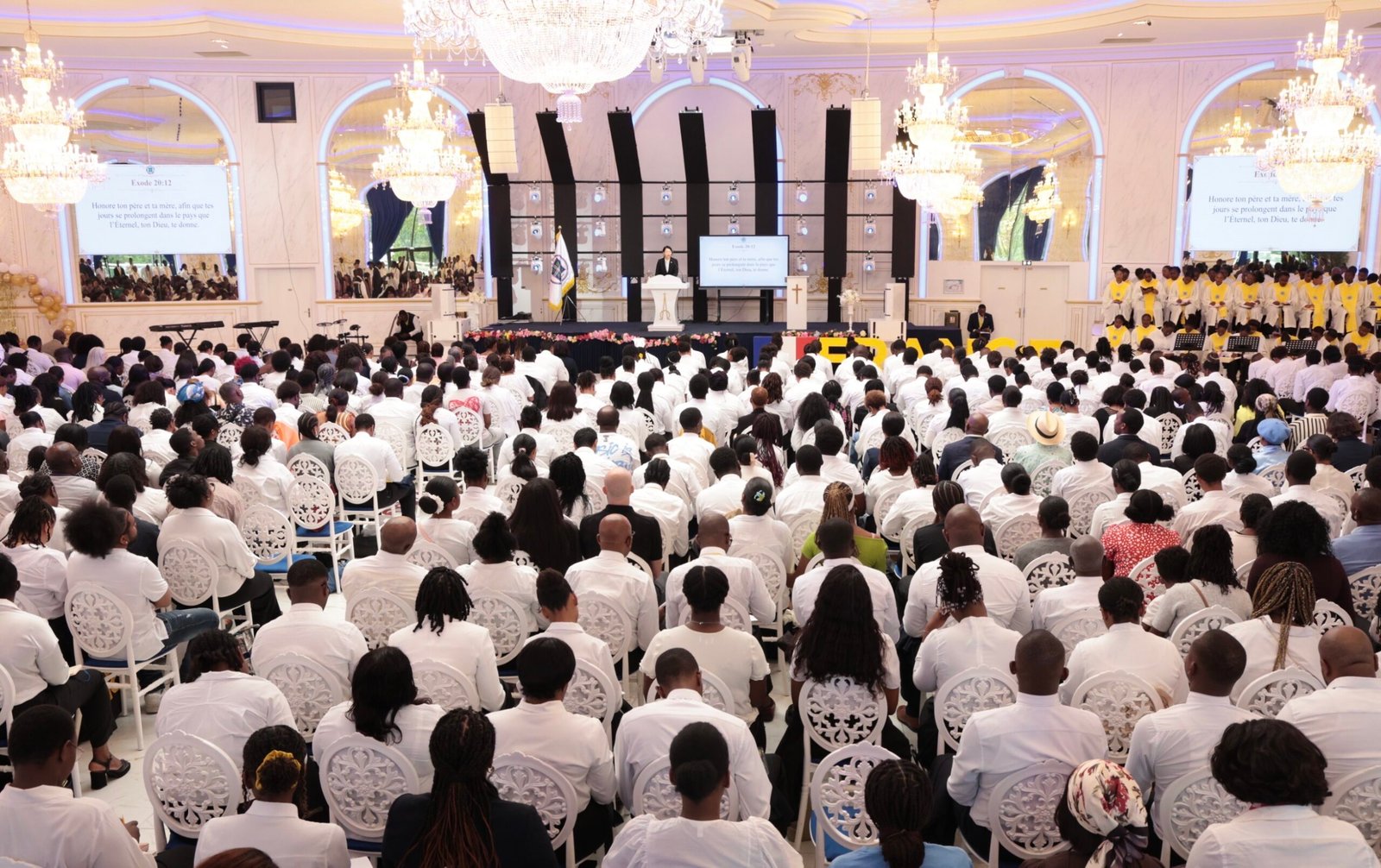
The first academy opened in May 2016 in Île-de-France. Growth was slow at first. After one year there were about fifty members. By 2019 the number had reached 350. During the COVID-19 pandemic the church moved online. Contrary to what happened in many traditional churches, online evangelization worked well for Shincheonji. Around 700 people joined during the pandemic. In 2023 the church celebrated reaching 1,000 members, a landmark for them. Today they report 1,440 members, some 1,000 of them in Île-de-France. According to data supplied by the French church, 65 percent are women. While 55.6 percent are French citizens, most are of African descent. When I attended a service at the headquarters in Île-de-France, more than 90 percent of those present were of African origin. Several interviewees came from Congo-Brazzaville, the Democratic Republic of the Congo, Gabon, Benin, Ivory Coast, and Burkina Faso. Others were French Caribbeans. Forty percent of the members are twenty-five or younger. More than 80 percent converted from another Christian church, although there are rare cases of former atheists or Muslims. Among French members, 43.2 percent were Pentecostals and 28.5 percent were Catholics before joining Shincheonji.
The French girl who served as interpreter and missionary confirmed that the church looks African. She said that this is not the result of a deliberate choice. She and the missionaries approach everybody. Those who respond positively are often of African descent. She said that African cultures encourage religious conversation and that many African families maintain a strong Christian identity. She contrasted this with French families where religion is often transmitted weakly or not at all. Several interviewees echoed this view. One said that in African families God has a large place even when people do not attend church regularly. Another said that African parents teach their children that God exists and should be prayed to. A third said that French friends of his are not very interested in religion.
The leader of the French church told me that the original goal was to evangelize the French population. She said that the missionaries did not want to evangelize African youths first. They wanted to reach the French people. They discovered that French people did not listen. They concluded that the best way to reach the French population was to build a church first. If people of African descent accepted the Word, then later the French would see that the Word is right. This was the logic behind the early years of the mission.
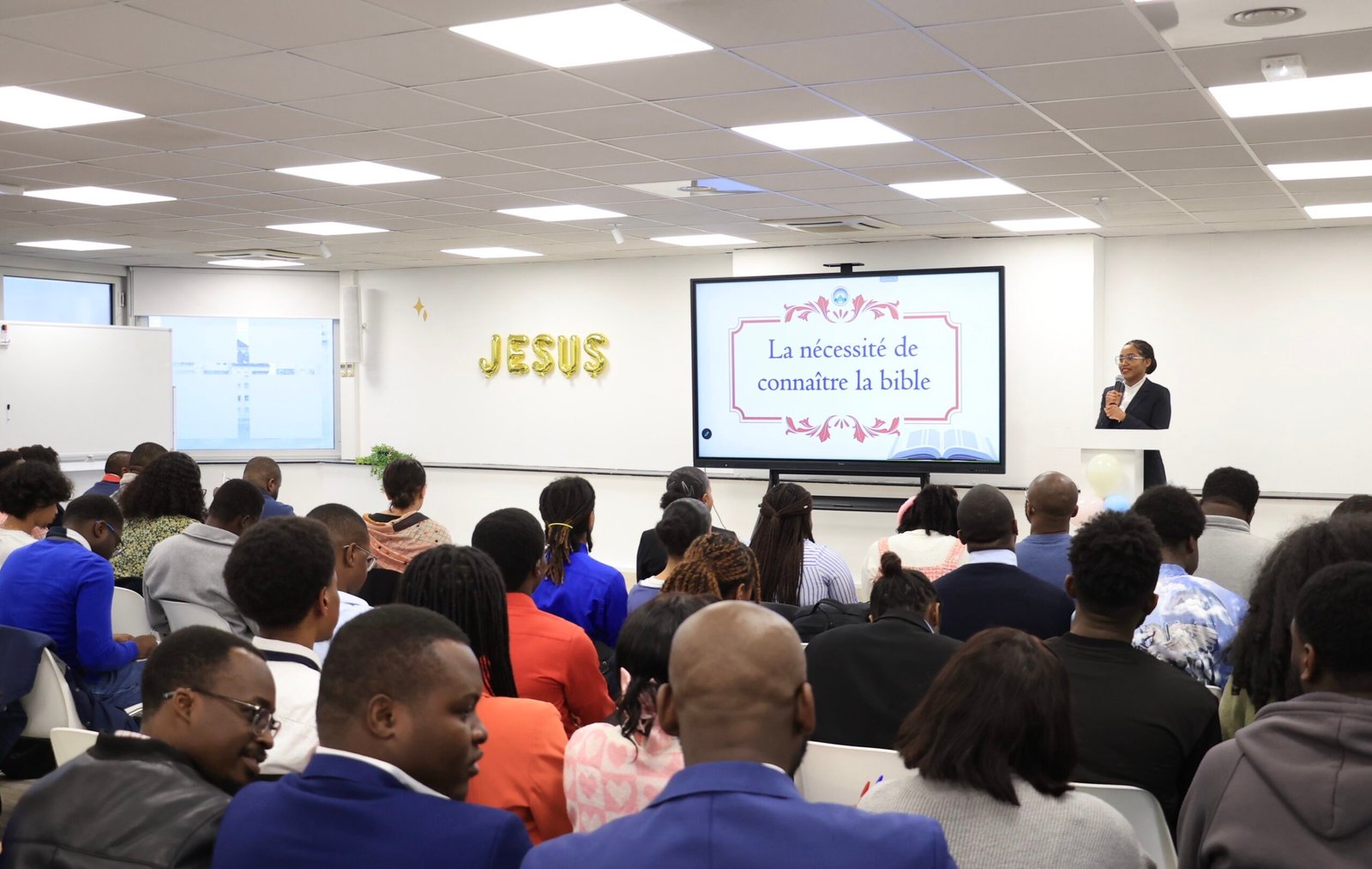
The story of Shincheonji in France is also the story of adaptation. The leader told me that when she arrived she tried to apply the methods used in Korea. They did not work. She and her team needed time to understand French society. Korean headquarters understood this. They prayed for the mission and waited. After one year growth accelerated. The missionaries learned how to speak with people in France—which did not necessarily mean speaking good French. To this very day, the leader preaches in Korean, with translation into French. The missionaries learned that they had to be patient. They learned that they had to explain their identity openly. At first they did not mention the name Shincheonji because they feared misunderstanding. Later they realized that nobody in France knew the name. They began to introduce themselves as Shincheonji Church.
The leader’s personal story also sheds light on the movement. She was a Protestant who spent seven years searching for answers about the Bible. She visited Presbyterian, Methodist, Jehovah’s Witness, and the Unification Church. She could not find answers to her questions, especially about the Book of Revelation. Her pastor told her that Revelation was not opened yet and could not be understood. She felt frustrated. She considered going to North Korea as a missionary and even dying a martyr there. She thought that martyrdom would allow her to go to heaven. She then saw a banner advertising a Bible conference. She attended. The instructor explained the prophecies according to the Bible. He answered her questions. She was shocked. She enrolled in the academy and joined Shincheonji in 2000. She later became an instructor and was responsible for education in South Korea. She prayed for three years to be sent to France. She had studied French in high school and liked French music. She regarded her assignment to France as an answer to her prayer.
The French girl who became the first French missionary had a different religious path. She was Catholic by background but not very involved in her parish. She said that Catholic parishes in France do not have a strong sense of community. People come and go. She discovered Shincheonji in Korea and found a different, warmer environment.
The early years of Shincheonji in France were marked by slow growth, cultural adaptation, and the discovery that the most receptive audience was composed of young people of African origin. The movement grew steadily. It has now opened academies in Lyon, Marseille, Montpellier, and three in Greater Paris. It developed a membership that is young, predominantly female, and largely composed of French citizens of African descent. It built a community that studies the Bible intensively and encourages questions. It created a space where people who felt frustrated in other churches found answers.
This is the story of how a Korean Christian movement took root in a secular country. It is a story of persistence, adaptation, and the unexpected role of African diasporas in shaping the religious landscape of contemporary France.
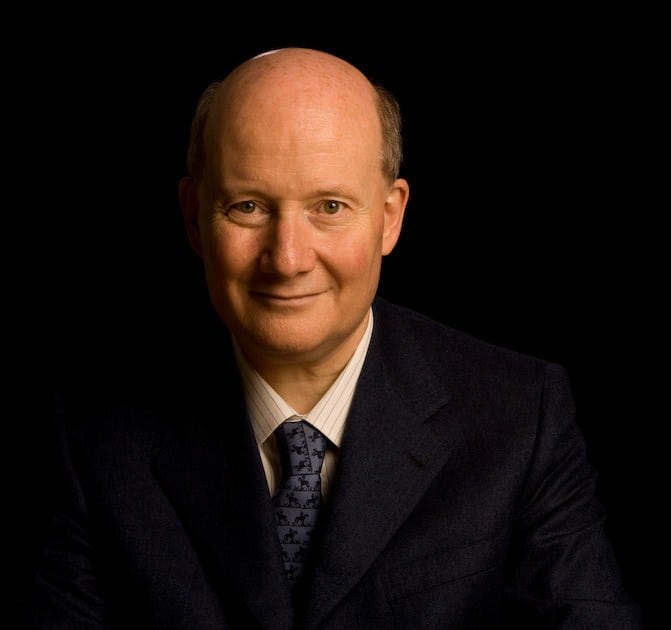
Massimo Introvigne (born June 14, 1955 in Rome) is an Italian sociologist of religions. He is the founder and managing director of the Center for Studies on New Religions (CESNUR), an international network of scholars who study new religious movements. Introvigne is the author of some 70 books and more than 100 articles in the field of sociology of religion. He was the main author of the Enciclopedia delle religioni in Italia (Encyclopedia of Religions in Italy). He is a member of the editorial board for the Interdisciplinary Journal of Research on Religion and of the executive board of University of Pennsylvania Press’ Nova Religio. From January 5 to December 31, 2011, he has served as the “Representative on combating racism, xenophobia and discrimination, with a special focus on discrimination against Christians and members of other religions” of the Organization for Security and Co-operation in Europe (OSCE). From 2012 to 2015 he served as chairperson of the Observatory of Religious Liberty, instituted by the Italian Ministry of Foreign Affairs in order to monitor problems of religious liberty on a worldwide scale.