When the media exploits attention and outrage, the importance of a balanced, value‑based discourse loses ground.
by Márk Nemes*
*A paper presented at the webinar “Media Bias Against Spiritual Minorities and the Tai Ji Men Case,” co‑organized by CESNUR and Human Rights Without Frontiers on May 4, 2026, after the United Nations World Press Freedom Day (May 3).
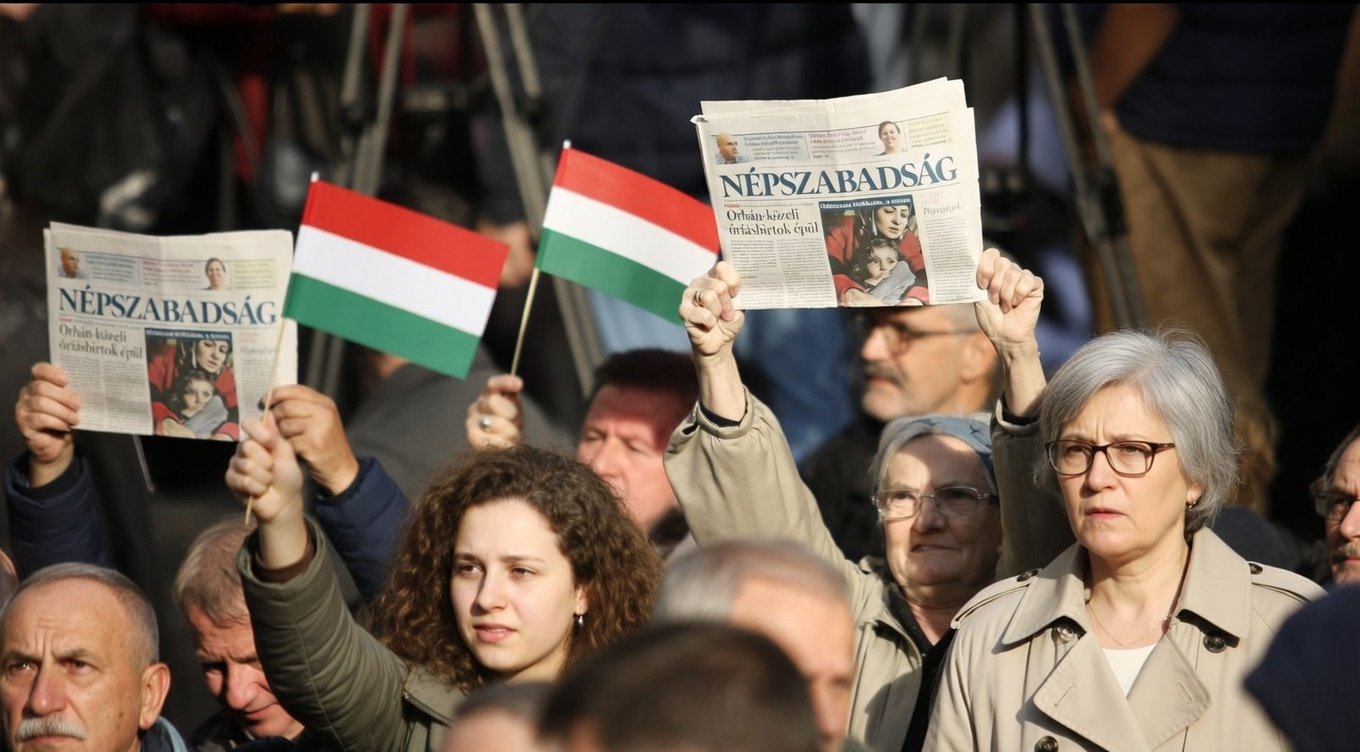
Freedom of expression is a fundamental human right, enshrined in Article 19 of the Universal Declaration of Human Rights. This Article states: “Everyone has the right to freedom of opinion and expression; this right includes freedom to hold opinions without interference and to seek, receive and impart information and ideas through any media and regardless of frontiers.”
On May 4th, 2026, only one day after the United Nations World Press Freedom Day, I share my paper with you for two essential purposes. First, to celebrate this universal human right to impart and receive information without restriction or censorship. It is a foundational right of modernity—one that has been absent from my own home country, Hungary, for over a decade now, and one whose restoration we eagerly await. The second purpose may be even more important: to remind ourselves of the fragility of this right and of the misuse of public influence, which has very real consequences for the lives of persecuted minority communities, groups, and individuals. For this reason, I divide this paper into two parts: first, a reflection on responsibilities related to the right to impart information, and second, a reflection on the right to receive it.
In an era where technology enables us to access almost any information with just a few taps, whenever and wherever we want, the right to free expression becomes a powerful tool—one that is regularly exploited to overpower lesser‑heard voices, incite moral panics, and create social scapegoats. The very convenience of modern technology fuels these issues: algorithms tend to promote attention‑grabbing content that triggers negative emotions, further boosting viewership and reach. In media studies, there is an axiom: “There is no bad press.” Indeed, when even a single second of attention can be monetized, there is no bad press—at least not financially. But this does not mean such content benefits society or helps inform readers. Sensationalist media often overemphasize elements that appear strange or unfamiliar while oversimplifying the phenomena they describe.
These misuses of power are occurring in places such as Czechia, South Africa, Japan, South Korea, Argentina, Australia, and many others, targeting new religions such as MISA, the Jehovah’s Witnesses, Scientology, the Christian Gospel Mission, the Unification Church, Shincheonji, Tai Ji Men, and several other forms of contemporary religiosity and spirituality. Our convenient lifestyles have also created another powerful tool for inciting moral panics: multimedia products—online series, films, podcast series—have far greater retention power because they create emotional connections. When misused, as in the case of the Netflix series “In the Name of God,” they can cause lasting harm and reach vast audiences.
In the case of Tai Ji Men, negative media attention focused almost exclusively on donation practices, misinterpreting gift-giving as tuition fees for a non-existent cram school, the still‑inconclusive legal cases, and a prosecutor’s misrepresentation of the group, which even accused its Grand Master of “raising goblins.” Through such portrayals, sensationalist media effectively branded the Tai Ji Men Qigong Academy as a “cult,” a label that is extremely difficult to remove from public discourse. Beyond the obvious oversimplifications, these articles also sparked widespread fear in Taiwanese society, leading many disciples to abandon their practice and causing divisions within families. For those who encountered these reports—in print, on television, and later online—the conceptual image of Tai Ji Men was so damaged that even positive firsthand experiences during cultural festivals or Qigong practice could not counterbalance it.

In this context, scholarly and human‑rights contributions became crucial for restoring balance. Today, when someone searches for “Tai Ji Men” online, the first results are no longer defamatory or sensationalist pieces but informative materials from taijimencase.org, “Bitter Winter,” CESNUR, the reports of the European Federation for Freedom of Belief, and analyses published by Human Rights Without Frontiers. These sources are now correcting global perceptions, shifting attention to human‑rights abuses, and enabling a moderate, value‑centered discourse on the Tai Ji Men case and the ongoing injustices this community continues to face.
On the other side of the equation lies the issue of the freedom to receive information. Well‑financed outlets may speak louder—though not necessarily wiser—than those who communicate with care and fewer resources. In optimal conditions, individuals can counterbalance this disparity by choosing which outlets they trust and through which lenses they interpret the world around them. However, state censorship can limit citizens’ access to information or block their connection to global exchanges altogether, restricting them to a curated selection. In recent years, we have seen such practices in China, Russia, and even in parts of the cultural West, though in more subtle forms.
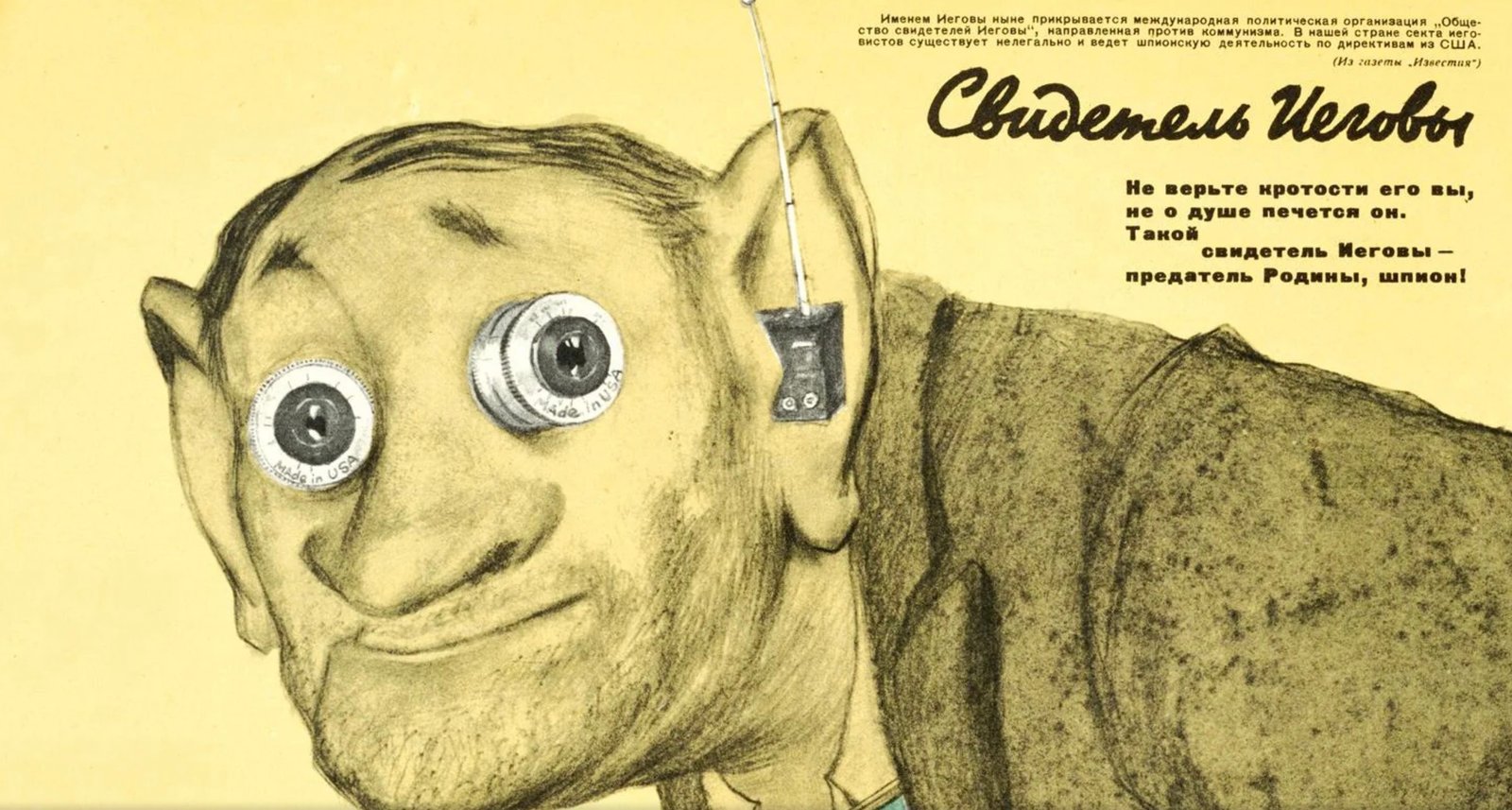
The dangers of this practice are evident, especially when the subjects of curated communication are minority or less‑understood communities. Mono-narrative reporting can incite witch‑hunts, weaponizing social unrest against a particular group. For example, Jehovah’s Witnesses, Baptists, Adventists, and many other Protestant churches are depicted in contemporary Russian state media as hubs for Western spies. Those affiliated with these persecuted communities must choose between facing the consequences of such unfounded accusations or fleeing their homeland. Narrowed‑down reporting and intentionally biased media can also create a cascading effect, in which countries with pluralistic media environments adopt these distorted narratives and incorporate them into their own reporting without proper fact‑checking.
Therefore, freedom of information can function only when combined with other foundational rights that ensure transparency and pluralism—both essential for a well‑informed society. States that adhere to the principles of the Universal Declaration of Human Rights must ensure media transparency and accountability and establish protective measures for moderate, value‑centered reporting. They must also promote participation in public discourse without repercussions or censorship, ensuring equal rights for diverse voices.
In conclusion, as we commemorate the recent United Nations World Press Freedom Day, I would like to draw attention to the urgent need for checks and balances across media ecosystems. Mono-narratives targeting minorities create considerable unnecessary human suffering. The Tai Ji Men case in Taiwan is an egregious example of this spiral of intolerance. For freedom of expression to flourish—free from the harmful effects of both restricted reception and distorted imparting—media pluralism must be preserved. A careful balance of voices is cultivated through legal and regulatory safeguards, open access to public-domain information, and the maintenance of a well‑informed society whose members are able and willing to analyze and synthesize the information they receive critically. Only then can individuals form opinions grounded not in agitation or emotion but in the preservation of freedoms, the acceptance of plural voices, and the pursuit of peaceful and harmonious coexistence.

Márk Nemes is a historian and a graduate in the academic study of religions. He received his doctorate in philosophy at the University of Szeged’s PhD program in 2025 and works as a researcher at the Hungarian Academy of Arts’ Research Institute of Art Theory and Methodology. As an awardee of the Hungarian National Eötvös Scholarship, he served as a visiting researcher at CESNUR from 2023 to 2024. For the past 10 years, he has focused on researching new, alternative, and emergent forms of religiosity in Hungary, Iceland, the US and most recently, in Italy. Since 2025, he serves as the Deputy Director of CESNUR