Reflecting on the propaganda that prepared the 1994 genocide and on how unchecked media hostility against minorities shows the urgent need to stop hate speech.
Massimo Introvigne*
*Introduction to the webinar “Media Bias Against Spiritual Minorities and the Tai Ji Men Case,” co-organized by CESNUR and Human Rights Without Frontiers on May 4, 2026, after the United Nations World Press Freedom Day (May 3).
Before we reflect on yesterday’s World Press Freedom Day, it is important to remember that the United Nations observed another significant day just a few weeks earlier, on April 7: the International Day of Reflection on the 1994 Genocide against the Tutsi in Rwanda. We typically do not hold a webinar for that day, but perhaps we should. In the last two webinars, I shared my trip to Rwanda earlier this year. I continue to study the genocide against the Tutsi, where about one million people lost their lives in around one hundred days. It remains one of the most devastating events of the twentieth century, and its effects still shape Africa today.
The genocide is also a major reason for the long and tragic war in Eastern Congo. When the genocidal regime in Rwanda fell, many of those responsible for the killings fled across the border, promising revenge and reorganizing militarily. Their presence in Congo sparked a series of conflicts, including invasions by the post-genocide Rwandan army. It contributed to a regional war that resulted in an estimated five million additional deaths. The scale of this tragedy is nearly impossible to grasp. Even after spending time in Rwanda, speaking with survivors and religious leaders, I remain shocked at how many aspects of the genocide still defy easy explanation.
One of the most troubling aspects of the Rwandan genocide is that it was not carried out by a single political party or specialized military units, as was the case in the Holocaust. Most of the perpetrators were ordinary citizens. They were neighbors, colleagues, and sometimes friends of those they killed. Some murdered people they had known for years. Some even killed their own spouses. This shocking reality continues to astonish the witnesses I interviewed in Rwanda. They struggle to understand how a society could unravel so quickly, how people who had lived side by side could suddenly turn against each other with such brutality.
I do not claim to have an answer to a question that has baffled many books and decades of research. However, I agree with most scholars of the genocide that the media were one of the primary causes. At that time, the media landscape in Rwanda was largely controlled by the Hutu-led government and by extremist Hutu factions. These outlets spread a constant stream of hate speech against the Tutsi minority. It is important to clarify that “Tutsi” and “Hutu” are not tribes in the simplistic sense often used in Western reporting. They are ethnosocial groups with remote but real different historical roots, traditionally linked to different economic roles—pastoralists in the case of the Tutsi, agriculturalists in the case of the Hutu. By the 1990s, these distinctions had turned into rigid political labels, and the media played a key role in transforming them into tools of hatred.
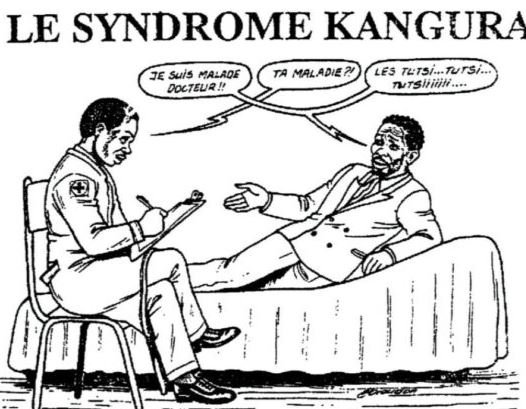
Day after day, magazines like “Kangura” and radio stations like the Radio Télévision Libre des Mille Collines spread messages portraying Tutsi as enemies, traitors, and threats to existence. One infamous broadcast urged listeners to “cut down the tall trees,” a phrase that became a coded call for murder. This constant poisoning of public discourse produced toxic results. It was not the sole cause of the genocide, but it was a significant factor explaining why ordinary people became killers almost overnight. When hate is repeated often enough, loudly enough, and with enough authority, it can reshape the moral landscape of a society.
We must not fall into the same trap and blame the Hutu as a collective group. Genocide is never the responsibility of an ethnosocial group as such. It falls on those who plan it, those who incite it, and those who carry it out. History reminds us that no group is immune. In Burundi in 1972, an earlier genocide occurred in which Tutsi forces killed large numbers of Hutu civilians. There, too, the media helped spread fear and hatred. In Rwanda in 1994, the hate media did not only target the Tutsi. They also targeted moderate Hutu leaders who advocated for peaceful coexistence. Many of these moderates were among the first to die.
The lesson is that media that promote hate can be extremely dangerous. They can tear apart the social fabric, undermine coexistence, and pave the way for violence. Hate speech does not always lead to genocide, but it always comes before genocide. Once the process starts, it is hard to stop.
This leads us to the theme of today’s webinar. The same dynamics of hate and scapegoating seen in Rwanda—though obviously on a much larger scale there—can also be observed in how certain groups are labeled as “cults” in various countries. When the media adopt hostile narratives, repeat unverified accusations, and portray a minority as dangerous or deviant, the consequences can be severe. Violence is not the only result. Discrimination, bullying, social exclusion, and lasting reputational damage can also occur.
The Tai Ji Men case is a painful example. After the case was fabricated in 1996, a wave of media coverage followed. Scores of articles appeared, many of them merely parroting the theories of the prosecutor who invented it. They repeated the false argument that Tai Ji Men was guilty of fraud and tax evasion, which eventually collapsed at trial. This slanderous media campaign caused enormous, undue suffering for Tai Ji Men dizi (disciples).
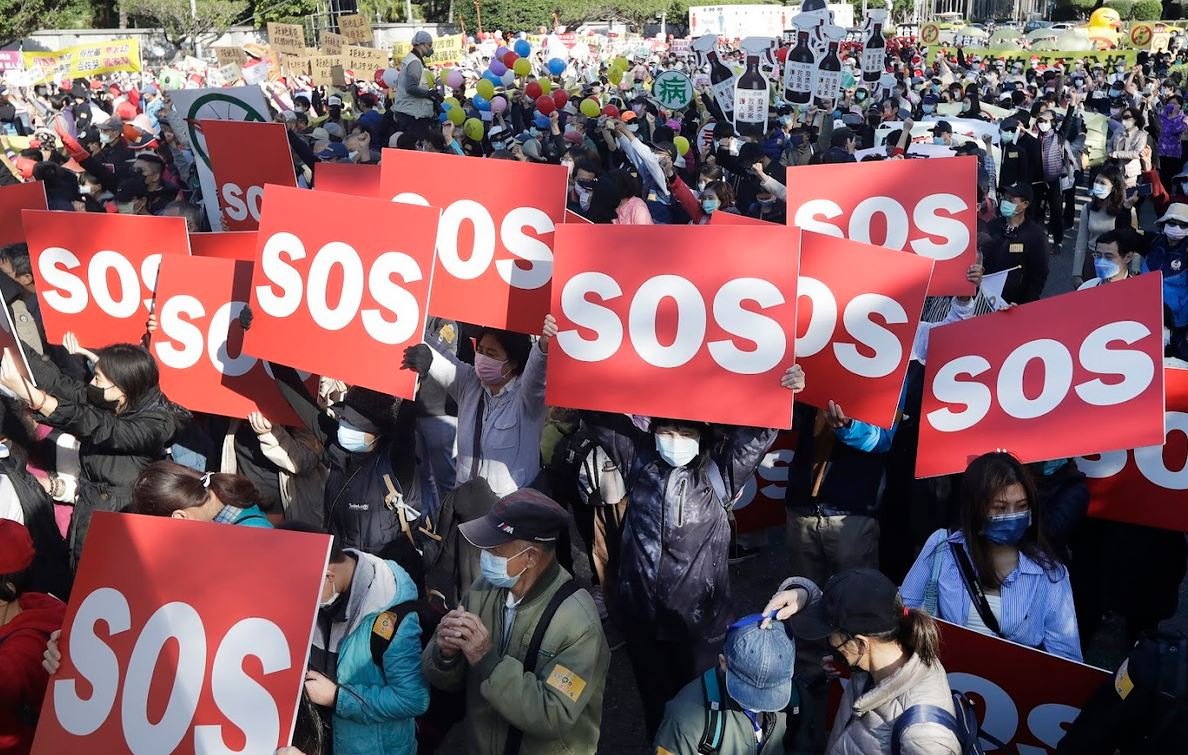
Of course, the Tai Ji Men case cannot be compared to a genocide. But the underlying mechanism—the use of media to stigmatize a group—is the same. The truth is that we do not know how far the impact of media hate speech can reach. Rwanda in 1994 serves as a tragic reminder that it can extend very far indeed. Hate speech in the media should be stopped when it starts. It should have been halted in Rwanda. It should have been halted in Burundi. It should also have been halted in the Tai Ji Men case, but it wasn’t. This is one reason the case remains unresolved today.
As we reflect on World Press Freedom Day, let us remember that freedom of the press is both a right and a responsibility. The media have the power to inform, educate, and protect. But they also have the power to divide, inflame, and harm. The lesson from Rwanda and Burundi—and from the Tai Ji Men case—is that the media must use their power wisely. When they spread hate, the consequences can be devastating. When they act responsibly, they can help build a more just and peaceful world.
Let this webinar remind us of the importance of responsible communication, the need for vigilance against hate speech, and the obligation to protect vulnerable minorities from the destructive power of false narratives.

Massimo Introvigne (born June 14, 1955 in Rome) is an Italian sociologist of religions. He is the founder and managing director of the Center for Studies on New Religions (CESNUR), an international network of scholars who study new religious movements. Introvigne is the author of some 70 books and more than 100 articles in the field of sociology of religion. He was the main author of the Enciclopedia delle religioni in Italia (Encyclopedia of Religions in Italy). He is a member of the editorial board for the Interdisciplinary Journal of Research on Religion and of the executive board of University of Pennsylvania Press’ Nova Religio. From January 5 to December 31, 2011, he has served as the “Representative on combating racism, xenophobia and discrimination, with a special focus on discrimination against Christians and members of other religions” of the Organization for Security and Co-operation in Europe (OSCE). From 2012 to 2015 he served as chairperson of the Observatory of Religious Liberty, instituted by the Italian Ministry of Foreign Affairs in order to monitor problems of religious liberty on a worldwide scale.