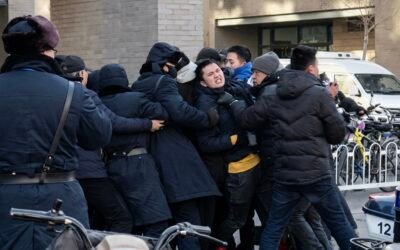
Beijing’s Islamic establishment reshapes the great scholar’s legacy to legitimize today’s state engineered “Sinicized Islam,” sidelining the historical record.
by Ma Wenyan
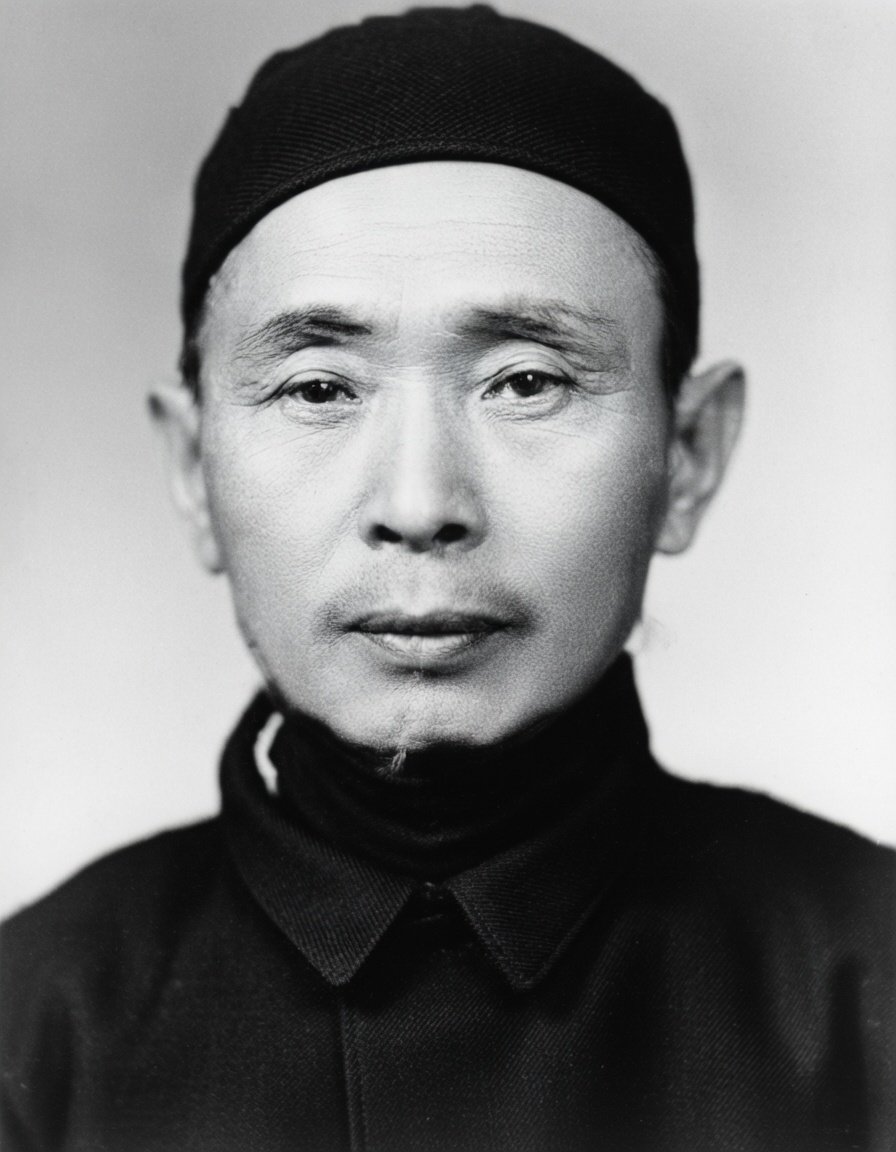
In recent weeks, the government-controlled China Islamic Association has started a high-profile commemoration of Ha Decheng (1888–1943), a respected Islamic scholar, educator, and translator from the Republican era. The Association’s media, including through articles by CCP Party School researchers, have presented him as a model of “patriotic religious leadership” and a forerunner of today’s “Sinicized Islam.” However, a deeper look at Ha’s life reveals a more complex and less convenient figure than the one currently being celebrated in an effort to fit a Republican scholar into the ideological framework that the CCP now demands of Islam.
Ha Decheng was indeed a patriot, but he expressed his patriotism by cooperating with the nationalist Kuomintang government rather than the Communists. During the Second Sino-Japanese War, he worked alongside KMT-aligned Muslim organizations, supported anti-Japanese publications, and helped set up refugee relief networks in Shanghai. His speeches connected Islamic ethics with national resistance, but within the political structures of the Nationalist state. He died in 1943, six years before the founding of the People’s Republic of China, and therefore had no role in the Communist Party’s religious policy or in the formation of the China Islamic Association. This important fact has been largely omitted from current commemorations.
Even more surprising is how the China Islamic Association now presents Ha as a pioneer of “religion adapting to socialism” and “Sinicization.” While Ha engaged in dialogue with Confucianism and found ethical similarities between Islamic and Confucian beliefs, his approach was based on scholarly exchange rather than political subservience. He aimed to promote understanding, not to make Islam conform to a state ideology. The “Confucianized Islam” now promoted in China—where Confucian ideas are selectively reinterpreted to strengthen political loyalty—would have been foreign to him. Ha’s writings focus on moral development and intellectual openness and do not use Confucianism as a means of state control.
The figure in Ha’s circle who ultimately cooperated with the Communist Party was not Ha himself but his contemporary and collaborator, Da Pusheng. After 1949, Da Pusheng participated in the early efforts that led to the establishment of the China Islamic Association, an organization created from the beginning to place Islam under state control. These events, however, took place years after Ha’s death. Yet in the current commemorations, the China Islamic Association subtly blurs the timeline, suggesting that Ha was part of a continuous lineage leading to today’s Party-led Islamic institutions.
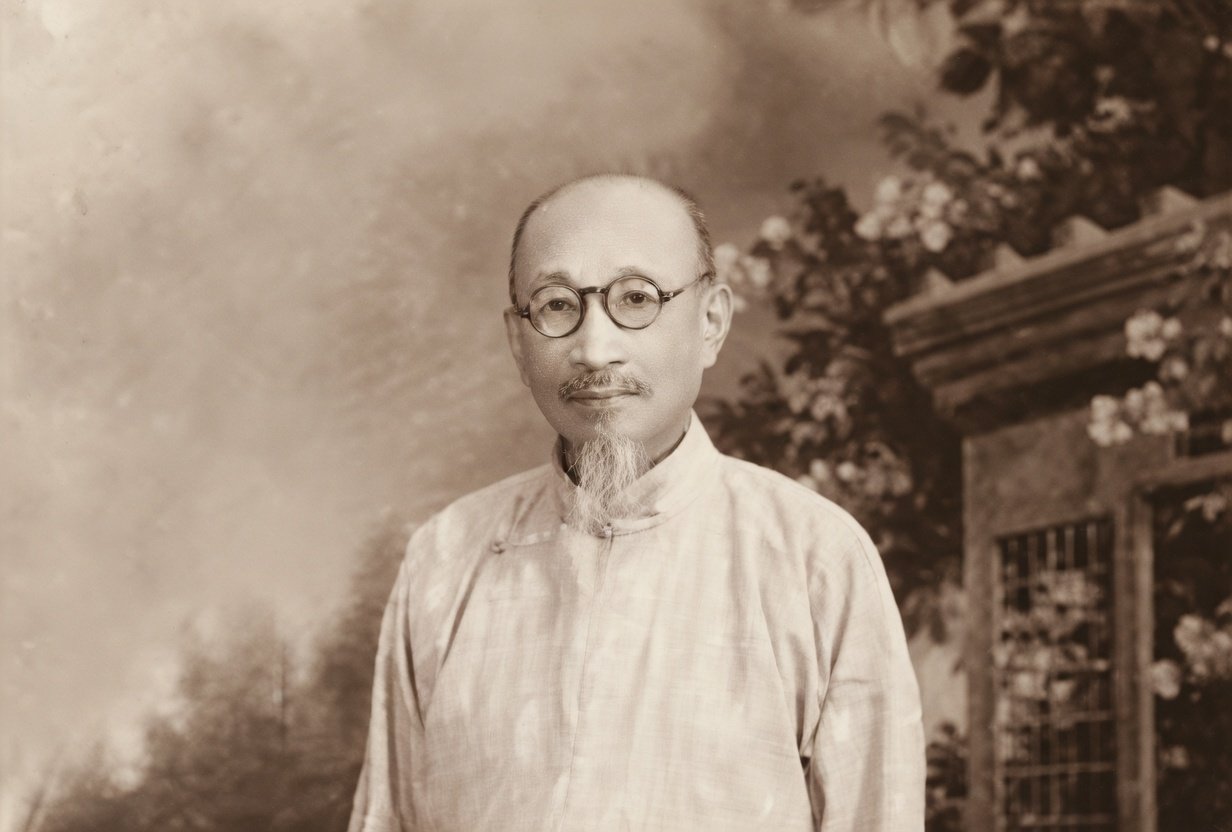
This selective retelling serves a political purpose. By claiming Ha Decheng as a forerunner of “Sinicized Islam,” the Association aims to legitimize its authority and present state-managed Islam as the natural progression of Chinese Islamic history. In truth, Ha’s legacy is much more independent, cosmopolitan, and intellectually rooted than the sanitized version currently promoted. He was a scholar who translated the Qur’an, founded modern Islamic schools, and engaged in interreligious dialogue—not a political player. His patriotism was genuine, but it did not reflect the ideological loyalty expected today.
The commemorative narrative stretches, rearranges, and selectively omits key aspects of Ha’s life to fit him into the mold of a “model” patriotic religious leader. Even the memory of a long-dead scholar can be used for political control in today’s China.

Uses a pseudonym for security reasons.