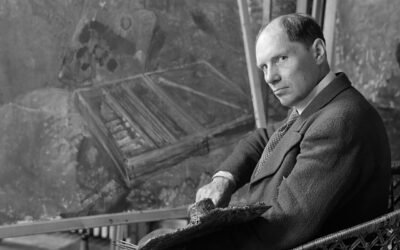
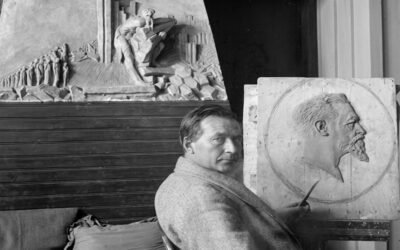
A Swedish master whose snow-covered landscapes were shaped as much by Theosophy and spiritual inquiry as by nature itself.
by Massimo Introvigne
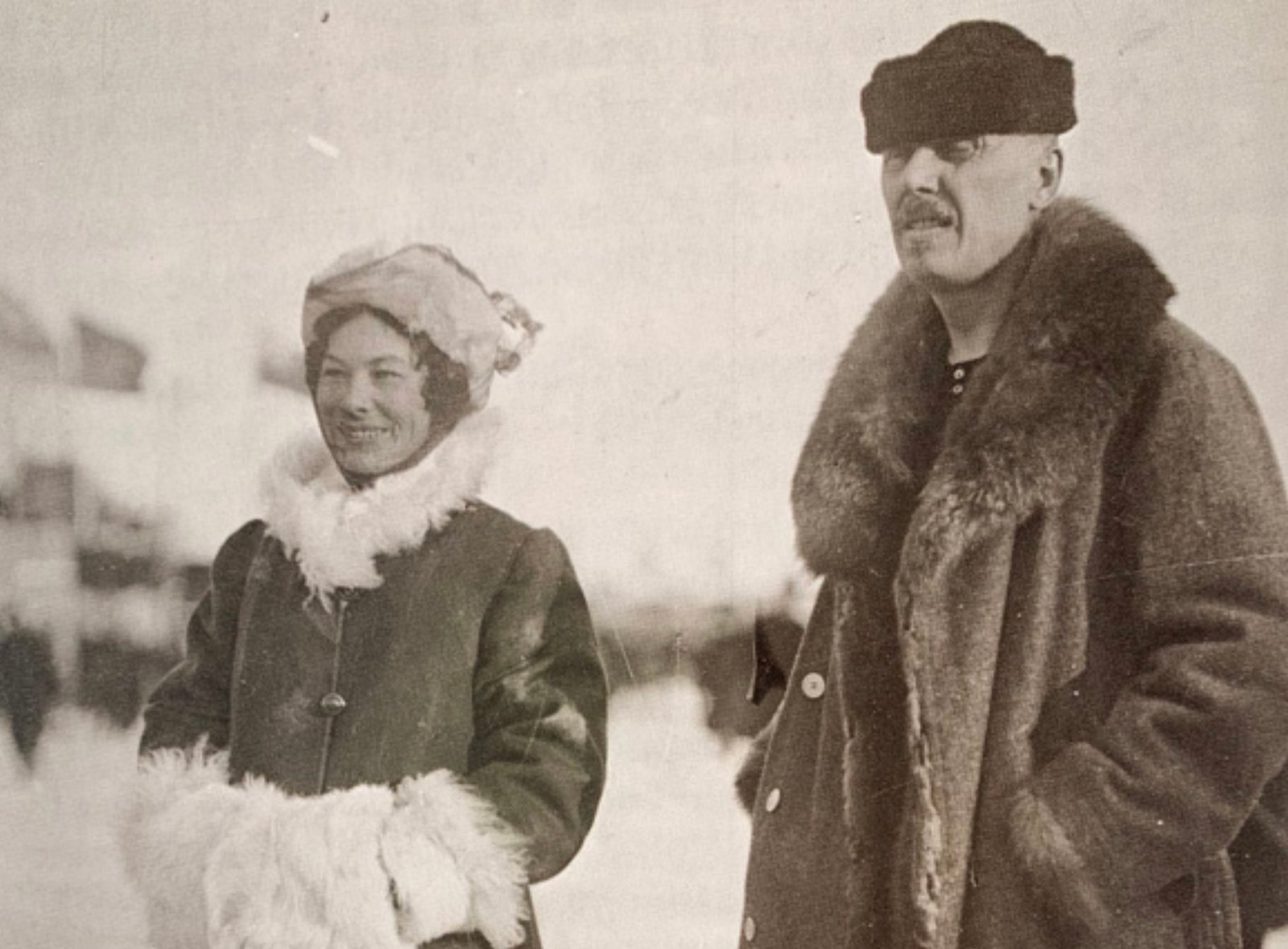
Gustaf Adolf Fjaestad is remembered in Sweden as the great painter of winter, the artist who transformed frost, ice crystals, and snow-covered branches into a national visual language. However, behind the shimmering surfaces of his paintings lies a spiritual story. Fjaestad was not just a painter of nature. He was a seeker of hidden realities, a dedicated Theosophist, and a man who believed that the visible world was merely the outer layer of a deeper, vibrating order. His art, admired for its technical skill, is closely linked to this spiritual journey.
Born in Stockholm in 1868, Fjaestad studied at the Royal Academy of Arts and later assisted Bruno Liljefors and Carl Larsson, contributing to significant decorative projects like Larsson’s fresco at the Nationalmuseum. However, a crucial change in his life occurred in 1897 when he moved from the capital to the forests and lakes of Värmland. There, near Lake Racken, he and his wife Maja formed a circle of painters and craftsmen known as the Racken Group. It was in this rural setting that Fjaestad’s artistic identity solidified and where his spiritual beliefs deepened.
A lodge of the Theosophical Society (Adyar) was established in nearby Arvika, and in 1909, Gustaf and Maja became members. Gustaf quickly emerged as one of its most active participants, frequently lecturing on ancient wisdom, cosmic evolution, and the hidden energies that Theosophists believed animated the universe. The couple’s letters, writings, and photographs—now stored in the National Library of Sweden—show how important these ideas were to their intellectual life. The Racken Group also developed an interest in Japanese spirituality and art, part of a “Japonist” trend favored by the commercial contacts between Japan and Sweden.
This spiritual focus influenced Fjaestad’s art in ways that contemporary critics only partly understood. His winter landscapes, which earned him public acclaim at the Stockholm Artists Union exhibition in 1898, were praised for their decorative elegance. These featured swirling patterns of snow, rhythmic frost designs, and the luminous stillness of frozen lakes. German critics nicknamed him “the snow king of the Nordic countries,” a title that referred not only to his paintings but also to his athletic achievements. He exhibited in the United States, where “The Brooklyn Daily Eagle” called him in 1912 “the greatest painter of snow effects in the world.”
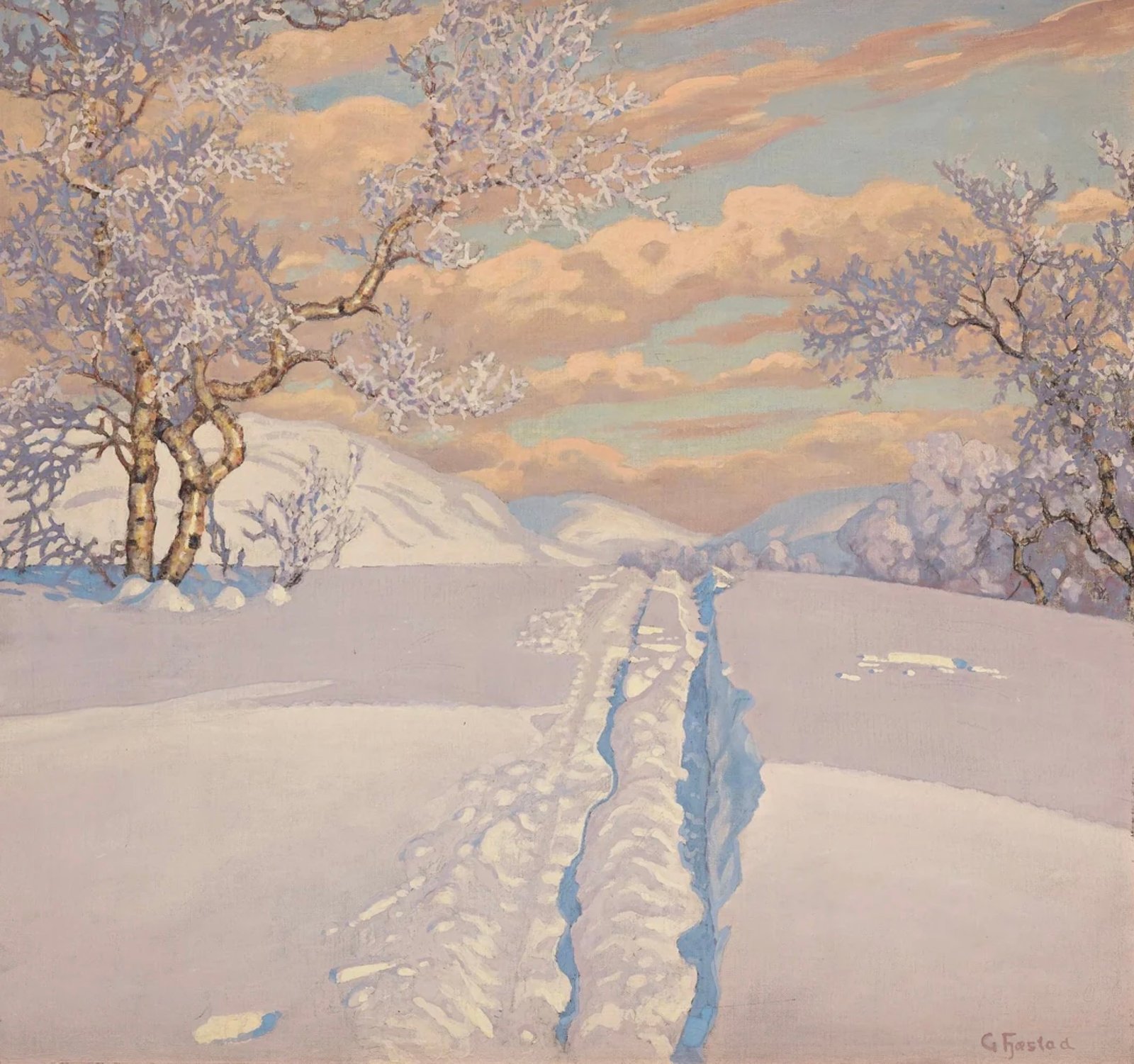
Fjaestad set a world record in speed skating in 1891 and won the first Mälaren Runt cycling race in 1892. Skating and skiing appear in some of his paintings. Yet the deeper motivation behind his winter scenes was not sports but metaphysics. Inspired by Theosophy, Fjaestad viewed nature as a field of vibrations, a visible echo of invisible energies. His technique, which involved placing points and strokes of color close together to create a shimmering, spectral light, was interpreted by some scholars as an attempt to capture on canvas the “white light of truth” described in Theosophical writings. In works like “The Mystery of Life” (1919), where snow-covered footprints fade toward a setting sun, the landscape serves as a spiritual metaphor: the human presence is felt only through absence, the path dissolves into the horizon, and the viewer is invited to reflect on the soul’s journey toward a hidden source.
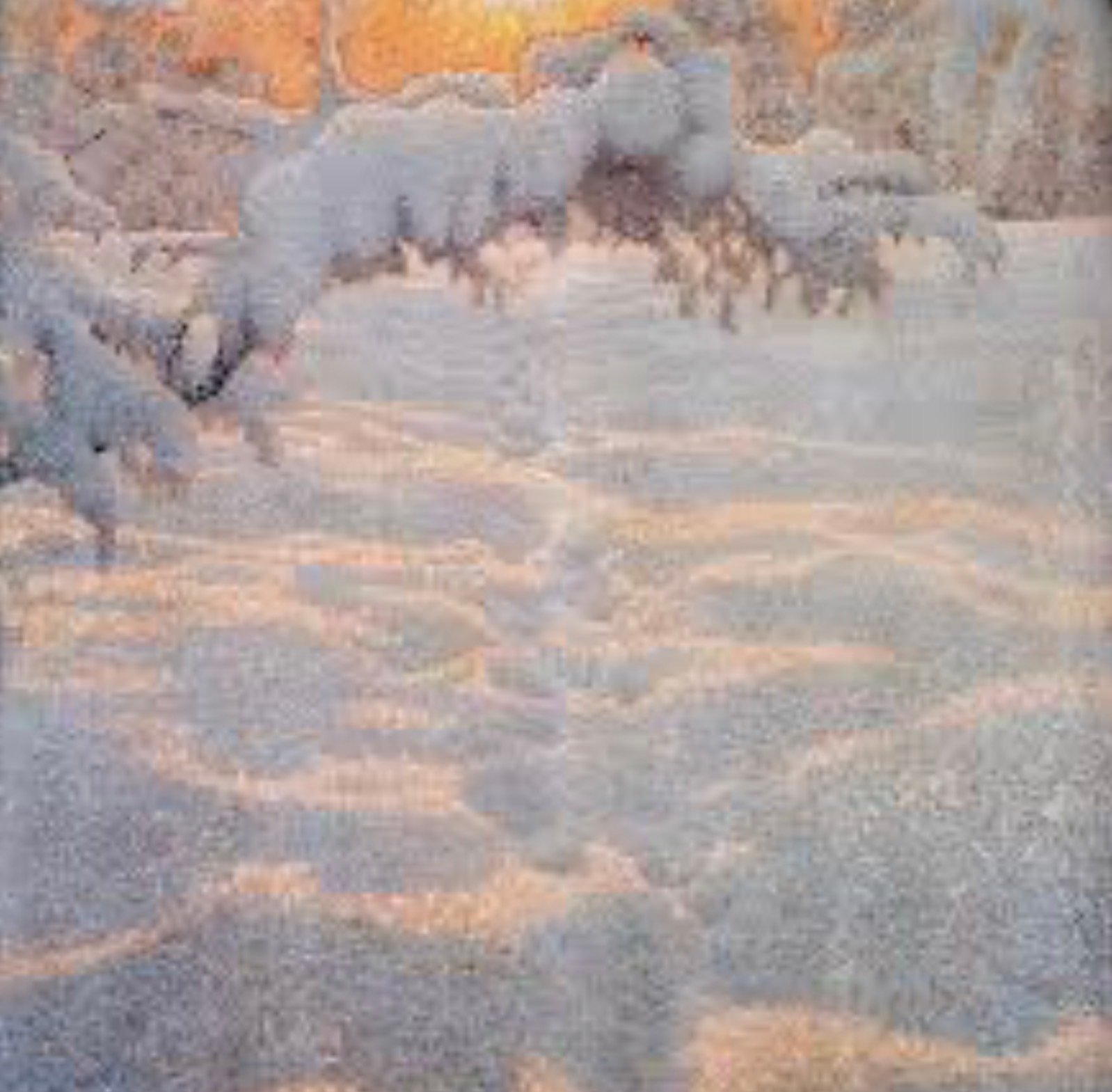
Fjaestad wrote to Archbishop Nathan Söderblom: “But how can there be any explanation for the connection between us human insects and the infinite. To that question, scientists of our time, without referring to it, have also given us answers. It teaches that everything that exists in creation is basically just different kinds of vibrations. Theosophy also speaks especially of three different vibrations so far apart that although they move one within the other no friction needs to arise. Namely the Material, the Mental and the Spiritual.”
Human figures rarely appear in his paintings, and when they do, they are implied rather than depicted—a ski track, a shadow on the ice, a trace suggesting a fleeting passage through a world that is not primarily focused on humans. This also reflects his spiritual view. For Fjaestad, nature was a reflection of cosmic order. The forests of Värmland, the frozen rivers, and the delicate frost patterns on branches expressed a living universe governed by laws that art could hint at but never fully reveal. His landscapes often convey a subtle tension. Beneath the decorative beauty lies a sense of mystery, even danger, as if the winter world holds secrets that the painter could only approach with respect.
Fjaestad’s career reached far beyond Sweden. His first solo exhibition in Stockholm in 1908 was a success, and his works were well received in Berlin in 1914 and London in 1927. Yet he remained connected to Värmland, where he worked as a painter, craftsman, and cabinetmaker, embodying the ideal of the artist-craftsman that resonated with both Theosophy and the Arts and Crafts movement. His life in the Racken community was a conscious choice to reject urban modernity in favor of a spiritual bond with nature.
His winter landscapes with their cold beauty are reflections on the unseen and invitations to see the world as a field of forces and meanings that lie beyond ordinary perception. While other Nordic painters and writers of his time were influenced by materialism and positivism, the Theosophist Fjaestad quietly asserted—through snow and light—that reality is larger, deeper, and more mysterious than it seems.
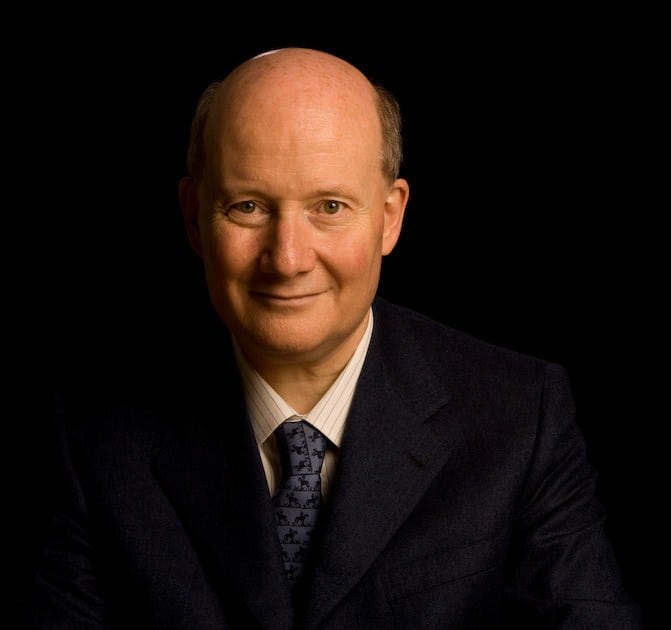
Massimo Introvigne (born June 14, 1955 in Rome) is an Italian sociologist of religions. He is the founder and managing director of the Center for Studies on New Religions (CESNUR), an international network of scholars who study new religious movements. Introvigne is the author of some 70 books and more than 100 articles in the field of sociology of religion. He was the main author of the Enciclopedia delle religioni in Italia (Encyclopedia of Religions in Italy). He is a member of the editorial board for the Interdisciplinary Journal of Research on Religion and of the executive board of University of Pennsylvania Press’ Nova Religio. From January 5 to December 31, 2011, he has served as the “Representative on combating racism, xenophobia and discrimination, with a special focus on discrimination against Christians and members of other religions” of the Organization for Security and Co-operation in Europe (OSCE). From 2012 to 2015 he served as chairperson of the Observatory of Religious Liberty, instituted by the Italian Ministry of Foreign Affairs in order to monitor problems of religious liberty on a worldwide scale.