France and India vow to cooperate in AI. The thought of the visionary spiritual leader may offer guidance in the forthcoming “AI-yuga.”
by Claude Arpi
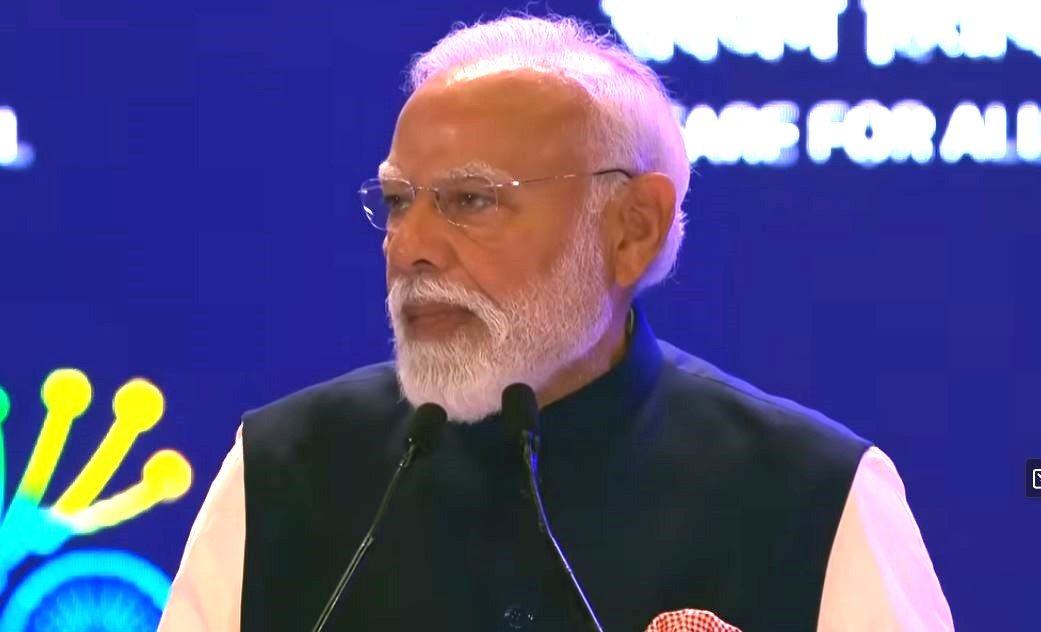
India has recently been in the news, as Prime Minister Narendra Modi inaugurated the AI (Artificial Intelligence) Impact Summit at Bharat Mandapam in New Delhi on February 18, welcoming several world leaders. Among the dignitaries were Pedro Sanchez Perez-Castejon, President of Spain; Peter Pellegrini, President of the Slovak Republic; Olzhas Bektenov, Prime Minister of Kazakhstan; Petteri Orpo, Prime Minister of Finland; Anura Kumara Dissanayake, President of Sri Lanka; and Alar Karis, President of Estonia.
The Summit, which was the first global AI gathering to be hosted in the Global South, witnessed an unprecedented participation, with over 20 Heads of State, 60 Ministers, and 500 global AI leaders.
A press release said that it reflected “India’s leadership in promoting global cooperation on artificial intelligence, innovation, and digital transformation.”
The Summit aimed at bringing together nations and international institutions, reflecting India’s focus on multilateral collaboration and the use of AI to address global challenges and unlock new opportunities for shared growth.
For months, Delhi had worked on the event, considered one of the Indian government’s flagships.
On February 19, PM Modi’s inaugural speech was followed by keynote presentations by OpenAI CEO Sam Altman, Google DeepMind CEO Dennis Hassabis, and Reliance Industries Limited, chairman and managing director, Mukesh Ambani; the keynote speakers included a representative of the Gates Foundation and Microsoft president Brad Smith.
French President Emmanuel Macron, along with Brazil’s President Luiz Inacio Lula da Silva, were among the galaxy of participants.
Over 400 exhibitors, ranging from startups and large corporate firms to government entities and researchers, set up booths on the summit premises.
The popularity of the AI Impact Summit’s exhibition was such that it had to be extended by one day, so that visitors could enjoy their visit without the heavy security arrangements attendant to the VIPs’ presence.
But what is this AI? Why so much excitement?
Recently, a friend of mine mentioned an uncomfortable truth; in tomorrow’s world, AI (artificial intelligence) will be supreme; my friend noted: “AI will affect most the ‘thinking-heavy’ professions, not the mechanical ones… For decades, the worth of analysts, strategic thinkers, or geopolitical commentators came from three advantages: access to information, ability to process large quantities of documents, and recognition of past patterns across history, doctrine, and behavior.”
Today, AI does all three faster, deeper, broader, and with no effort.
AI can read every paper published in the world in the last 20 years in seconds; it can compare doctrinal shifts across the world or detect patterns of human behavior that humans would miss, while instantly generating alternative doctrines.
In these circumstances, what remains to be done for humans?
“Not analysis. Not synthesis. Not even forecasting,” observed my friend. The human is slowly shifting “from judgment under ambiguity to choosing which question to ask.”
Can India and the world lose the race of tomorrow?
Certainly not, and the event at Bharat Mandapam, which coincided with the French President Macron’s visit to India, must be seen in this perspective.
Twenty-eight years after signing the first Strategic Partnership, Emmanuel Macron landed in Mumbai for his fourth visit to India; the highlight of his trip was, of course, his participation in the AI Summit.
While in Mumbai, the French President and the Indian Prime Minister had the opportunity to have bilateral talks and jointly inaugurate the 2026 India-France Year of Innovation.
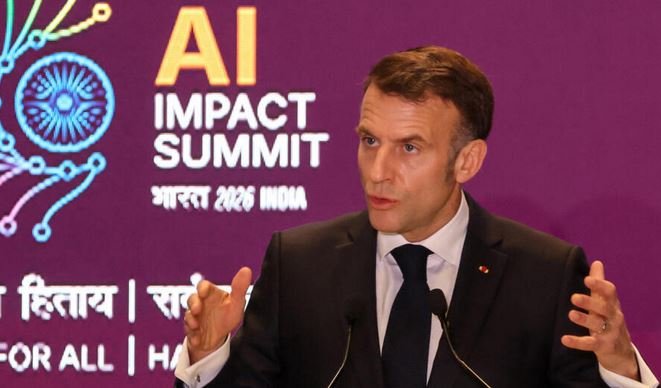
Modi and Macron were conscious that, in the future, AI and Innovation would rhyme.
That is why both leaders agreed to elevate relations to a “Special Global Strategic Partnership” to “act as a force for global good that can help build not only prosperity and resilience in their economies and advance their countries’ security but also work collectively towards addressing challenges in an increasingly uncertain global environment.”
The planet is indeed facing serious challenges; the world seems to have entered a period of great uncertainty, not to say chaos. To solve problems in the forthcoming “AI-yuga,” can machines replace men?
From this perspective, it is interesting that France and India agreed to join hands, not just in the defence domain.
Indeed, innovation will determine the world’s future leadership.
Only nations with a strong will (and capacity) to innovate (particularly in the AI field), while keeping moral and ethical values in mind, will be able to play a meaningful role in tomorrow’s world. In this perspective, collaboration is an important consideration.
The joint statement observed that both nations: “welcomed the progress in existing bilateral cooperation on critical and emerging technologies, including on space, civil nuclear energy, cyber, and AI, and encouraged to go further in technology cooperation. They welcomed the launch of the India-France Innovation Network to bring together the innovation ecosystems of France and India through a digital network, by connecting key stakeholders, including innovators, start-ups, businesses, and incubators of both countries.”
Undoubtedly, in the new era, humanity will move from “who knows more” to “who understands consequences better.”
For ages, India has been eminently suited for this.
More than a century ago, Sri Aurobindo, the sage and freedom fighter, who had an in-depth knowledge of Ancient India, wrote: “India creates and creates and is not satisfied and is not tired.”
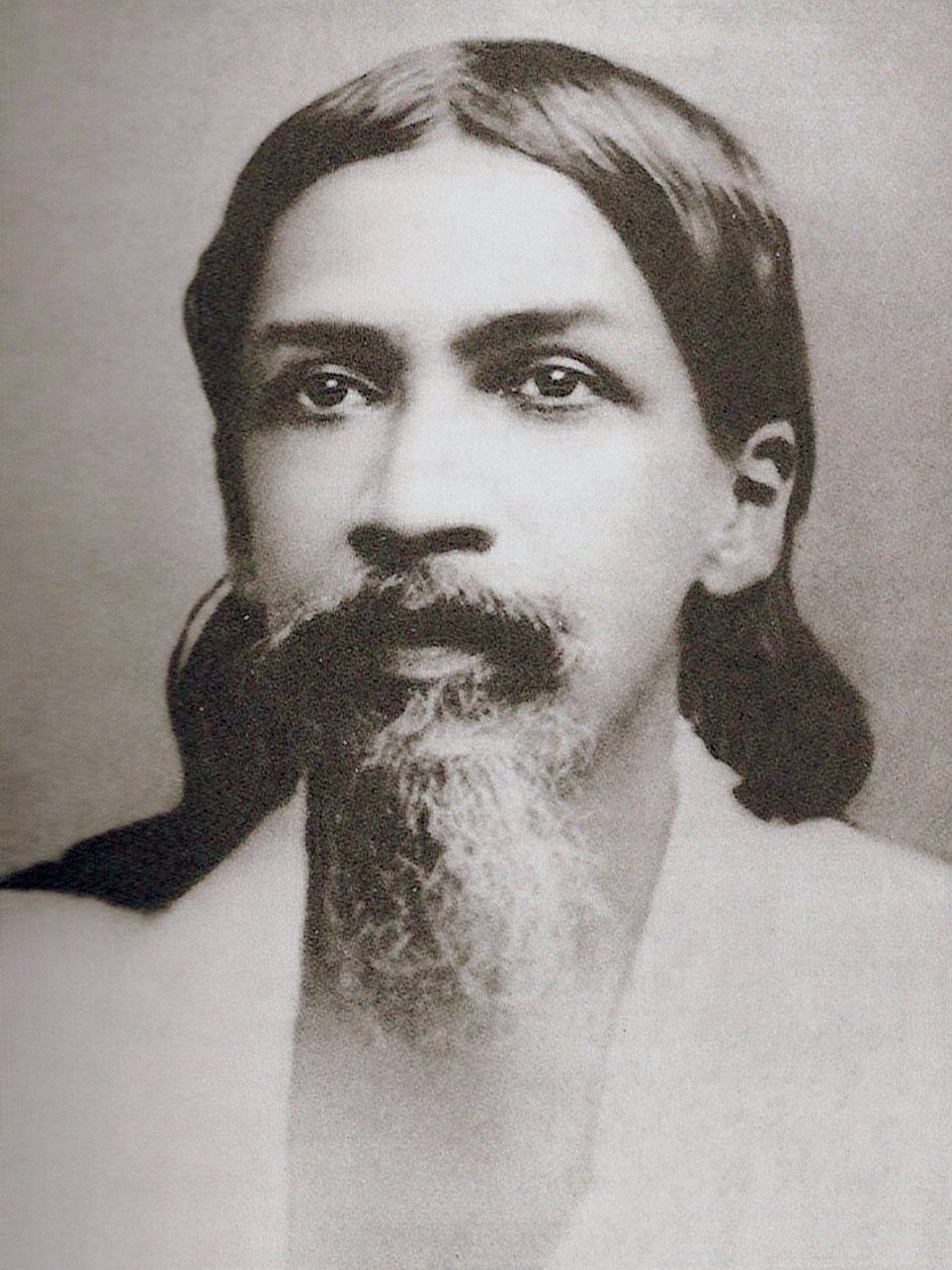
This eternal vitality and creativity will be a vital component in a better world emerging from the present chaos.
The success of the present endeavor will not depend only on the large investments announced by the Tech giants at the Summit in New Delhi. For example, Google CEO Sundar Pichai told the reporters: “India’s going to have an extraordinary trajectory with AI, and we want to be a partner.” Can India provide a moral, ethical, and spiritual base for AI development?
Here too Sri Aurobindo had shown the path: “Spirituality is indeed the master-key of the Indian mind,” he wrote: “When we look at the past of India, what strikes us next is her stupendous vitality, her inexhaustible power of life and joy of life, her almost unimaginably prolific creativeness.”
This was subdued for decades by a bureaucratic mindset and unnecessary over-centralization, but there is an opportunity for a change now; however, innovation without a sound ethical foundation is bound to fail.
It is where India could make a difference.
Referring to the UPI system, Emmanuel Macron rightly began his address at the Summit by praising India for having “built what no other country can.”
Let us hope it continues to materialize.
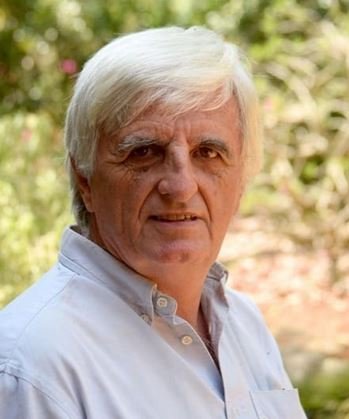
Claude Arpi was born in Angoulême (France) in 1949. In 1972, he visited the Indian Himalayas. Since then, he has been an enthusiastic student of the history of Tibet, China, and the subcontinent. After graduating as a Dental Surgeon from Bordeaux University in 1974, he decided to come to India and settled in Auroville, the utopian city founded by Sri Aurobindo. He is the author of several books and articles on the geopolitics of the region, Indo-French relations, and Aurobindo. Arpi previously held the Field Marshal KM Cariappa Chair of Excellence at the United Service Institution of India and is a Distinguished Fellow at the Centre of Excellence for Himalayan Studies, Shiv Nadar Institution of Eminence (Delhi).