After 143 days of unjust detention, the conservative Protestant leader was released. But the authorities continue to harass the educational institution he founded.
by Massimo Introvigne
“Bitter Winter” has covered the case of Korean Pastor Son Hyun-bo of Busan’s Segero Presbyterian Church, who was arrested for allegedly interfering in elections by suggesting to his parishioners that some candidates had an anti-Christian agenda and should not be supported. Korean law forbids clergy from making electoral recommendations, but in the past, violators have been punished with small fines. Pastor Son was arrested and spent 143 days in jail before, on January 30, 2026, the 6th Criminal Division of the Busan District Court sentenced him to six months in prison with a one-year suspended execution and ordered his release. Son’s detention was widely perceived in Korea as political vengeance for his conservative positions and criticism of the current left-leaning president, Lee Jae Myung.
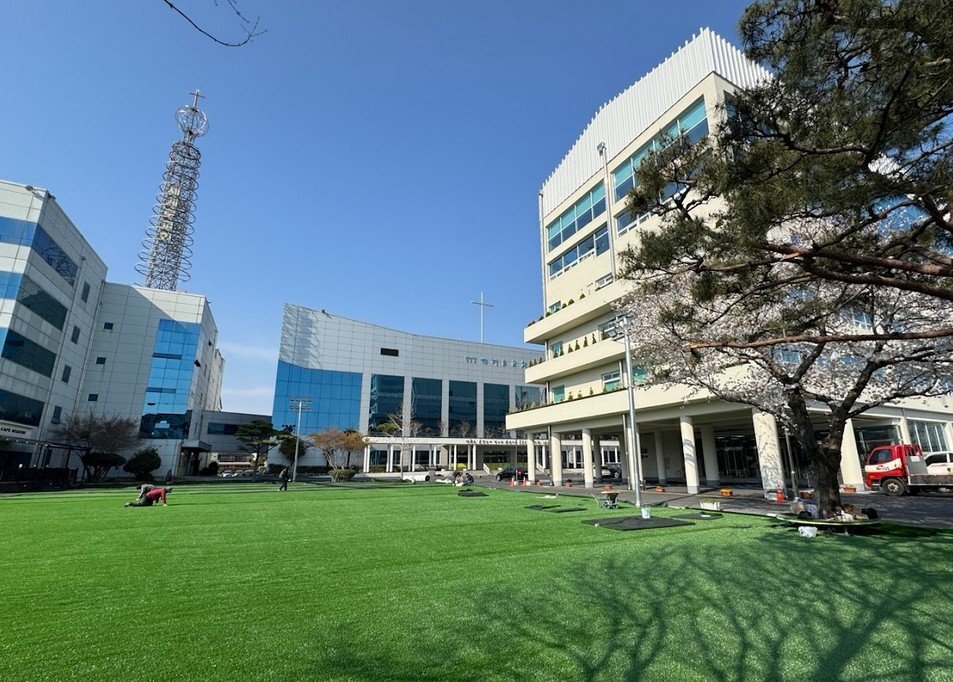
Pastor Son is now free, but the political vendetta against his school, Segero Unam Christian Academy, continues. The school was born from a community that has learned, through painful experience, that freedom of religion or belief is never guaranteed and that institutions built on conviction must be prepared to defend it. Segero Church, founded in 1993, has grown through evangelism, discipleship, and a willingness to stand for its beliefs publicly. Over the past years, this posture has brought the church into direct conflict with state authorities.
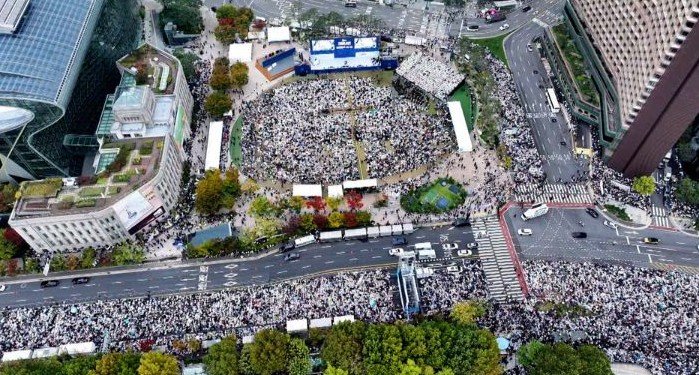
This background is essential to understanding why Segero Church decided to establish a school. The community had already experienced what it means to be treated as a political problem rather than a religious body, and it understood that the next generation would need not only academic competence but moral clarity and resilience. During the COVID‑19 pandemic, when churches were classified as “non‑essential,” Segero Church continued in‑person worship while complying with public‑health requirements. The authorities responded by ordering the church closed. In 2024, when the Supreme Court recognized national health insurance benefits for same‑sex couples, Pastor Son expressed his theological disagreement and organized a massive prayer gathering—“1027 United Worship”—that drew an estimated one million participants in Seoul and another million online. These events shaped the church’s identity.
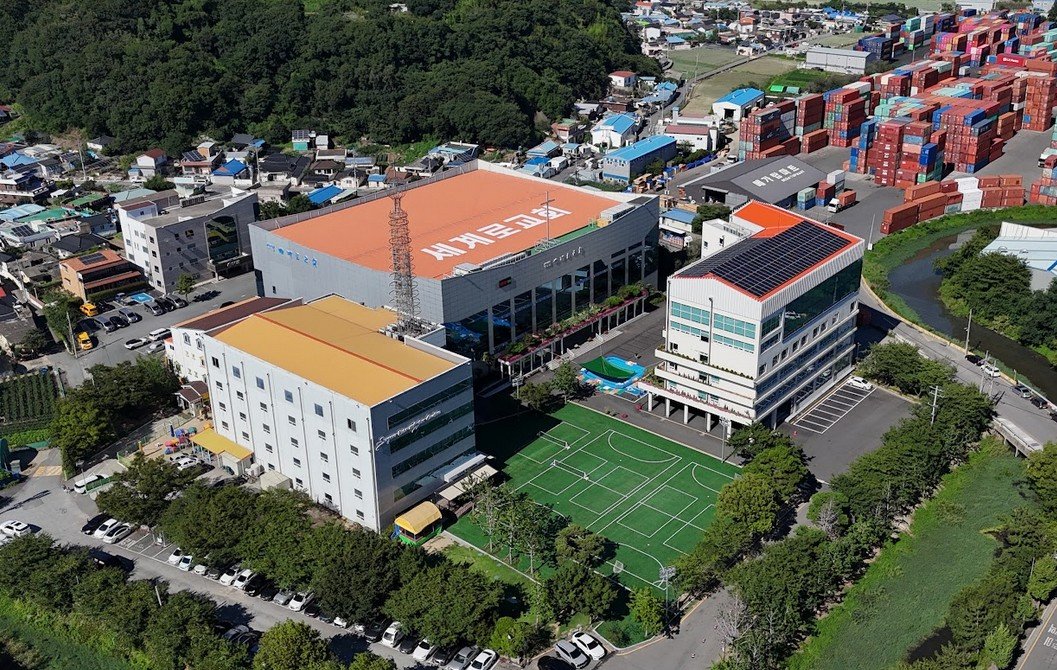
Segero Unam Christian Academy emerged from this lived experience. The school follows the Korean national curriculum at all grade levels, but every subject is taught through a biblical worldview. Instructional materials are developed independently to ensure that Christian teachers implement instruction based on a redesigned curriculum. English education is a major component, with native English‑speaking teachers preparing students for higher education in international contexts. The name “Segero Unam Christian Academy” reflects both its mission and its historical grounding. “Unam” was the sobriquet of Syngman Rhee, the first president of the Republic of Korea, a Christian statesman who led the country from monarchy to constitutional democracy. Under his leadership, Korea adopted a constitution strongly influenced by the American model, guaranteeing religious liberty, freedom of speech, and private property—principles that allowed Christianity and civil society to flourish. The school’s founders saw in Rhee’s legacy a reminder that education must form citizens capable of defending freedom, not merely consuming it.
From the beginning, the academy pursued full government accreditation. Yet the process quickly revealed the growing tension between Christian education and the current interpretation of “political and religious neutrality” by the Busan Superintendent of Education. The school was instructed to apply as an alternative education institution. It did so. Then it was rejected. The reasons given were striking: the use of the name “Unam” was deemed a violation of neutrality, as referencing the founding president was considered politically charged; the founding pastor’s public advocacy for freedom of expression and religious liberty was labeled “political bias”; and Christian education itself, according to the Superintendent’s interpretation of the Education Framework Act, was incompatible with neutrality standards applied to alternative education. Actions cited as “political” included public opposition to anti‑discrimination legislation (which the church believes is intended to prevent criticism of homosexuality), expressing inability to support candidates promoting such laws, and speaking in defense of liberal democracy and constitutional freedoms. In other words, the school was denied accreditation not because of academic deficiencies, but because of its religious identity and the public convictions of its founding pastor.
The refusal to register Segero Unam Christian Academy raises serious questions about the state of freedom of religion or belief in South Korea. When neutrality is interpreted to exclude faith‑based education from legal recognition, it becomes a tool of exclusion rather than fairness. When a pastor’s public advocacy for constitutional freedoms is treated as disqualifying “political activity,” the boundary between education policy and ideological policing becomes dangerously thin.
The Segero Church has already experienced the consequences of standing against prevailing political currents. Its pastor’s imprisonment, the dramatic protests by church members, and the intense public scrutiny surrounding the case have made the community acutely aware of how fragile religious freedom can be. The denial of accreditation to its school is not an isolated administrative decision—it is part of a broader pattern in which religious expression is increasingly treated as a threat to public order or political neutrality.
Segero Unam Christian Academy continues to operate, but without accreditation, its students face obstacles in recognition, advancement, and access to certain educational pathways. Yet the school’s founders insist that the mission remains unchanged: to form young people who can think critically, live faithfully, and engage society with courage. The existence of the Academy is in itself a statement—a declaration that faith communities have the right to educate their children according to their convictions, and that religious freedom includes the right to teach, to form, and to pass on a worldview. The struggle of Segero Unam Christian Academy concerns the future of pluralism in South Korea and whether the state will allow diverse educational visions to coexist—or whether neutrality will be redefined as uniformity.

Massimo Introvigne (born June 14, 1955 in Rome) is an Italian sociologist of religions. He is the founder and managing director of the Center for Studies on New Religions (CESNUR), an international network of scholars who study new religious movements. Introvigne is the author of some 70 books and more than 100 articles in the field of sociology of religion. He was the main author of the Enciclopedia delle religioni in Italia (Encyclopedia of Religions in Italy). He is a member of the editorial board for the Interdisciplinary Journal of Research on Religion and of the executive board of University of Pennsylvania Press’ Nova Religio. From January 5 to December 31, 2011, he has served as the “Representative on combating racism, xenophobia and discrimination, with a special focus on discrimination against Christians and members of other religions” of the Organization for Security and Co-operation in Europe (OSCE). From 2012 to 2015 he served as chairperson of the Observatory of Religious Liberty, instituted by the Italian Ministry of Foreign Affairs in order to monitor problems of religious liberty on a worldwide scale.