A model investigation by an award-winning magazine highlights how Beijing uses trolls to shape public opinion in “hostile” countries.
by Massimo Introvigne

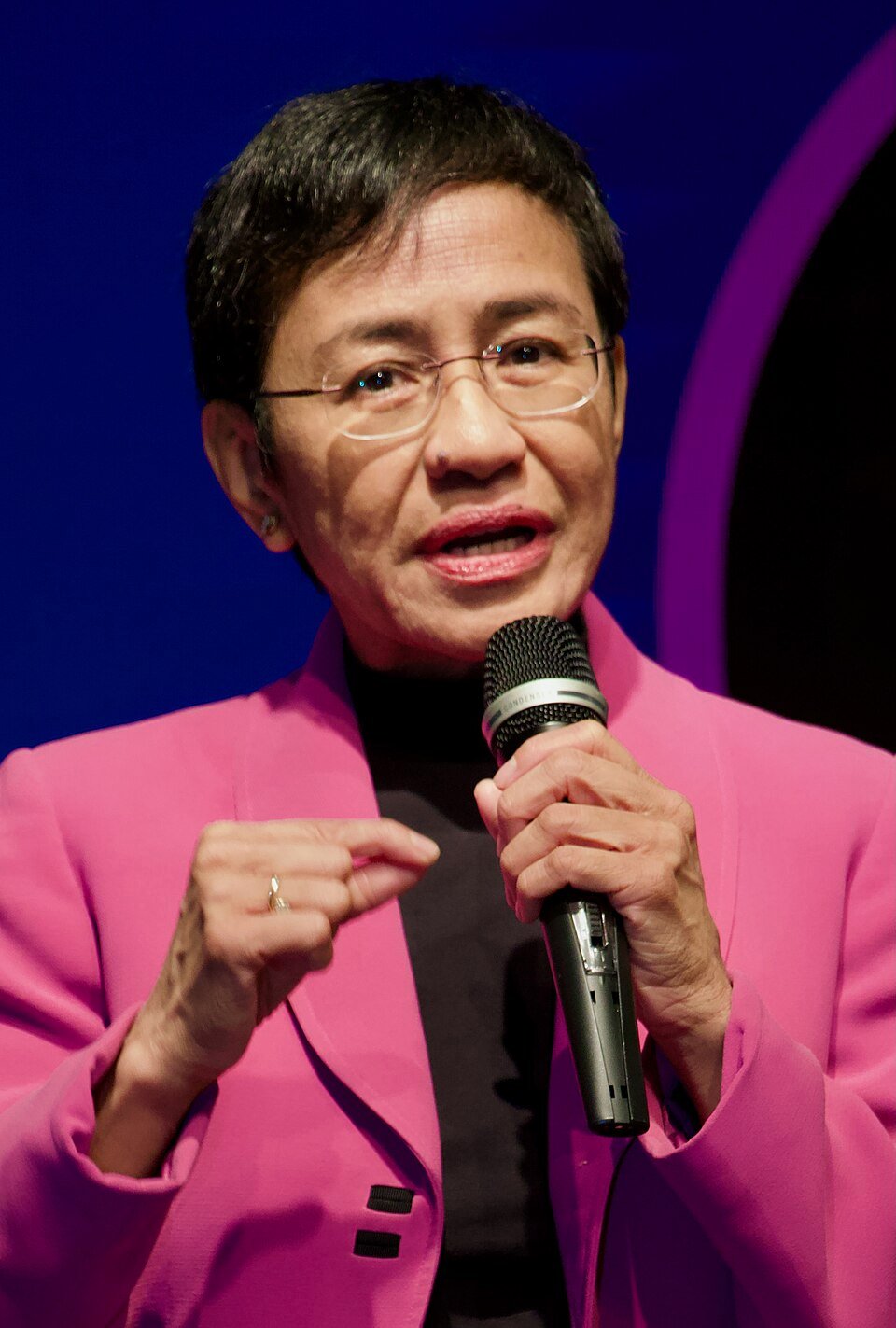
“Rappler” is not just another Filipino news outlet. It is a digital investigative magazine co‑founded by journalist Maria Ressa, who was awarded the 2021 Nobel Peace Prize for her efforts to safeguard freedom of expression. Under Ressa’s leadership, “Rappler” has become internationally respected for exposing corruption, disinformation networks, and the weaponization of social media—work that has often placed the publication at odds with powerful political actors.
I may occasionally disagree with “Rappler” and Ressa on other issues. However, it has just uncovered one of the most detailed case studies to date of Chinese influence operations. Don Kevin Hapal’s December 20 investigation, “China’s Troll Army,” is a dispatch from the front lines of a new kind of geopolitical conflict—one fought not with ships in the West Philippine Sea, but with fabricated Facebook profiles and outsourced propaganda mills.
There is a particular chill that runs through Hapal’s investigation—of the colder, bureaucratic kind. The kind that comes from reading onboarding documents for a propaganda factory that pretends to be a marketing firm.
The story opens with a deceptively ordinary tableau: “A teacher. A college student. And even a construction worker. ”These are the avatars of everyday life, the digital neighbors one expects to encounter on Facebook. As Hapal writes: “To the casual observer scrolling through Facebook, these profiles would look like ordinary Filipinos. A teacher posting about classroom experience, students interacting with other students, and an ordinary worker sharing glimpses of his daily grind. They had names, faces, and opinions.”
Except they didn’t. Or rather, the names, faces, and opinions were manufactured—carefully engineered masks worn by what internal documents call “dedicated keyboard warriors.” Their mission: to infiltrate Filipino conversations and subtly reshape public sentiment about China.
This is where the investigation becomes especially valuable. Influence operations are often discussed in abstract terms—“troll farms,” “bots,” “foreign interference.” “Rappler’s” reporting cuts through the abstraction by showing the machinery up close. The documents from InfinitUs Marketing Solutions, the firm allegedly hired by the Chinese embassy, outline a program explicitly designed to “change the overall negative perception of Filipinos about the Chinese and China.”
And the timing is no coincidence. As Hapal notes, the operation unfolds amid escalating tensions in the West Philippine Sea. China’s aggression at sea is well documented; what is less visible is the parallel campaign to soften Filipino resistance by manipulating the digital public square. The battleground, as Rappler puts it, “has shifted from the open seas to the digital sphere.”
One of the most striking revelations is not merely that China may be conducting influence operations—this has long been suspected—but that these operations appear to be outsourced to local firms, effectively weaponizing Filipino labor against Filipino democracy.
This is the kind of detail that transforms a geopolitical narrative into a human one. Influence operations are no longer faceless; they have HR departments, onboarding manuals, and payrolls.
InfinitUs, for its part, denies everything. The firm claims the contract linking it to the Chinese embassy is a “forgery crafted to fit a political narrative.” Yet it acknowledges that the check from the Chinese government—presented by Senator Francis Tolentino as evidence—is real, though “legal and justified.” The company’s marketing director, Myka Basco‑Poynton, insists: “InfinitUs Marketing Solutions, Inc. stands firm in its commitment to truth and integrity… we categorically refute the baseless claims made against our company and reaffirm our dedication to ethical business practices.”
The contrast between this corporate boilerplate and the granular detail of the leaked documents is, however, stark. What Rappler has uncovered is not just a local anomaly. It is a template—a model of how a powerful authoritarian state can extend its influence into democratic societies through commercial intermediaries.
If it is happening in the Philippines, it is almost certainly happening elsewhere. “Bitter Winter” itself is periodically targeted by massive troll attacks on social media that clearly show Beijing’s fingerprints. The genius—and danger—of such operations lies in their banality. They do not require secret agents or sophisticated AI. They require only a budget, a marketing firm willing to take the contract, and a population whose digital spaces are porous. The result is a propaganda ecosystem that blends seamlessly into everyday life.
This is what makes Hapal’s investigation so important. It offers a rare, document‑based look at the mechanics of influence operations that are usually invisible. It shows how disinformation is professionalized, outsourced, and localized.
Authoritarian states increasingly rely on soft power, digital manipulation, and psychological operations. The investigation is a reminder that journalism—real journalism—remains one of the few tools capable of exposing the architecture of deception.

Massimo Introvigne (born June 14, 1955 in Rome) is an Italian sociologist of religions. He is the founder and managing director of the Center for Studies on New Religions (CESNUR), an international network of scholars who study new religious movements. Introvigne is the author of some 70 books and more than 100 articles in the field of sociology of religion. He was the main author of the Enciclopedia delle religioni in Italia (Encyclopedia of Religions in Italy). He is a member of the editorial board for the Interdisciplinary Journal of Research on Religion and of the executive board of University of Pennsylvania Press’ Nova Religio. From January 5 to December 31, 2011, he has served as the “Representative on combating racism, xenophobia and discrimination, with a special focus on discrimination against Christians and members of other religions” of the Organization for Security and Co-operation in Europe (OSCE). From 2012 to 2015 he served as chairperson of the Observatory of Religious Liberty, instituted by the Italian Ministry of Foreign Affairs in order to monitor problems of religious liberty on a worldwide scale.