After President Modi offered a copy of the “Bhagavad Gita” to Putin, Alexander Dvorkin revamped one of his old campaigns.
by Massimo Introvigne
It seems that in Russia, even stretching your hamstrings can be construed as a geopolitical threat. On his website and Telegram channel, Alexander Dvorkin—the country’s most notorious anti-cultist—has published an article by Hieromonk Luke Kuzmin that reads like a parody of anti-cult propaganda.
“Yoga,” Kuzmin warns, “is not gymnastics but a recruitment project of Hinduism.” He describes the practice as “leg‑lifting and arm‑twisting” and tries to scare his readers by assuring them that “there are numerous, if not widespread, cases of joint disease at the end of life in old Hindus who practice ritual yoga poses all their lives.”
Worse, yoga is depicted as designed to lure unsuspecting Christians into the snares of “cultic religion.” Just like in China, “cults” in Russia are elastic categories that include everything from Falun Gong to Orthodox Christian communities that refuse to submit to the control of the Moscow Patriarchate. In Kuzmin’s telling, yoga is nothing less than a Trojan horse for India’s global ambitions.
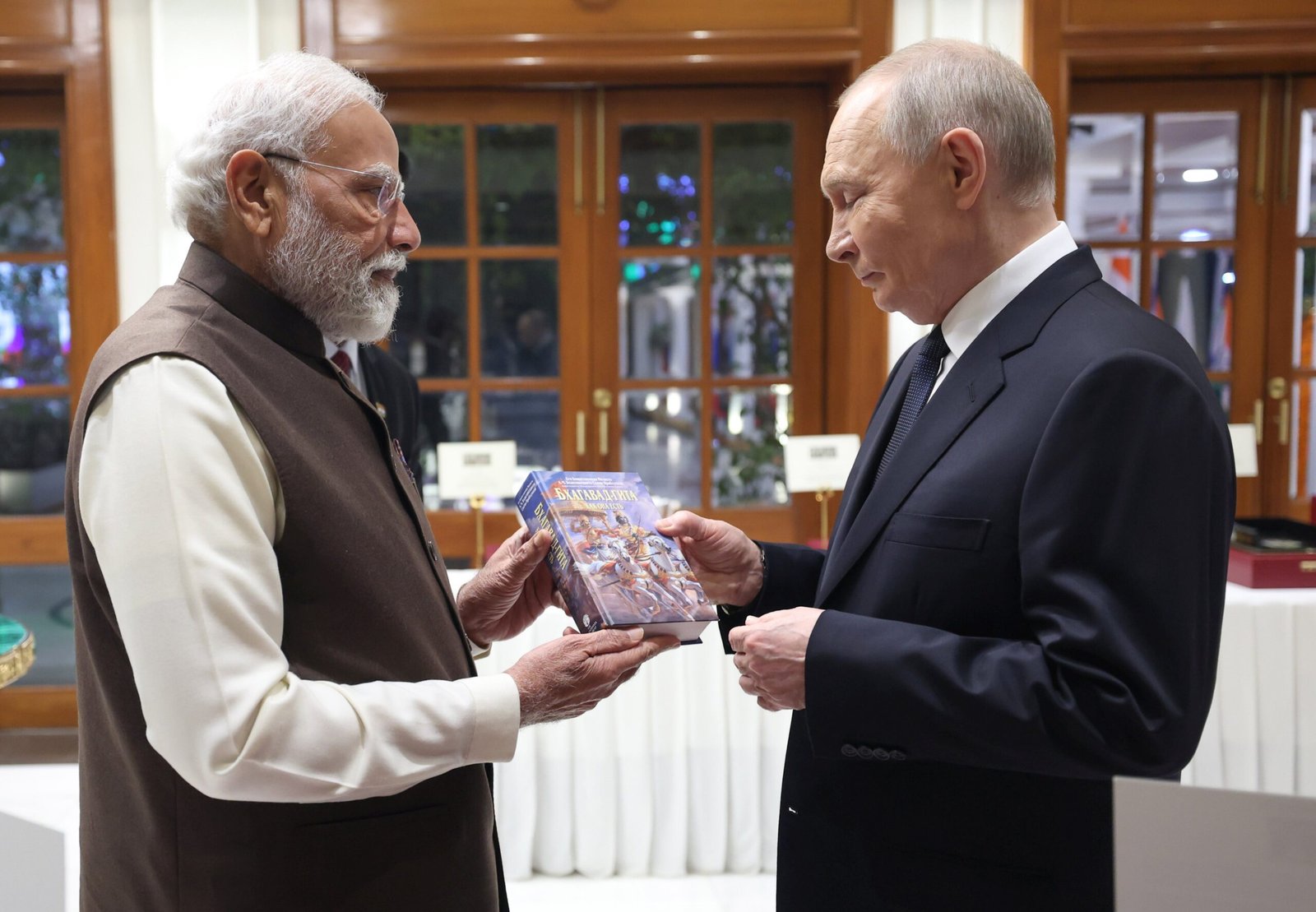
The paranoia reached new heights when Indian Prime Minister Narendra Modi was photographed presenting President Vladimir Putin with an edition of the “Bhagavad Gita” published by ISKCON, the Hare Krishna movement. Modi himself posted the image on X on December 4, reporting that he told Putin that “The teachings of the Gita give inspiration to millions across the world.”
Putin was not exactly smiling, and I doubt the sweet “Bhagavad Gita” would really make inroads into his dark heart. In the article published by Dvorkin, however, Modi’s gift was part of a sinister political plot. “In India,” we read, “for the past few decades, those in power have been promoting the idea of lobbying for Hindu interests under the guise of anything, just to create an ideological platform for growing India’s authority globally, both in terms of ideology and tourism, as well as in meaningful practices and theories. This benefits them both ideologically and economically.”
Dvorkin’s associate thundered that ISKCON is “a cult of pedophiles, drug dealers, arms dealers, and other criminals,” and that Modi’s gift was just another proof that India is “the most cultic country in the world.”
If this sounds familiar, it should. In 2011, Dvorkin orchestrated a campaign through a Tomsk prosecutor to have the Bhagavad Gita As It Is—the holy book published with commentaries by ISKCON founder Prabhupada—declared an extremist text. He even made the outrageous claim that “We won’t be mistaken if we say that, from the Orthodox viewpoint, Krishna is one of the demons.” The statements embarrassed Russian diplomats in India, provoked outrage in the Indian Parliament, and made headlines across the subcontinent. The Leninsky District Court eventually rejected the prosecutor’s appeal, but the damage was done: Russia had managed to insult one of Hinduism’s most sacred scriptures.
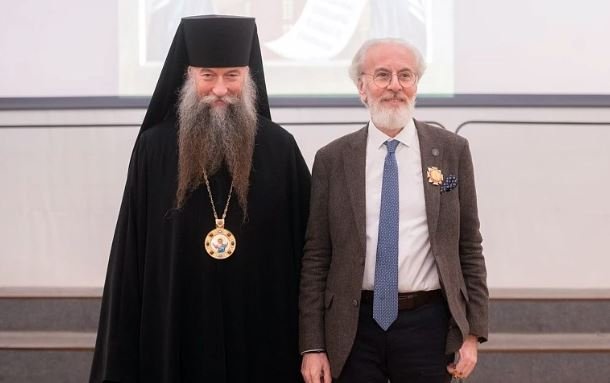
Now, Dvorkin and his allies are at it again, recycling the same tired tropes about “cultic India” and “dangerous yoga.” We would leave it to Putin to reconcile his regime’s support for the Russian anti-Hindu (and anti-India) anti-cultists, which are unleashed when needed for the propaganda against Ukraine, allegedly “controlled by the cults,” and his geopolitical need to keep a good relationship with the Indian government and such a pious Hindu as Modi.
For Dvorkin, India is not a partner but a problem, not a civilization but a conspiracy. While millions around the world practice yoga for health and peace of mind, Russian anti-cultists see only a sinister plot. While India promotes cultural diplomacy, Dvorkin insists it is a recruitment drive for “neo-Hindu cults.”
Dvorkin’s obsession cannot forgive a country that refuses to fit neatly into his blacklist of “cults.” And so, every yoga mat becomes a battlefield, every book a weapon, every gift a scandal.
In the end, the spectacle says less about India than about Russia’s anti-cult crusaders. Their campaign against yoga is driven by fear, in a country where the Moscow Patriarchate’s blind support for the regime has made the Russian Orthodox Church less and less popular and believable. And their attempt to brand India “the most cultic country in the world” tells us more about their own ideological rigidity than about the millions of people who find in yoga, and in Hindu traditions, a path to meaning and health.
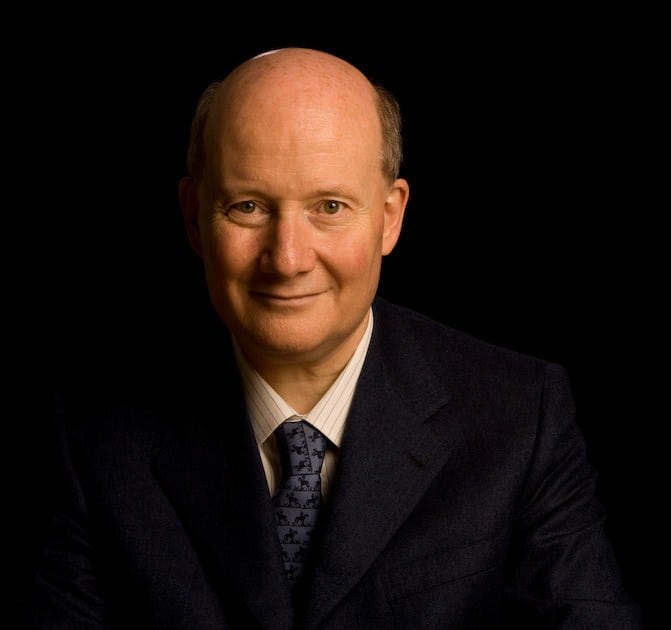
Massimo Introvigne (born June 14, 1955 in Rome) is an Italian sociologist of religions. He is the founder and managing director of the Center for Studies on New Religions (CESNUR), an international network of scholars who study new religious movements. Introvigne is the author of some 70 books and more than 100 articles in the field of sociology of religion. He was the main author of the Enciclopedia delle religioni in Italia (Encyclopedia of Religions in Italy). He is a member of the editorial board for the Interdisciplinary Journal of Research on Religion and of the executive board of University of Pennsylvania Press’ Nova Religio. From January 5 to December 31, 2011, he has served as the “Representative on combating racism, xenophobia and discrimination, with a special focus on discrimination against Christians and members of other religions” of the Organization for Security and Co-operation in Europe (OSCE). From 2012 to 2015 he served as chairperson of the Observatory of Religious Liberty, instituted by the Italian Ministry of Foreign Affairs in order to monitor problems of religious liberty on a worldwide scale.