A study by Li Hou-chen in “Lingua Sinica” examines how China’s VIP guests are outmaneuvered and manipulated to further CCP propaganda.

by Massimo Introvigne
We rarely review articles by others (as opposed to books) in “Bitter Winter.” Still, Li Hou-chen’s forensic deep-dive, “The Influence Machine,” deserves the attention of those who do not subscribe to the worthy magazine “Lingua Sinica.” Li’s dissection of China’s velvet-gloved propaganda playbook stars Holger Chen, Taiwan’s most muscular YouTuber, in a role he didn’t quite audition for: influencer under influence.
Act I: The Setup
In June 2025, Holger Chen—tattooed, charismatic, and famously blunt—lands in Shanghai. His trip is billed as spontaneous, a personal journey to “see China for himself.” But as Li reveals, spontaneity was nowhere on the itinerary. From visa approvals to livestream logistics, Chen’s visit was choreographed with the precision of a state banquet.
The cast behind the curtain reads like a who’s who of China’s United Front ecosystem. Wang Xiao is a BiliBili influencer with 2.37 million followers, a CCP darling, and co-host of Chen’s livestreams. He acted as the friendly face of state-sanctioned nationalism. Li Xiang is a former state media editor turned influencer wrangler. He’s now embedded in the New Social Strata Association—a United Front Work Department (UFWD) proxy targeting non-party elites. Yang Sheng is a chief reporter of the international CCP newspaper “Global Times” and co-host of “Break Talks,” a YouTube-style show that blends propaganda with influencer banter. He is the ideological enforcer in a hoodie.
Together, they guided Chen through a curated tour of “modern China”: barbecue joints, bustling shopping streets, and livestreams that conveniently avoided sensitive topics. But the real show was happening online.
Act II: The Influence Machine
While Chen grilled lamb skewers in Xinjiang-themed restaurants, a parallel media campaign was unfolding. Videos like “I Will Use My Whole Life to Fight Taiwan’s Poisonous Independence Curriculum!” dropped while Chen was still in Shanghai.
The Observer-Fudan University nexus—a Shanghai-based media-think tank alliance—served as the engine behind this blitz. They use influencers to create “primary content” (livestreams, vlogs), then spin it into “secondary content” (reaction videos, commentary, state media coverage) that floods Chinese platforms and reframes the narrative.
Chen’s livestream after his return to Taiwan with Victor Gao—former translator for Deng Xiaoping and vice president of the Center for China and Globalization—was a diplomatic flex. Gao praised Chen’s “courage” and subtly nudged him toward a more “balanced” view of cross-strait relations.
Act III: The Psy-Op Playbook
Li’s report lays bare the mechanics of China’s United Front strategy. First, target outsiders, not insiders. Chen was once vocally anti-CCP, pro-DPP, and critical of Xi Jinping. That made him the perfect candidate—not to be silenced, but to be “converted.”
Second, manufacture authenticity. By staging “unscripted” interactions, the campaign created the illusion of organic engagement. But every step—from whom Chen met to what he said—was pre-approved.
Third, exploit controversy: Chen’s hesitation when asked, “What country are you from?” sparked a firestorm. But that moment, amplified by state media, served Beijing’s goals: to sow doubt, provoke debate, and normalize ambiguity about Taiwan’s status.
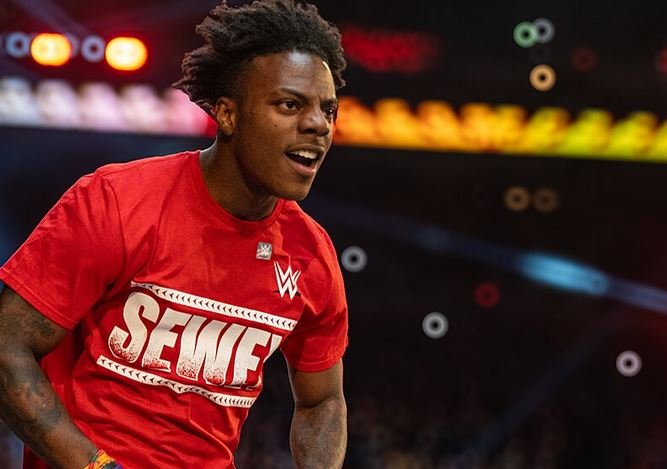
And it wasn’t just Chen. The report names other influencers who have been caught in similar webs. iShowSpeed, the American streamer, visited China under mysterious sponsorship, only to praise the country’s “freedom.”
Act IV: Why It Matters
Chen’s trip wasn’t a one-off—it was a prototype. A scalable model for psychological operations that blends entertainment, nationalism, and digital manipulation.
As Li warns, this is the future of information warfare: influencers as ideological delivery systems, livestreams as propaganda pipelines, and authenticity as a weapon.
So next time your favorite creator goes on a “spontaneous” trip to Shanghai, ask yourself: who’s really behind the camera?

Massimo Introvigne (born June 14, 1955 in Rome) is an Italian sociologist of religions. He is the founder and managing director of the Center for Studies on New Religions (CESNUR), an international network of scholars who study new religious movements. Introvigne is the author of some 70 books and more than 100 articles in the field of sociology of religion. He was the main author of the Enciclopedia delle religioni in Italia (Encyclopedia of Religions in Italy). He is a member of the editorial board for the Interdisciplinary Journal of Research on Religion and of the executive board of University of Pennsylvania Press’ Nova Religio. From January 5 to December 31, 2011, he has served as the “Representative on combating racism, xenophobia and discrimination, with a special focus on discrimination against Christians and members of other religions” of the Organization for Security and Co-operation in Europe (OSCE). From 2012 to 2015 he served as chairperson of the Observatory of Religious Liberty, instituted by the Italian Ministry of Foreign Affairs in order to monitor problems of religious liberty on a worldwide scale.