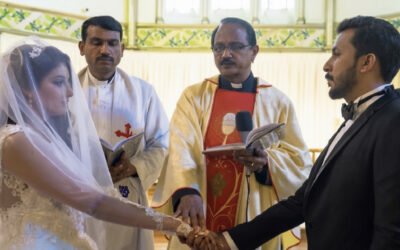
Deprogrammed members were told they should either sue the Church or would be confined again. The dissolution decision largely relied on such cases.
by Patricia Duval
Article 3 of 4. Read article 1 and article 2.
Note: We publish a report sent to the relevant Special Rapporteurs of the United Nations on June 30, 2025. The document partially reproduces the content of Patricia Duval’s series on deprogramming previously published in “Bitter Winter.”
**

The confined members who were being subjected to “deprogramming” were brought to the lawyers, who were working in coordination with the deprogrammers, and coerced into filing financial claims against the Church to secure their release from confinement. These members had to sustain their claims to avoid any possibility of being abducted and confined again by their families and deprogrammers, even decades later.
The thirty-two tort cases on which the government relied illustrate this deprogramming system. In their findings, the civil courts mentioned that the “victims” had been confined and “rescued” or “protected,” another word for deprogrammed, which means that they had been coerced into abandoning their faith and “persuaded” to sue the Church.
It can safely be concluded that such cases, in which plaintiffs complained of an alleged infringement of their free will, were fabricated against the Church, and that the former adherents’ faith at the time of their donations is proven, since coercion was needed to have them recant their beliefs.
In one of the cases, three claimants, all over the age of majority, had been abducted and confined by their families and subjected to “deprogramming” led by a Protestant pastor, i.e., persuasion that true Christianity differs from the teachings of the Unification Church (Kobe District Court, 10 April 2001).
Pastor Mamoru Takazawa was questioned and cross-examined during the court hearings and stated the following (Kobe District Court, Minutes of court hearing, 26 March 1996, page 81, Attachment 2): “Q: Are you aware that the defendant Church criticized your rescue activities as kidnapping and confinement? A: Yes, I am aware of that. Q: What are your thoughts on such criticisms? A: I believe that it is not kidnapping or confinement because the parents are involved, so it should be considered protection.”
He went on to state: “Q: When did you start using physical restraint? A: As I mentioned earlier, I believe it was around ten years ago. However, it wasn’t just me; it was generally a common practice among pastors involved in rescue activities nationwide” (Kobe District Court, Minutes of court hearing, 21 May 1996, page 25, Attachment 2).
Then, the deprogrammer admitted to the court that he knew that this practice was normally illegal but intended to continue with it based on the following justification (Kobe District Court, Minutes of court hearing, 26 March 1996, pages 81-82, Attachment 2). “Q: Are there any people who leave the Church on their own without undergoing rescue activities? A: Once someone has firmly embraced Unification Church beliefs, I believe it is impossible for them to leave naturally.”

It is precisely to break the unswerving faith of Unification Church believers that deprogramming was devised and blossomed into a “nationwide” activity with the government’s tacit approval. In all the civil cases in which the verdicts relied on deprogramming, the courts, at least tacitly, endorsed the coercive de-conversions that had been brought about.
For example, in a case before the Sapporo District Court in 2001, the plaintiffs, who complained of the Church’s “evangelistic activities” and an alleged infringement of their free will, had been confined and forcibly de-converted, according to the court’s findings.
In spite of the defense lawyer’s plea that their testimonies were not reliable, the Sapporo District Court found in their favor that torts had been committed against them without even answering the defense argument. On appeal, the Sapporo High Court almost followed this decision but gave a specific answer in relation to deprogramming in its 14 March 2008 decision.
The High Court ruling (page 24) referred to the abduction and confinement as follows: “The appellant argues that the fact that many of the appellees abandoned their faith due to means such as restraint of physical liberty violates the fairness and impartiality of the judiciary. As recognized above, all of the appellees are individuals who withdrew (abandoned their faith) from the appellant’s organization, and many of them were subjected to restraint of physical liberty by their relatives during the process leading up to their withdrawal. Such restraint may be illegal (i.e., not permissible as a justifiable act) depending on the relationship between the person who engaged in the conduct and the appellee [plaintiff] in question. However, this is merely a matter between those who committed such acts and the respective appellees, and should be dealt with separately as necessary. The existence of such circumstances has no bearing on the appellant’s [defendant, the Church] responsibility toward the appellees (if anything, it can be said to have brought such responsibility to an end). Therefore, the failure to take into account the circumstances leading up to the withdrawal, as claimed by the appellant, does not render the judgment contrary to judicial fairness and impartiality, and the appellant’s argument is without merit.”
Therefore, the fact that the plaintiffs were coerced into suing the Church under threat of confinement was not considered.
In fact, after admitting the “restraint of physical liberty,” the court went further and stated that “if anything, it can be said to have brought any such responsibility to an end,” meaning that at least it ended the brainwashing of the Church and the tort committed against the plaintiffs.
By treating this matter as an entirely separate private issue and voluntarily ignoring the fact that the claims had been filed under coercion, the court endorsed this activity and the illegal acts of confinement, which should have been considered a public order issue entailing the State’s liability.
This shows a blatant bias by the civil courts against the Unification Church, against which all shots are fair game. In all the cases brought by deprogrammed members and relied upon by the government to request dissolution of the Church, the courts never drew any conclusions from their findings about the confinement and forced de-conversion of the plaintiffs. They found instead that the Church exerted “undue influence” or “evangelical brainwashing,” a vague and arbitrary notion that the European Court of Human Rights condemned as having no scientific value (Case of Jehovah’s Witnesses of Moscow v. Russia, 302/02, 10 June 2010, §129).
This constitutes a violation of the duty of judicial impartiality and the right to a fair trial and amounts to the State’s liability for violating Japan’s duties under the Covenant.
In the civil cases on which the Tokyo District Court relied for deciding in favor of the dissolution, the judges also relied on the vague and discredited theory of mental manipulation to reject all the evidence filed by the Church that the former believers had donated or joined the Church out of faith and free will.
Based on the same theory of mind control, the courts arbitrarily refused to apply the statute of limitations and declare the plaintiffs’ action time-barred. The facts involved were ancient (occurring as they had between twenty and forty years previously), but the courts denied the plea by the defense that they were time-barred (over three years old).
The judges refused to apply the statute of limitations applicable to civil cases, finding that the “victims” were not aware of being victims until they met with the anti-Unification Church Lawyers’ Network.

They ruled that the donors were under the undue influence of the Church and that the statute of limitations applied from the day they met these lawyers and were “awakened” by them to file claims. This represents a discriminatory application of the law and shows partiality on the part of the judges in the cases against the Church.
Attorney Yoshiro Ito, a former member of the National Network of Lawyers against Spiritual Sales, confirmed this situation in a statement filed at the Tokyo District Court in the lawsuit mentioned above, filed by Toru Goto against his deprogrammers. Lawyer Ito testified in November 2012 that “The courts tend to accept easily claims that would never be accepted in other cases, if they are directed against cults,” and “In civil lawsuits, there is a kind of unwritten rule that if a cult is involved, it will lose the case.” So, the anti-Unification Church lawyers knew about and relied upon the bias of civil courts when they ruled in cases against the Unification Church.
Another completely arbitrary and biased application of the notion of undue influence can be found in the last finding of the Tokyo District Court in the dissolution decision, under the heading “c. The existence of damage that has not yet become apparent cannot be denied.”
The court found no claims in recent years and, to still justify the corporation’s dissolution, decided that there were unknown cases of hypothetical victims who would not dare speak up, based on the same theory of an alleged undue influence exerted by the Church and its members.
The court stated: “It should be said that there is no denying that there are other unrevealed damages caused by illegal solicitation of donations, etc., other than those asserted in the above civil judgments, and in-court and out-of-court settlements.”
By using the argument that “there is no denying,” the court reversed the burden of proof and suggested that the defendant did not deny that there were bound to be “other unrevealed damages.” However, it should be up to the claimants to prove their case.
The court went further in its assumptions: “The fact [is] that it is difficult to assume that all those who have suffered damage due to illegal solicitation of donations will seek a solution by consulting a lawyer, etc., due to psychological barriers such as interpersonal relationships with surrounding believers, etc.”
And taking into account all those “victims” who never formulated any claims, the court inferred that “although the damage has been on a downward trend, it is still at a scale that cannot be overlooked.” This is pure presumption and outright speculation, which violates all the rules of due process of law and the right to a fair trial.

Patricia Duval is an attorney and a member of the Paris Bar. She has a Master in Public Law from La Sorbonne University, and specializes in international human rights law. She has defended the rights of minorities of religion or belief in domestic and international fora, and before international institutions such as the European Court of Human Rights, the Council of Europe, the Organization for Security and Co-operation in Europe, the European Union, and the United Nations. She has also published numerous scholarly articles on freedom of religion or belief.