A TV “investigation” leads to an explosion of hostile media reports and calls for renewed judicial action against his movement.
by Massimo Introvigne and Rosita Šorytė

The long-lasting legal saga of Guru Jára seemed to have ended on August 28, 2024. A final Czech verdict ruled that he and his co-worker, Barbora Plášková, had already purged through their time in detention camps in the Philippines, where they had unsuccessfully applied for asylum, the sentences rendered in the Czech Republic against them. They were now free to return to their everyday lives.
However, even if the legal case ended, the maliciousness of anti-cult media continued. On April 27, 2025, journalist Markéta Fialová launched a new 30-minute show on Czech cable TV CNN Prima News, CNN’s Czech partner. The first episode featured a sensational story by reporter Valerie Fišrová. She claimed to have “infiltrated” for a year the Path of Guru Jára, recently renamed the Path of JahRa (POYRA: Guru Jára now prefers the spelling JahRa). Fišrová reported that initially, “I felt that I was doing my job wrong, that maybe the women there were really good, that it was helping them. At some of the seminars, I myself felt that I felt fine.” However, her partner persuaded her that this was just an effect of the group’s notorious brainwashing.
Eventually, she claims she was told that, if she wanted, she could go to the Philippines, meet JahRa, and eventually go through the sacred eroticism ritual called “unhooking.” However, we contacted JahRa’s lawyers, who claim this is impossible since the spiritual leader is banned from entering the Philippines. Also, POYRA told us JahRa no longer practices “unhooking.” However, “hooks” (explained below) are still diagnosed by Path masters, and there are alternative rituals such as sacred dances to remove them.
Fišrová also reports that courses given by JahRa’s associates are not offered for free, and some spend significant money to attend them (as it happens in most Tantric and self-help groups worldwide, although this is not mentioned in the show). While anti-cult “experts” with dubious credentials were interviewed, the show did not provide the point of view of POYRA practitioners.

The show created a sensation in the Czech Republic. In a few weeks, it was featured in more than one hundred articles, almost all negative. POYRA members felt the effects of the campaign and reported several instances of hate speech and discrimination. Politicians also jumped on the anti-cult bandwagon created by the media. Tomio Okamura, the leader of the far-right party SPD, criticized the Czech judges for not keeping JahRa in jail and promised action. CNN Prima News obligingly covered his statement. The same network interviewed Interior Minister Vít Rakušan, who said: “I cannot comment on specific cases, but in general, if someone continues to engage in criminal activity for which they have already been convicted, they risk further, more severe punishment.”
It seems that the Minister and CNN Prima News either have not read or maliciously misinterpret the verdicts of the Czech courts about JahRa.
Numerous articles about JahRa and his path have been published in “Bitter Winter” and the scholarly “The Journal of CESNUR.” JahRa’s teachings cover much more than erotic practices. While erotic topics rarely dominate his courses, they were the catalyst for his legal issues. One specific practice he promotes, termed “unhooking,” is intended to liberate female participants from the harmful connections of past sexual relationships. JahRa claims that “unhooking” alters the energetic implications of their sexual history and “erases” their previous experiences. This process occurred through a ritual that included intercourse (without ejaculation) with JahRa.
We have published numerous articles that detail the experiences of hundreds of women who experienced the “unhooking” process. Many of these women, including some we interviewed, described their journey as empowering and liberating. However, a few noted feelings of mistreatment, which led to a series of events that we have carefully documented in our previous publications.
Summarizing the narrative, we find two opposing viewpoints. JahRa and his supporters view the accusations as the grudges of a handful of former members whose allegations clash with the positive experiences of many others connected to the group. Conversely, critics—including journalists, the creators of a slanderous television miniseries, the prosecuting attorney, and ultimately the Czech judiciary—concluded that the rituals performed by JahRa constituted sexual abuse for certain women, which led to the prison sentences.
The subject of spiritual groups promoting sacred eroticism is often delicate, and certainly, sexual abuse is not protected by religious liberty. We will not reiterate our skepticism or that of others regarding the neutrality of the Czech verdict. Those interested in this topic should refer to our earlier studies for more details.
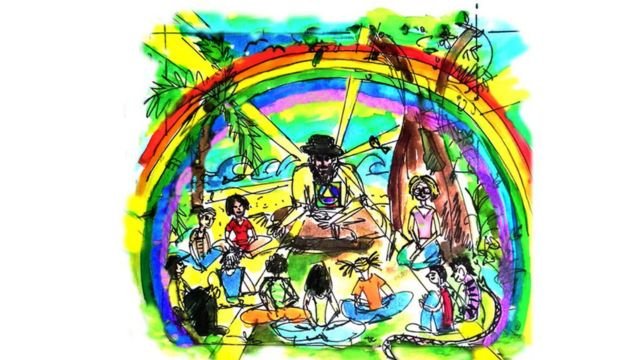
Relevant to the present controversy is that the Czech decisions did not pass judgment on the Tantric roots, meaning, and effectiveness of JahRa’s sacred eroticism practices. These are religious matters that secular courts are neither equipped nor allowed to examine. The courts concluded that in some individual cases, women did not go through the rituals freely, or expressed a desire to stop them, which was not respected. Again, POYRA disputes that this was the case.
The courts did not examine the situation of hundreds of women who had submitted statements insisting they had nothing to complain about the rituals and derived positive experiences from them. Although some derogatory comments showed the courts’ lack of sympathy (and perhaps of understanding) of POYRA’s teachings and practices, they were not banned. The logical conclusion is that JahRa, and everybody else, is free to continue teaching and practicing sacred eroticism, including “unhooking,” although in fact POYRA claims he no longer practices the latter ritual. What is forbidden (and rightly so) is to force the participation in the rituals of unwilling women.
Any different conclusion would be not only illogical but inconsistent with the human rights and religious freedom of the women who willingly decide to engage in JahRa’s admittedly idiosyncratic spiritual path. Why should they be prevented from doing so? In non-religious settings, there are many cases in which women (and men) experiment with sexual practices society does not generally approve of and have sexual encounters with partners they are not in a relationship with, from swinger clubs to BDSM discos. If practiced by consenting adults, they are not illegal. Why is what is allowed for recreational purposes prohibited when presented as a path to spiritual enlightenment?
In a way, the malicious investigation of Fišrová is really a “revelation.” It reveals that the aim of the campaigns against JahRa was never to protect the tiny minority of women who claimed their experiences in POYRA had been negative and abusive. It was to destroy the group, its leader, and its teachings, an egregious act of discrimination and a blatant violation of freedom of religion and belief.
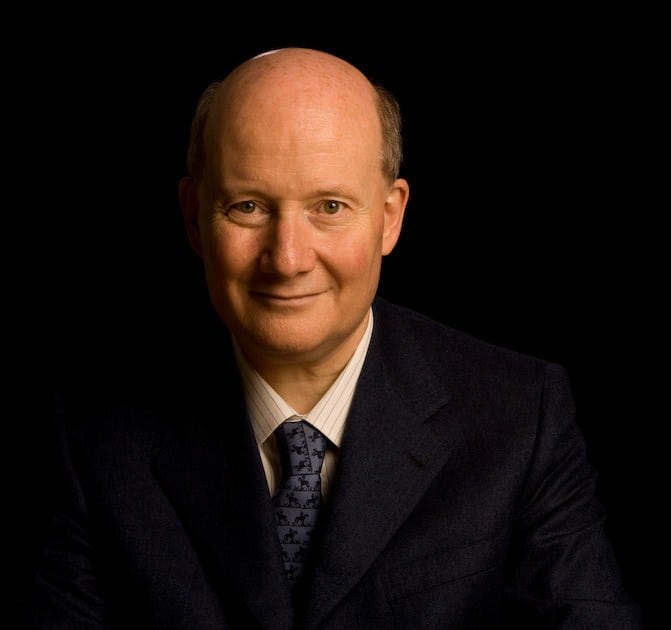
Massimo Introvigne (born June 14, 1955 in Rome) is an Italian sociologist of religions. He is the founder and managing director of the Center for Studies on New Religions (CESNUR), an international network of scholars who study new religious movements. Introvigne is the author of some 70 books and more than 100 articles in the field of sociology of religion. He was the main author of the Enciclopedia delle religioni in Italia (Encyclopedia of Religions in Italy). He is a member of the editorial board for the Interdisciplinary Journal of Research on Religion and of the executive board of University of Pennsylvania Press’ Nova Religio. From January 5 to December 31, 2011, he has served as the “Representative on combating racism, xenophobia and discrimination, with a special focus on discrimination against Christians and members of other religions” of the Organization for Security and Co-operation in Europe (OSCE). From 2012 to 2015 he served as chairperson of the Observatory of Religious Liberty, instituted by the Italian Ministry of Foreign Affairs in order to monitor problems of religious liberty on a worldwide scale.