Japan keeps introducing limitations to religious liberty that are not compatible with United Nations covenants it has signed and ratified.
by Patricia Duval*
*A report sent to several United Nations offices on September 22, 2024.
Article 3 of 5. Read article 1 and article 2.

Recurrent recommendations from the UN Human Rights Committee have reminded the Japanese government of the only permitted restrictions to the right to express one’s religion or belief, as provided at Article 18.3 of the International Covenant on Civil and Political Rights (ICCPR or Covenant): “3. Freedom to manifest one’s religion or beliefs may be subject only to such limitations as are prescribed by law and are necessary to protect public safety, order, health, or morals, or the fundamental rights and freedoms of others.”
Social Acceptability and Public Welfare
As the Human Rights Committee stressed, public welfare is not included in the list of possible restrictions, nor is social acceptability.
On the contrary, the Committee in its Comment no. 22 on Article 18 gave the following guideline for its interpretation: “Article 18 protects theistic, non-theistic and atheistic beliefs, as well as the right not to profess any religion or belief. The terms ‘belief’ and ‘religion’ are to be broadly construed. Article 18 is not limited in its application to traditional religions or to religions and beliefs with institutional characteristics or practices analogous to those of traditional religions. The Committee therefore views with concern any tendency to discriminate against any religion or belief for any reason, including the fact that they are newly established, or represent religious minorities that may be the subject of hostility on the part of a predominant religious community.”
Therefore, the fact that some religious beliefs or practices would not be considered as “socially acceptable” cannot be a criterion for Japan to be legitimate in its attempt to eliminate the Unification Church from its religious landscape.
And the argument used by the Ministry of Education in its dissolution request that UC believers made the tort claimants donate by “preventing their normal judgment, resulting in the disruption of the peaceful life of many people including their family members” is totally irrelevant.
International human rights law does not take in consideration the “disruption of peaceful life” of family members due to the conversion of their kin to new religious movements.
It is the same with the infringement of “public welfare.” It is not listed in the possible limitations to freedom of manifesting one’s religion or belief under Article 18.3 of the Covenant that Japan has committed to.
Actually, Article 81(i) of the Religious Corporate Act providing for dissolution in case of substantial harm to public welfare should have long been cancelled following the various UN recommendations received by the Japanese Government.
Proselytism
In addition, the right to proselytize is part of the right to manifest one’s religious beliefs and is protected as such.
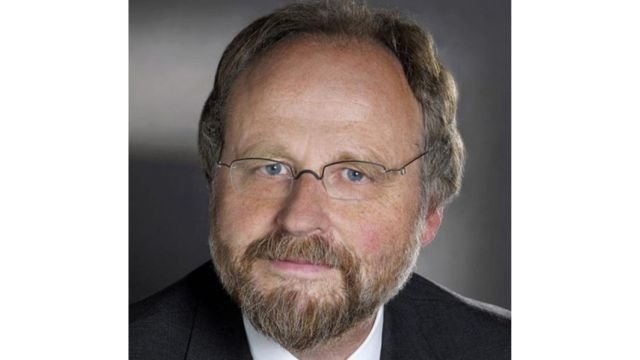
Former Special Rapporteur on Freedom of Religion or Belief, Heiner Bielefeldt, devoted part of his 2012 Interim report to the Human Rights Council (13 August 2012, A/67/303) to “the right to try to convert others by means of non-coercive persuasion” and reported that some “States impose tight legislative or administrative restrictions on communicative outreach activities. This may unduly limit the right to try to convert others by means of non-coercive persuasion, which itself constitutes an inextricable part of freedom of religion or belief.”
There is no doubt that the invitation by UC members for newcomers to participate in seminars or training sessions “allowing the doctrines, ‘Divine Principle,’ to gradually permeate their understanding,” as it was described in the above court decision, falls into the category of “non-coercive persuasion” and legitimate proselytism.
The Special Rapporteur added that “many such restrictions are conceptualized and implemented in a flagrantly discriminatory manner,” and that “members of religious communities that have a reputation of being generally engaged in missionary activities may also face societal prejudices that can escalate into paranoia.”
This is precisely the situation of the followers of the Unification Church in Japan who are facing societal prejudices which have escalated into paranoia and have led to their proselytism to be seen as an “anti-social activity.”
In particular the Tokyo District Court ruled on 15 January 2008 (decision included in the Government request for dissolution): “However, when solicitation activities or the sale of goods, as described above, are carried out by unduly instilling anxiety or fear in the other party, exploiting their psychological state, and when such donations or purchases of goods are conducted in a manner that cannot be said to be based on the free will of the person in question according to societal norms, or when they involve the expenditure of an unreasonably large sum of money, considering the actor’s social status, assets, or circumstances, thereby significantly deviating from what is generally considered acceptable by society, such solicitation or sales activities must be deemed antisocial.”
In order to avoid those prejudicial situations, which infringe the rights protected by the Treaties, the Special Rapporteur concluded that “Any restrictions on missionary activities deemed necessary by States must therefore meet all the criteria set out in article 18 (3) of the International Covenant on Civil and Political Rights.”
Soliciting Donations
Inherent to the right to manifest one’s religion or belief is also the right to establish and maintain religious institutions, which includes the right to solicit donations as spelled out by a 1981 Declaration of the UN General Assembly: “Art. 6 (b): The right to freedom of thought, conscience, religion, or belief includes the freedom, ‘to establish and maintain appropriate charitable or humanitarian institutions.’ Art. 6 (f): The right to freedom of thought, conscience, religion, or belief includes the freedom, ‘to solicit and receive voluntary financial and other contributions from individuals and institutions.’”
It is therefore totally legitimate for UC members to solicit donations and other contributions for the functioning of their Church, as long as they are not extorted by violence.
On the practice of soliciting donations and sale of religious artifacts by the Unification Church, we refer to the in-depth review published by Massimo Introvigne, a prominent sociologist of religions and former OSCE Representative for combating racism, xenophobia, and religious discrimination. See also the article on this subject by Masumi Fukuda.
In the absence of any element of violence, the Network of anti-UC lawyers have coined the concept of undue influence, adopted by the Japanese Courts to find that the contributions were obtained through infringing the donors’ free will.
Influence by a religious organization is deemed to be “undue” and not “socially acceptable” when it comes from the Unification Church.
In her letter sent to the Ministry in December 2022, Masumi Fukuda quoted a statement by Attorney Yoshihiro Ito, a member of the Network who said: “The courts tend to accept easily claims that would never be accepted in other cases if they are directed against cults”; and “In civil lawsuits, there is a kind of unwritten rule that if a cult is involved, it will lose the case.”
In conclusion of the above, the Government’s request for dissolution of the UC, based on biased tort cases and a flawed article of law on “public welfare” constitutes a serious violation of Japan’s commitments under the Treaties.

Patricia Duval is an attorney and a member of the Paris Bar. She has a Master in Public Law from La Sorbonne University, and specializes in international human rights law. She has defended the rights of minorities of religion or belief in domestic and international fora, and before international institutions such as the European Court of Human Rights, the Council of Europe, the Organization for Security and Co-operation in Europe, the European Union, and the United Nations. She has also published numerous scholarly articles on freedom of religion or belief.