Attacks against Western ships in the Red Sea have alerted many to the danger of Yemen’s Houthis. They have also created dramatic human rights problems.
by Massimo Introvigne

It took a strong intervention by the United Nations, through its Special Procedures independent experts, calling for the release of five believers detained in inhuman circumstances, to lift the veil of silence on an almost unknown feature of Houthi terrorism: the persecution of the Baháʼí.
The Houthis, designated as a terrorist organization by the U.S. Department of State, are an armed Shiite Muslim ultra-fundamentalist group that controls a large part of the territory of Yemen, including its capital Sana’a. Supported by Iran, the Lebanese Hezbollah, and North Korea, the Houthis have clarified in their texts and manifestos that their aim goes beyond controlling Yemen. They believe they are called to wage a millennial war against the West, the United States, and Israel, as well as to avenge the historical wrongdoings perpetrates by Sunni Muslims against Shiites. They expect the advent of a global millennial kingdom governed by descendants of Prophet Muhammad and the first Shiite imam, Ali.
The Houthis made the news in 2024 when, after the beginning of the Israel-Hamas war, they started attacking Western ships in the Red Sea and firing missiles at Israel. Many in the West thus “discovered” the Houthis, while human rights organizations had long called the attention on their reign of terror in Yemen, targeting in particular women and homosexuals. Some of the latter were sentenced to death through stoning or crucifixion.
The Baháʼís are part of an 8-million-strong new religion that originated in 19th century Iran. It proclaims the unity of all major world faith based on the prophetic messages of its early leaders. The peaceful Baháʼís are under heavy persecution in Iran. Drawing from Iranian statements, in 2018 the Houthi leader Abdel-Malek al-Houthi called the Bahá’í religion “satanic” and “at war with Islam.” Other Houthi leaders stated that all Baháʼís in Yemen should be killed.

As reported by the Bahá’ís, Houthi-occupied Yemen has seen “the mass arrest of over 60 men, women, and children participating in a Baháʼí community gathering in 2016; the call for the arrest of over two dozen members of the Baháʼí community in 2017; the indictment of 24 individuals because of their association with the Baháʼí Faith in 2018; and the call for the public execution of one Baháʼí in 2018. In 2020, six Yemeni Baháʼís, who had been arrested and jailed, and were facing unjust prison sentences, were forced to leave the country and cannot return. In May 2023, armed Houthi gunmen staged a violent raid on a peaceful gathering of Baháʼís in Sana’a and detained and disappeared 17 people including five women.” Of these 17, 12 have since been released but continue to be surveilled and harassed, while five remain in jail in very difficult conditions. Baháʼís who have been detained in Yemen also report the widespread use of torture.
While the Houthis’ terrorist attacks and human rights abuses are now widely recognized, the international community should continue to raise its voice for the most forgotten among their victims, the Bahá’ís.
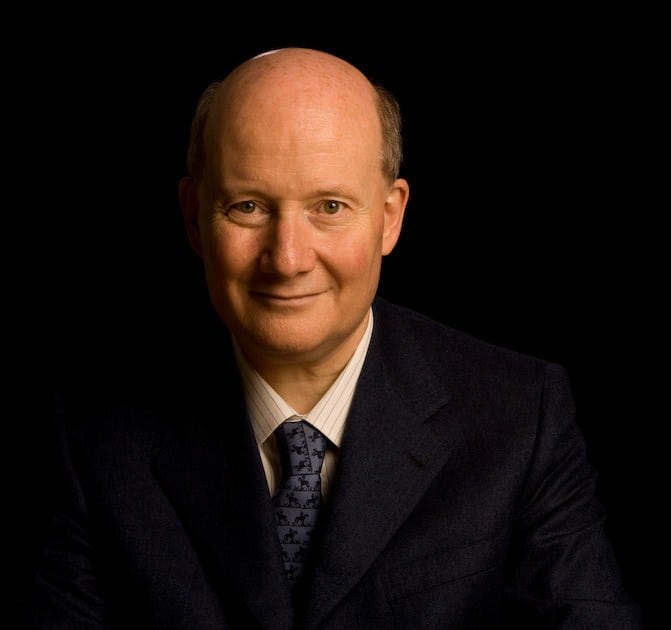
Massimo Introvigne (born June 14, 1955 in Rome) is an Italian sociologist of religions. He is the founder and managing director of the Center for Studies on New Religions (CESNUR), an international network of scholars who study new religious movements. Introvigne is the author of some 70 books and more than 100 articles in the field of sociology of religion. He was the main author of the Enciclopedia delle religioni in Italia (Encyclopedia of Religions in Italy). He is a member of the editorial board for the Interdisciplinary Journal of Research on Religion and of the executive board of University of Pennsylvania Press’ Nova Religio. From January 5 to December 31, 2011, he has served as the “Representative on combating racism, xenophobia and discrimination, with a special focus on discrimination against Christians and members of other religions” of the Organization for Security and Co-operation in Europe (OSCE). From 2012 to 2015 he served as chairperson of the Observatory of Religious Liberty, instituted by the Italian Ministry of Foreign Affairs in order to monitor problems of religious liberty on a worldwide scale.