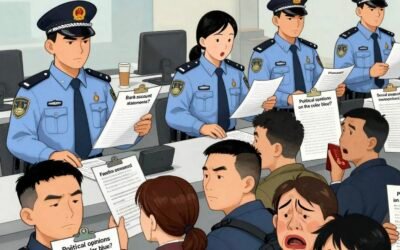
It is indeed true that the CCP has exhibited extraordinary creativity in organizing a genocide and gathering international support for it, including from Muslim countries.
by Kok Bayraq
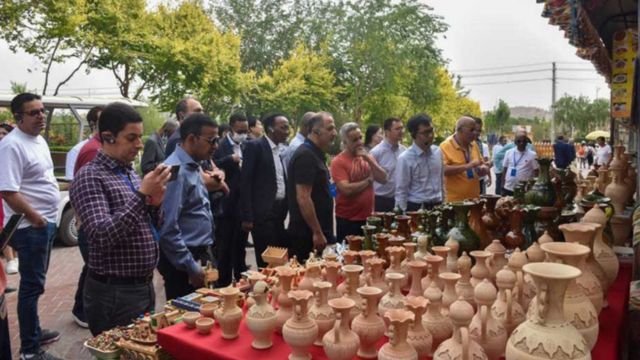
Last week, Chinese officials, while hosting representatives of Arab countries in the East Turkistan (Xinjiang to China), boasted again about the “creative governance measures” implemented in the region. They had previously mentioned this “creativity” several times when announcing their “zero-violence victory” in the region.
Yes, China is right in this claim: its measures are creative enough to deserve a patent.
So far, Chinese officials have described this creativeness very simply as “setting up vocational training centers, saving people from religious extremism and unemployment within two years, thus rooting out terrorism.” As a Uyghur who grew up in the Uyghur region, with most of my family members still living there, I would like to explain these “creative measures” in some more detail.
In the past, experts have reminded China that it is not possible to imprison an entire population and advised China not to target the whole Uyghur people while punishing “separatists.” However, China showed to the world that this was possible by establishing more than 380 camps in 2017, imprisoning more than 3 million people (1/5 of the Uyghur population, all those in military capacity), and detaining them for some six years.
Of course, although today’s modern surveillance technology has contributed greatly to the possibility of controlling a large population, the mentality and morality of using massive detention to destroy an “internal enemy” within the country was only seen in China.
Some colonial powers around the world have historically used mass extermination as a way to control or reduce the population of native people. By adding sterilization and family separation, China has created ways to achieve this goal more effectively. By using these methods, China’s own population statistics show that Uyghur birth rates have sharply declined. Between 2017 and 2019, there was a 48.7% decline in birth rates among Uyghurs according to China’s own statistics. In other words, China has destroyed not only the unborn babies of its “internal enemies,” but even the possibility of generating them, something that had never before crossed the mind of the most lethal rulers in history and legend.
Until recently, repressive regimes punished political opponents with harsh and controversial court decisions. These decisions were criticized by the international community, the regime was subject to sanctions, and therefore suffered social and economic losses. China has blocked these kinds of debate by implementing extrajudicial punishment. Moreover, they created economic value by establishing factories in prisons and camps or by taking prisoners to workplaces outside prisons and forcing them to work. Making money out of the repression of dissidents is also comparatively rare.
By misrepresenting the reasons why Uyghurs were taken to concentration camps, China was able to gain the support of the Islamic world, even though it said that Islam was a mental illness and needed to be treated. The hostility towards the United States and the West in Islamic countries played a part in its support of China. But enrolling Muslims internationally to support anti-Muslim repression required real inventive intelligence and, indeed, “creative measures.”
Never in the world has there been such unity of dictatorial regimes as in the last decade; and this alliance took place under the leadership of China. While the international alliance of dictators was previously limited to China, Russia, Iran, North Korea, and Cuba, the club continuously acquires new members, from Nicaragua to Belarus and Venezuela, all under the effective leadership of Xi Jinping.
It should be known that China has managed to do so not only with determination but also extraordinary fickleness. For example, China, which occasionally accuses Uyghurs “separatist” movements that may not even exists today, such as the ETIM, to be in league with the Talibans, has become the first state to recognize and host the Taliban government of Afghanistan. China, which accuses the Uyghurs of terrorism, defends Hamas’ terrorist attacks. China’s “creative measures” are indeed astounding.
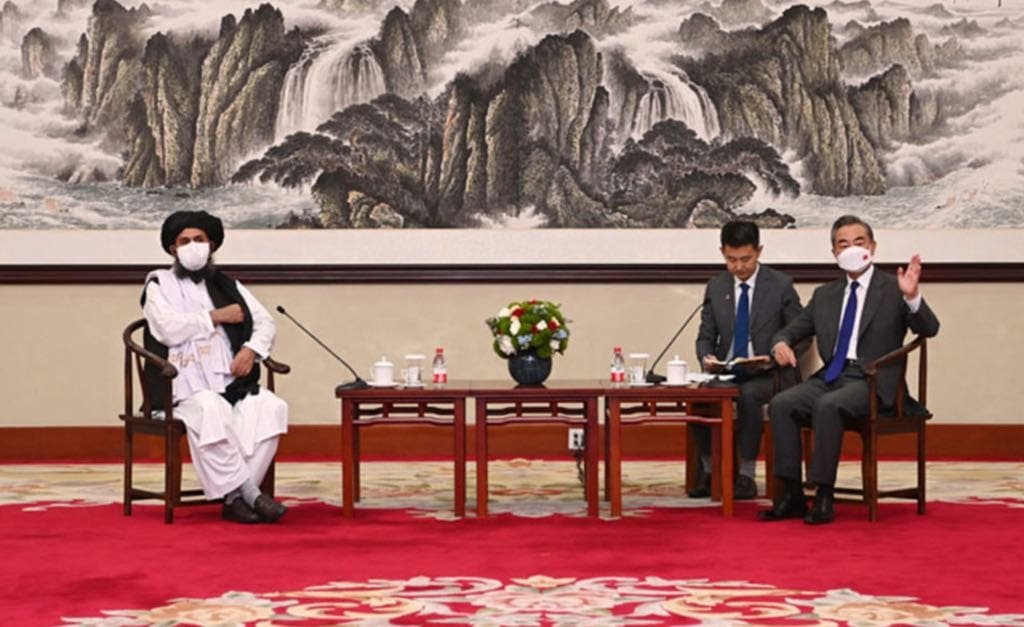
China has also made unprecedented progress in transforming its economic power into political power. It organized leaders, ambassadors, and journalists from poor countries to visit the Uyghur region covering all their costs. These “delegates-for-hire” found Chinese propaganda “persuasive.” China’s human rights situation won support at the UN by over 100 votes to some 50, with pro-China votes coming from developing countries in Africa, Latin America, and the Middle East. Taking advantage of the weak points of states and leaders is one of China’s important “creative measures.”
Today for the international public opinion, particularly in Muslim countries, the killing of Palestinians is visible, its numbers are known, and Israel is regarded as guilty, while the killing of Uyghurs is secret, the numbers are unknown, and China is considered innocent. Keeping the killing fields secret while committing massacres, showing to visitors a quiet environment while engaging in torture, and presenting itself as an ambassador of peace on the international stage while being guilty of genocide are unique innovations that China has achieved. In other words, China is really a pioneer in modern, innovative, and “creative” methods of genocide.
The list of measures goes on and on. In short, the patent for its “creative governance measures” that China seems to have unofficially requested should be granted immediately, even without examination.

Shohret Hoshur (who until 2025 used the pseudonym of Kok Bayraq) is a political émigré from East Turkestan (Ch. Xinjiang) and an opponent of the Sinicization of his homeland. He left China in 1995 when his journalism got him “into trouble with the authorities,”and is now living in Washington, D.C.. His unique thoughts and feelings published in Taipei Times and Global Voice comment on the ongoing Uyghur genocide.