The UN “Convention on Genocide” excludes cultural destruction as a marker for genocide, to avoid a vague use of the term “culture.” But culture is not a fuzzy concept. It identifies peoples.
by Marco Respinti
Article 2 of 4. Read article 1.

The opening chapter of the report “Eyewitness: Witnesses and Survivors of the 1971 Genocide in Bangladesh Speak,” published by the European Bangladesh Forum (EBF), is important, achieving the goal of the fact-finding mission led in Bangladesh by Dutch politician and human rights activist Henricus “Harry” van Bommel in May 20‒26, 2023. The title of its first chapter goes right to the heart of a decisive matter: “What exactly is genocide?”
A remark contained in that report, “[c]ultural destruction does not suffice” to identify a genocide, provides the subject for this article and those following in this series, also returning to some observations that have been disseminated in some previous “Bitter Winter” articles.
What genocide is not
Its identification being the central question, the unique criminal nature of “genocide” dictates its verification to be always handled with extreme care, but at the same time urges all to fully acknowledge genocides that are not yet recognized. Prudence and rigor command then to establish first what a genocide is not.
A genocide is a crime against humanity but the two concepts do not coincide. As the UN Office on Genocide Prevention and the Responsibility to Protect (GPRP) observes, “[c]rimes against humanity have not yet been codified in a dedicated treaty of international law, unlike genocide and war crimes, although there are efforts to do so. Despite this, the prohibition of crimes against humanity, similar to the prohibition of genocide, has been considered a peremptory norm of international law, from which no derogation is permitted, and which is applicable to all States.”
The 1998 Rome Statute establishing the International Criminal Court “is the document that reflects the latest consensus among the international community on this matter. It is also the treaty that offers the most extensive list of specific acts that may constitute the crime.” It says that “[f]or the purpose of this Statute, ‘crime against humanity’ means any of the following acts”—and a list is offered—“when committed as part of a widespread or systematic attack directed against any civilian population, with knowledge of the attack.”
A genocide is not a synonym of a “war crime” either. It may include war crimes or unfold in parallel to them, in the same place and time, targeting the same people, but they are evidently different realities, for the simple fact that genocides can occur also outside theaters and times of war. A serious wrongdoing and one that needs to be prosecuted accordingly, a “war crime” is a violation of the laws established in internationally recognized codes and conventions to regulate military conflicts. The most well-known are the so-called “Geneva Conventions” of 1929 and 1949, but they are not the only ones. They aim at granting some humanity, measure, proportion, and possibly relief even within the context of warfare.
More recently, the GPRP singled out the crime of “ethnic cleansing” too, whose practices “constitute crimes against humanity and can be assimilated to specific war crimes. Furthermore, such acts could also fall within the meaning of the Genocide Convention.” Yet, also “ethnic cleansing” has not been “recognized as an independent crime under international law” and thus “there is no precise definition of this concept or the exact acts to be qualified” as such. Among others, Canadian expert William A. Schabas, Professor of International Law at Middlesex University in London, analyzed similarities and distinctions between “ethnic cleansing” and “genocide.” It seems then fair to conclude that the first is a component of a process that may and/or does culminate in the latter.

Intentions and markers matter
Now, what a genocide is. The pages of the EPF report, “Eyewitness,” move throughout what happened in 1971 in Bangladesh, strictly adhering to the binding definition contained in the “Convention on the Prevention and Punishment of the Crime of Genocide.” It was ratified by the United Nations (UN) General Assembly on December 9, 1948, entered into force on January 12, 1951, and presents the general criteria to define, so far, all genocides.
In Chapter 1, the authors of “Eyewitness” write: “To constitute genocide, there must be a proven intent on the part of perpetrators to physically destroy a national, ethnical, racial or religious group.” This is the definition of a genocide drawn directly from Article 2 of the UN “Convention on Genocide,” quoted in the EPF report too. The tools devised by the “Convention” to establish whether a genocide has been perpetrated are the markers that identify a targeted group of human beings as a distinguished portion of humanity. Thus, the intention of the perpetrators—with which the planning, the organization, and the implementation of a genocide come—(i.e., the definition), and the markers which points out their victims (i.e., the identification), are the two pillars of the theoretical and juridical architecture of the UN “Convention on Genocide.”
As to the size of the portion of humanity targeted for genocide, it does not count per se. If, by hypothesis, the chief of a village of twenty people aims at exterminating all the fifteen inhabitants of another village because they worship a different god and in hate of that diverse belief (marker), that is a genocide, even if the absolute number of the killed people is small. In fact, the intention that moves the chief of that hypothetical village of twenty is the physical elimination of all the fifteen members of a portion of humanity that perpetrators, victims, and judges identify through one of the markers that are acknowledged in the list contained in the UN “Convention on Genocide.”
The success of the extermination does not count per se either. If the chief of that hypothetical village of twenty wants to eliminate all the fifteen inhabitants of the second village because they worship a different god and in hate of that diverse belief (marker), but ends up, for whatever reason, in killing only five of them, the perpetrator (the chief of the first village) is still guilty of genocide. The diriment point is in fact his ultimate intention. We may call it an “attempted genocide,” but it does not change the responsibility of the offender. In fact, Article 3 of the UN “Convention on Genocide” clearly punishes also “[c]onspiracy to commit genocide; [d]irect and public incitement to commit genocide; [a]ttempt to commit genocide; [and] [c]omplicity in genocide.”
The EPF report, “Eyewitness,” explains it directly, condensing in one cogent sentence the whole logic of the UN “Convention on Genocide”: “Fact is that not the number of victims, but the intent of the act committed defines whether it was genocide.”
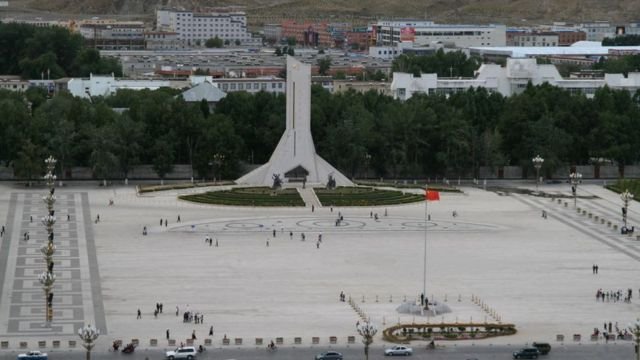
“Culture is not a marker.” True?
The reason of the EBF report’s adherence to the terms used in the UN “Convention on Genocide” is explained by another important consideration penned in the report’s pages: “The intent is the most difficult element to determine.” What instead prompts further evaluation is the report’s sentence, “[c]ultural destruction does not suffice” to identify a genocide.
The UN “Convention on Genocide” substantially adopts the same position, by remaining silent on cultural destructions. The question entered the discussion during the drafting of the text, but it was set aside due to what the drafters perceived as a derailment toward an inappropriate enlargement of the definition of “genocide.” It is documented in the two-volume “The Genocide Convention: The Travaux Préparatoires” (Leiden and Boston: Martinus Nijhoff, 2008) edited by Hirad Abtahi (Chief of Staff to the Presidency of the UN International Criminal Court in The Hague), and Philippa Webb (Professor of Public International Law at King’s College in London, and Director of its Centre for International Governance and Dispute Resolution).
At first sight, the rationale behind that decision seems to be the vagueness attributed to the term “culture.” This is possible, though, only if one adopts a weak definition of culture, light-years away from the classical scholarly reflections and definitions proposed by the like of, say, at least French sociologist Émile Durkheim (1858–1917), Welsh historian Christopher Dawson (1889–1970), and American sociologist Talcott Parsons (1902–1979), different thinkers as they were. Because, on the contrary, “cultural destructions” matter, and matter most, when they are the voluntary demolitions— by perpetrators intending to offend, target, and wipe out an identifiable and identified portion of humanity—of artifacts and public expressions, both material and immaterial, that characterize a culture. Here of course the focus shifts from cultural artifacts and expressions to the culture that substantiate them as a marker of a distinctive group of human beings.
In fact, in those cases perpetrators intend to vilify cultural manifestations, tangible or intangible, of a human group to deprive both the group and its members of their specific characteristics, out of hatred for them, using this as a stage toward the final dehumanization of both the group and its members. Next, physical extermination is performed as an immediate consequence of the suppression of a culture, or induced physical extinction comes as a capital execution delayed in time by preventing the transmission of a groups’ characteristics to the next and future generations.
The implications of this argument will be discussed in the next article of this series.

Marco Respinti is an Italian professional journalist, member of the International Federation of Journalists (IFJ), author, translator, and lecturer. He has contributed and contributes to several journals and magazines both in print and online, both in Italy and abroad. Author of books and chapter in books, he has translated and/or edited works by, among others, Edmund Burke, Charles Dickens, T.S. Eliot, Russell Kirk, J.R.R. Tolkien, Régine Pernoud and Gustave Thibon. A Senior fellow at the Russell Kirk Center for Cultural Renewal (a non-partisan, non-profit U.S. educational organization based in Mecosta, Michigan), he is also a founding member as well as a member of the Advisory Council of the Center for European Renewal (a non-profit, non-partisan pan-European educational organization based in The Hague, The Netherlands). A member of the Advisory Council of the European Federation for Freedom of Belief, in December 2022, the Universal Peace Federation bestowed on him, among others, the title of Ambassador of Peace. From February 2018 to December 2022, he has been the Editor-in-Chief of International Family News. He serves as Director-in-Charge of the academic publication The Journal of CESNUR and Bitter Winter: A Magazine on Religious Liberty and Human Rights.