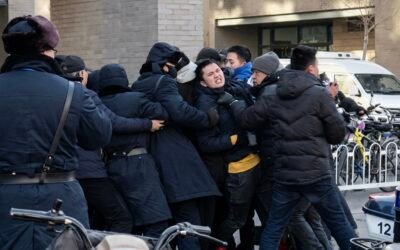
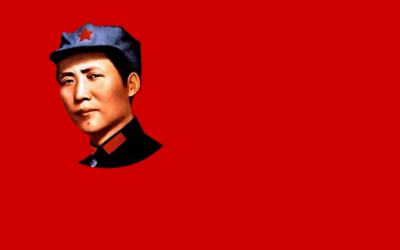
The President’s recent visit to Xinjiang, where he promised to enforce a “Marxist view of religion,” is reminiscent of Scipio sowing the city of Carthage with salt.
by Marco Respinti

Eight years after his last visit, Chinese despotic ruler Xi Jinping visited Xinjiang, which his non-Han people call East Turkestan, from July 12 to 15, 2022. Even the edulcorated language of the CCPs’ Global Times cannot hide what he went there for. He “stressed efforts to fully and faithfully implement the policies of the Chinese Communist Party,” the Global Times wrote, “for the governance of Xinjiang in the new era, highlighting social stability and lasting security as the overarching goal and the region’s significant role in building the Belt and Road Initiative.”
Translated from the Orwellian newspeak of the CCP, it indicates, once again, the aim of re-educating Xinjiang inhabitants and enrolling them in President Xi’s road to Sinicization of what remains today of globalization after COVID-19, i.e. a “globalization with Chinese characteristics.” As usual, the Global Times mocks Western attempts to indict and sanction China for its Xinjiang repressive policies. It notes that in the region the CCP has achieved “fundamental changes from disturbance to stability.” We all know that this means repression and persecution.
The slanting message of the visit, as reviewed by a propaganda organ such as the Global Times, should be interpreted as a clarion call. Reportedly, Wang Yuting, an associate professor at the Institute of Chinese Borderland Studies at the Chinese Academy of Social Sciences in Beijing, stated that Xi went to Xinjiang for saluting the region’s step “into a new phase of economic development,” which qualifies it as “the bridgehead for westward opening-up.” Does this mean that the CCP considers “Xinjiang repression operation” accomplished, and the region is now a vast prairie where it may roam freely? Does this mean that Uyghur and other Turkic identities in that region have been sufficiently repressed and Sinicized to allow the CCP a step forward?
What the Global Times does not say, is spelled out in so many words by Xinhua, the official Chinese state press agency. Entitling its chronical with a rather disquieting “Xi Jinping’s inspection tour of Xinjiang,” Xinhua reports president Xi’s words: “We must better uphold the principle of developing Islam in the Chinese context and provide active guidance for the adaptation of religions to the socialist society. We must train a team of Party and government officials who are adept at the Marxist view on religion, familiar with religious affairs and competent to engage in related work, foster a group of religious figures who are politically reliable, have noble characters and religious accomplishments and can play their role at critical times, and foster a group of religious researchers who have firm political stand and good academic achievements, stick to the Marxist view on religion and be good at innovation. We must ensure that reasonable demands of religious believers be met and rally them around the Party and the government.”
As we all know, and history documents, the only socialist and Marxist view of religion is extinction and subjugation: the first as an absolute goal, the latter as a temporary adaption to circumstances, ultimately aimed at reaching the first aim.
It is here that we have the impression that the CCP’s “Xinjiang repression operation” has been accomplished and the Party is ready for a phase two, focused on managing religion sticking to the Marxist view of it. Building on the results of the cultural genocide that the CCP is waging on since years in the region, Xi seems now to be ready to cash his gains.
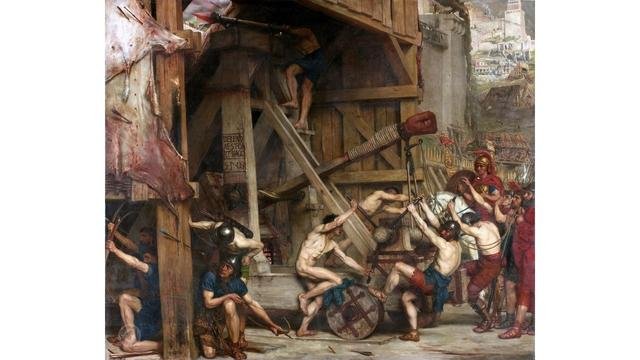
The journal of his “inspection tour” as provided by state media may then look like Roman general Scipio Aemilianus’s (185–129 BC) legendary sowing the city of Carthage with salt after defeating it in the Third Punic War (146 BC). In ancient times, salting the earth was a cursing ritual used in various cultures to prevent a destroyed city or building from being rebuilt. Xi Jinping is salting Xinjiang to make sure that its destroyed identity and culture will not rise again.

Marco Respinti is an Italian professional journalist, member of the International Federation of Journalists (IFJ), author, translator, and lecturer. He has contributed and contributes to several journals and magazines both in print and online, both in Italy and abroad. Author of books and chapter in books, he has translated and/or edited works by, among others, Edmund Burke, Charles Dickens, T.S. Eliot, Russell Kirk, J.R.R. Tolkien, Régine Pernoud and Gustave Thibon. A Senior fellow at the Russell Kirk Center for Cultural Renewal (a non-partisan, non-profit U.S. educational organization based in Mecosta, Michigan), he is also a founding member as well as a member of the Advisory Council of the Center for European Renewal (a non-profit, non-partisan pan-European educational organization based in The Hague, The Netherlands). A member of the Advisory Council of the European Federation for Freedom of Belief, in December 2022, the Universal Peace Federation bestowed on him, among others, the title of Ambassador of Peace. From February 2018 to December 2022, he has been the Editor-in-Chief of International Family News. He serves as Director-in-Charge of the academic publication The Journal of CESNUR and Bitter Winter: A Magazine on Religious Liberty and Human Rights.