Some didn’t go the camps but lived in constant fear: our exclusive series of testimonies from ethnic Kazakhs persecuted in China continues.
by Serikzhan Bilash and Karima Abdrakhmova*
*Galman Kochiigit, Bekzat Maxutkan, Gulzhan Toktassyn, Galym Rakizhan, and Tilek Niyazbek cooperated with the interviews and in preparing this series.
Article 4 of 6. Read article 1, article 2, and article 3.
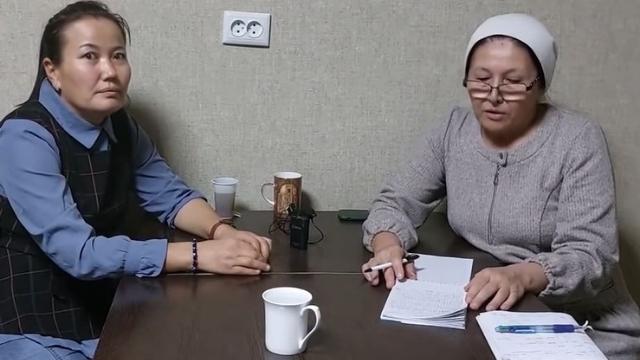
Gulguina Toktagazy is a resident of Kazakhstan from September 18, 2019. She moved from Shubarzhidek hamlet, Koktobe village, Tacheng city, Tarbagatay region, Xinjiang, on October 12, 2016, and today she lives in Makanshy village, Urjar district, East Kazakhstan. She is representative of those who were not sent to the camps or to jail, yet were put under house arrest or surveillance, and had to live in constant fear.
Gulguina told about her life in Xinjiang, where she went because of the death of a close relative, to attend the funeral and see her family. So, Gulguina went to China alone on October 6, 2017, after she had received a Kazakhstani residence permission in 2016. Her family. i.e., her husband, two sons, and father-in-law remained in Kazakhstan.
After crossing the Chinese border, the police officers confiscated her passport and Kazakhstani residence permission, telling her she will receive the documents back when she would go back to Kazakhstan. After the funeral, she went to the local security department to take her documents back and return to her family in Kazakhstan, but the local authorities refused to release the passport and residence permission.
Instead, they placed Gulguina under house arrest. Every morning, she was obliged to go to the office of the local department to stand in the ranks and watch as the national flag was raised, and sing the Chinese national anthem. She was constantly scared that she would be taken to a transformation through education camp. She had to work as a cleaner and a kitchen worker in different places where she was sent by the local authorities. Meanwhile, she was forced to attend classes to learn the Chinese language.

She lived in the house of her brother-in-law. She was obliged to report about her routine days, activities, take pictures of the places where she was, and send them to the officer who was her supervisor. When Gulguina saw a woman being dragged in the street, shackled, handcuffed, and with a black bag on her head, escorted by policemen with weapons in their hands, her concerns increased.
Gulguina reports that there were security cameras everywhere in the streets. She was depressed, but she had to hide her tears and cry only at night when she was alone, because she could not show her tears publicly. She might be punished or sent to a camp.
Gulguina remained under house arrest for one year and eight months. She was questioned many times, and asked different detailed questions about her relatives in Kazakhstan, and about her reasons for moving to Kazakhstan. Finally, her documents were given back to her on May 25, 2019. It was a very long procedure as the documents had to be stamped with ten seals of different government instances.
Gulguina was not taken to a camp, but says she witnessed the real life of Kazakhs in Xinjiang, which is part of the genocide against the ethnic minorities there. She reports that the Chinese authorities terrorize Kazakhs so that they would leave. Then, they use any possible way to prevent Kazakhs from selling their houses and property, and they are compelled to abandon what they have purchased through years of hard work.

*Karima Abdrakhmanova was born in 1962 in Taraz, Kazakhstan, and lives in Petropavlosk, in North Kazakhstan. She graduated in 1985 from Kyrgyz Pedagogical Women Institute and is a teacher of English language.

Serikzhan Bilash is a leading human rights activist in Kazakhstan. He was repeatedly harassed and persecuted for his campaigns exposing the horrific condition of ethnic Kazakhs and others detained in Xinjiang’s transformation through education camps.