A new film tells the story of a devotee who joined The Church of Almighty God at its beginnings. She was hunted, detained, and tortured ever since.
by Massimo Introvigne
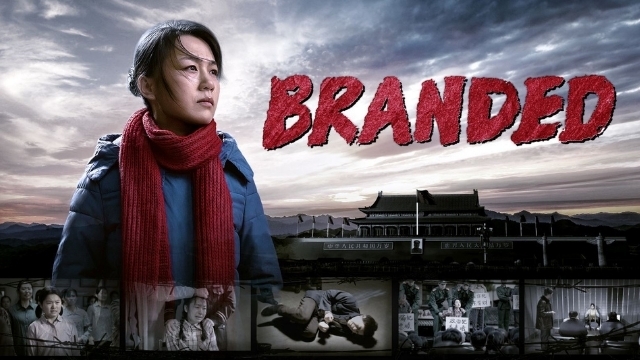
A 13-year-old girl is arrested at a religious gathering in China. She spends two days alone in a dark shabby room, with rats as her sole companions. Her family pays a fine, which is pocketed by the police, and she is allowed to return home. This is how Branded, a new movie produced by The Church of Almighty God, starts. It is also how Li Chenxi enters into a life where one arrest follows another. A life on the run, where the most horrific torture becomes routine.
Li Chenxi is not her real name, but the movie is based on a true story. On the one hand, it is the story of The Church of Almighty God. Li Chenxi is among the first believers who received and accepted in 1991 messages uttered by a sister in the house church movement as coming from the Holy Spirit, then realized that this sister was Christ returned on earth as the incarnated Almighty God (a story I have told in my own book Inside The Church of Almighty God, published this year by Oxford University Press).
It is a story of joy, sorrow, and persecution. After Tiananmen, the CCP decided to crack down on unauthorized religion and Christian house churches in general, but The Church of Almighty God was quickly singled out as particularly dangerous because of its rapid and spectacular growth. It was labeled as a xie jiao, which the English subtitles of the movie translate as “cult.” The translation is used by the CCP itself in its English-language publications, but is somewhat inaccurate, as xie jiao has been used since the late Ming dynasty to designate “heterodox teachings” banned by the government.
The movie follows Li Chenxi as she spreads the gospel of Almighty God, while her own spiritual experience deepens. She is repeatedly arrested, and her parents, who had also accepted Almighty God’s faith, are also detained and abused. While she is on the run, they are repeatedly harassed and intimidated by the police at their house and are told that she is dead, leading to a nervous breakdown from which her mother would never recover.
At age 17, Li Chenxi is arrested by the police for distributing books of Almighty God’s words to brothers and sisters in the church, and later is paraded in the streets as a criminal, together with murderers and fraudsters. She is arrested again at the age of 37, and enters a hellish system where torture is common, and she is insulted and abused both by the prison guards and her fellow prisoners. Yet, her faith is not shattered. At the end of the movie, we see her, released on bail for reason of severe heart disease in 2013 and kept under surveillance, and finally embarking again on the road of escape.
As I mentioned in a previous study, The Church of Almighty God has become skilled in producing professional quality movies, which are based both on its religious experience and the believers’ approach to art and beauty. Branded is one more example, and one vividly capturing the reality of religious persecution in China.
As Michael Walsh has argued in his recent book Stating the Sacred: Religion, China, and the Formation of the Nation-State (New York: Columbia University Press, 2020), the Communist Chinese state is not less “sacralized” than its Imperial predecessor. The only religion CCP really tolerates is the cult of the CCP itself.
In the movie, Li Chenxi keeps asking why the CCP persecutes her, since she has committed no crime except believing in Almighty God. From the point of view of the CCP, believing in Almighty God is precisely the crime. Successful, dynamic new religious movements such as The Church of Almighty God offers a believable alternative to the divinization of the state and of the CCP. It is something totalitarian regimes never tolerate.

Massimo Introvigne (born June 14, 1955 in Rome) is an Italian sociologist of religions. He is the founder and managing director of the Center for Studies on New Religions (CESNUR), an international network of scholars who study new religious movements. Introvigne is the author of some 70 books and more than 100 articles in the field of sociology of religion. He was the main author of the Enciclopedia delle religioni in Italia (Encyclopedia of Religions in Italy). He is a member of the editorial board for the Interdisciplinary Journal of Research on Religion and of the executive board of University of Pennsylvania Press’ Nova Religio. From January 5 to December 31, 2011, he has served as the “Representative on combating racism, xenophobia and discrimination, with a special focus on discrimination against Christians and members of other religions” of the Organization for Security and Co-operation in Europe (OSCE). From 2012 to 2015 he served as chairperson of the Observatory of Religious Liberty, instituted by the Italian Ministry of Foreign Affairs in order to monitor problems of religious liberty on a worldwide scale.